
Think iguanas or pythons are a nuisance? That’s nothing compared to what’s happening now in Southwest Florida.
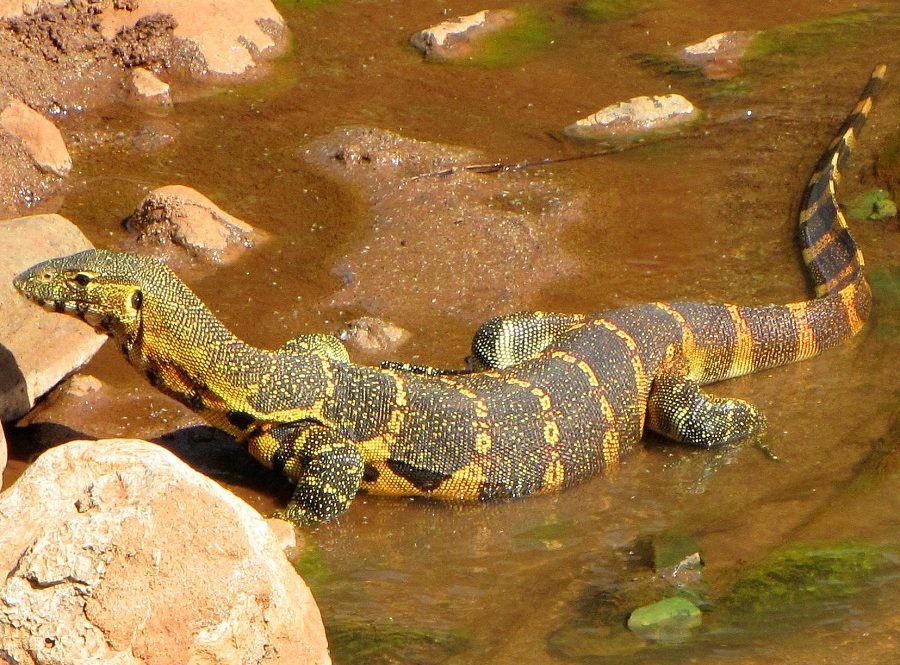
Reports show over 2,000 Nile monitor lizard sightings, with the majority occurring near Cape Coral, and this is not merely another nuisance animal story. We’re talking about six-foot, razor-clawed carnivores that swim like crocodiles, climb trees with ease, and hunt anything that moves. These lizards are tearing through the ecosystem, devouring native wildlife, and even threatening people’s pets.
Wildlife officials don’t mince words: Nile monitors are among the most dangerous invasive reptiles Florida’s ever dealt with. They’ve exploded in number over the past few years, especially across neighborhoods in Cape Coral, which now count as their home turf.
Here’s a look at the numbers: Lee County tops the state with over 1,600 reported Nile monitor sightings. Palm Beach trails far behind at 299; Miami-Dade has just 76, and Broward reports 68. In 2021, the Florida Fish and Wildlife Conservation Commission (FWC) finally put Nile monitors on the prohibited species list. Too little, too late? The lizards are already everywhere.
Locals in Cape Coral used to relax to the sound of water running through the canals. Now, they hear the scratch and clatter of claws on concrete. The Nile monitor, originally from sub-Saharan Africa, has gone from a bizarre curiosity to a neighborhood nightmare. Unlike docile iguanas that freeze and fall from trees in the winter, these monitors have built-in survival capabilities. They’re smart, aggressive, and almost impossible to trap. Try to catch one, and you’ll meet a mouthful of sharp teeth and claws strong enough to shred tree bark.
People have stories. One Cape Coral resident claims to have seen this enormous monster run through their house straight to the back door. These lizards aren’t just fast, they’re relentless. And unlike iguanas, cold weather barely slows them down.
The impact? It’s ugly. Nile monitors dig up the burrows of gopher tortoises and burrowing owls, species that already teeter on the edge. Their tunnels can undermine canal banks, sidewalks, and even seawalls. More and more, residents are losing chickens or small pets to these backyard predators.
So, what can you actually do? Experts admit we can’t wipe out Nile monitors anymore. Now it’s about managing the problem and reacting quickly. If you spot one, snap a photo and report it using the IveGot1 app or call 888-483-4681. Don’t get close, as these lizards will defend themselves, and you don’t want to test those jaws. If you find one on your property, Florida law lets you remove it humanely without a special permit.
Nile monitors are spreading into Charlotte County and beyond. The official advice? Stay alert, keep your distance, and let the experts know. The sunshine is still here, but so is a new predator, and it’s not going anywhere.
Want details on how to spot these lizards, or a list of local wildlife removal services in Lee County? Just ask.