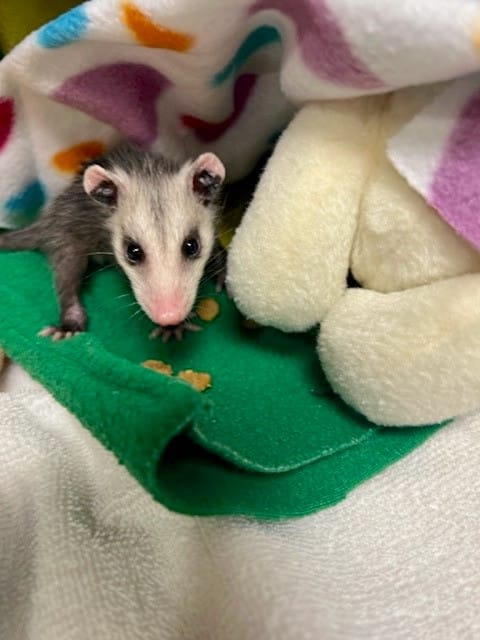
Spring in Southwest Florida brings more than just blooming flowers; it signals the frantic start of “baby season” for local wildlife rescuers. The Conservancy of Southwest Florida’s von Arx Wildlife Hospital recently announced a major surge in patients, headlined by the arrival of over 20 baby opossums in a single wave.
In a recent social media update, the Conservancy shared images of the tiny marsupials, noting that this latest influx has officially made the Virginia opossum the most common patient at the facility for the month of March. The tiny orphans, often no larger than a human palm, arrive after being separated from their mothers because of car strikes, dog attacks, or other suburban mishaps.
“March marks the beginning of baby season, and we are seeing a significant increase in young wildlife arriving at our hospital,” the Conservancy stated.
The surge highlights a critical time for Florida’s ecosystem. As temperatures rise, various species, including squirrels, rabbits, and songbirds, breed. However, the opossum remains a frequent visitor because of its unique biology. As North America’s only marsupial, a single mother can carry up to 13 babies in her pouch. Wildlife rehabilitators must intervene rapidly if a mother is injured, because the entire litter’s survival depends on it.
At the von Arx Wildlife Hospital, these “joeys” require round-the-clock care. Specialized staff and volunteers must provide supplemental feedings that mimic a mother’s milk and maintain precise temperature controls to ensure the fragile infants thrive. The goal is always the same: raise them until they are old enough to forage and defend themselves, then release them back into the wild.
The Conservancy is using this moment to remind residents to be extra vigilant. With “baby season” in full swing, motorists should slow down during dawn and dusk, when opossums are most active. The organization urges the public to check the pouches of deceased female opossums found on the road because the young inside often survive the initial impact and people can still save them if they bring them to the hospital quickly.
As the hospital prepares for an even busier April, the community can support the influx of patients by donating food, medical supplies, or specialized formula. This support will ensure these 20-plus new arrivals, and the hundreds behind them, get a second chance at life in the wild.