
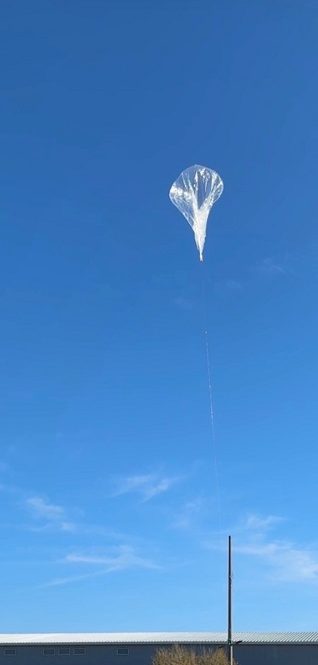
SKY Academy Englewood students don’t just read about science in a textbook; they experience it firsthand.
On February 19, 2026, they launched a real weather balloon with their STEM teacher, J.T. Tremaine, with the expert guidance from Bill Reed and the Englewood Amateur Radio Society (EARS) to make it happen. The Englewood REVIEW crew caught the whole thing: students out on the field, assembling and prepping the balloon, chasing data in real time instead of flipping through another textbook chapter.
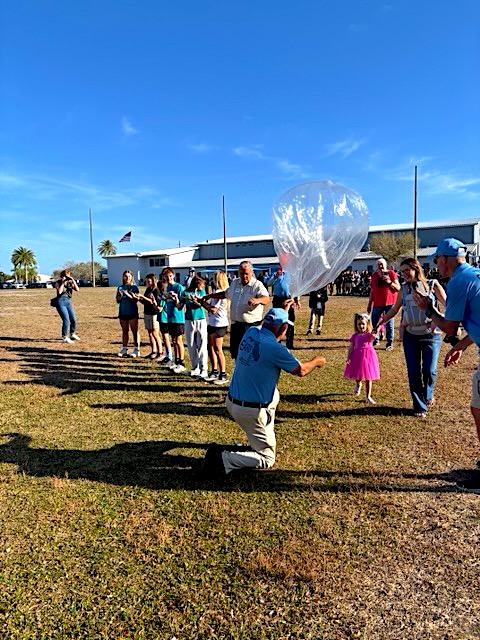
This wasn’t your average science class. The students actively participated and learned from EARS members, who demonstrated real-world STEM applications outside of school. This partnership gave them a shot at the real thing.
“We get to learn a lot about the weather and how the wind affects aircrafts, weather and stuff like that,” said an enthusiastic Noah*, a SKY Academy student.
Bill Reed, EARS president, explained, “The balloon is a high-altitude Pico balloon, just 15 grams with a tiny radio transmitter. It tracks altitude, speed, temperature, humidity, and GPS coordinates.” The data’s not just for fun, either. The National Oceanic and Atmospheric Administration tracks it, too, grabbing live weather data right from the students’ experiment.
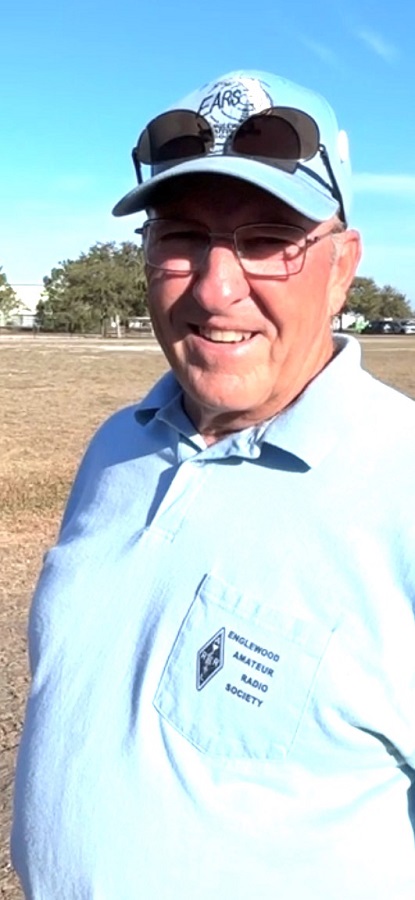
SKY Academy student, Madeline, summed it up with a smile, “We’re going to learn about helium, physics, and all that space stuff. It is a really cool exercise.”
Brody, a fellow STEM classmate, who wants to be an astronaut, agrees, “It’s pretty cool because we’ll be able to track it all over the globe. That’s amazing.”
The learning keeps going even after the launch. The balloon’s solar-powered instruments transmit data as long as there’s daylight. EARS volunteers love watching these balloons climb, up to 46,000 feet sometimes, riding the jet stream at speeds that can hit 160 miles an hour. Some balloons circle the globe two or three times. One even stayed up there for two years, making three trips around the planet.
“We’re going to learn about physics,” says Mallory, a student, “and it’s supposed to go all the way around the world. That is amazing.”
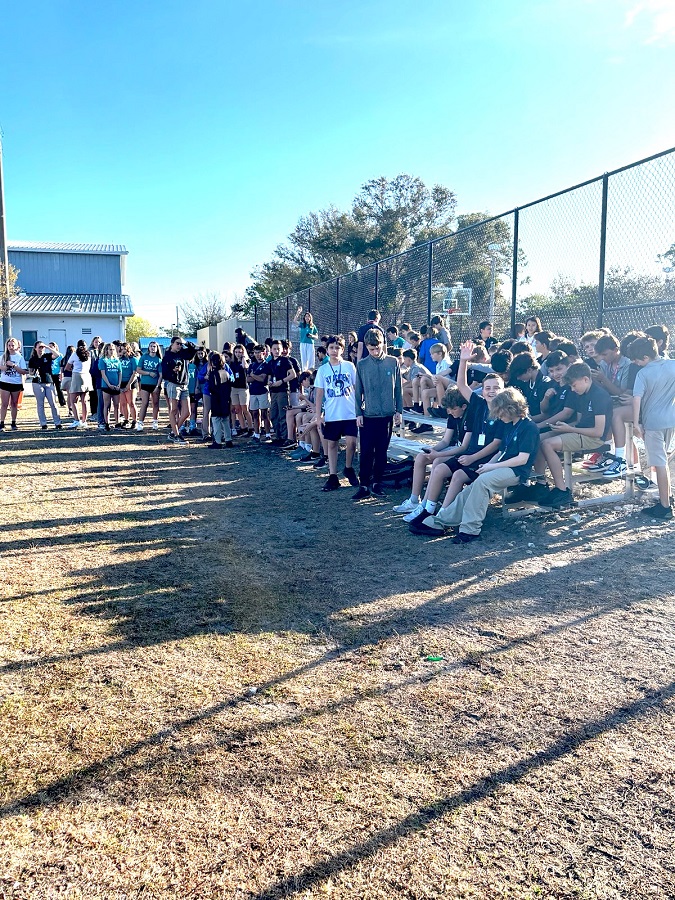
Bill Reed and the EARS volunteers are excited about their partnership with SKY Academy. “The students are very excited about the STEM program. They truly get the project, they understand what they’re doing, and they are fully embracing it. We’re meeting with Mr. Tremaine on March 10th. He’s going to lay out exactly what he needs, and we’re going to do everything we can to meet those needs and help him succeed.”
One of the EARS volunteers explained that, under a new Florida law effective July 1, 2024 (HB 321), intentionally releasing balloons is illegal, except for children aged six years or younger. So, Malin, a 7th-generation Englewood local under the age of 6, got the honor.
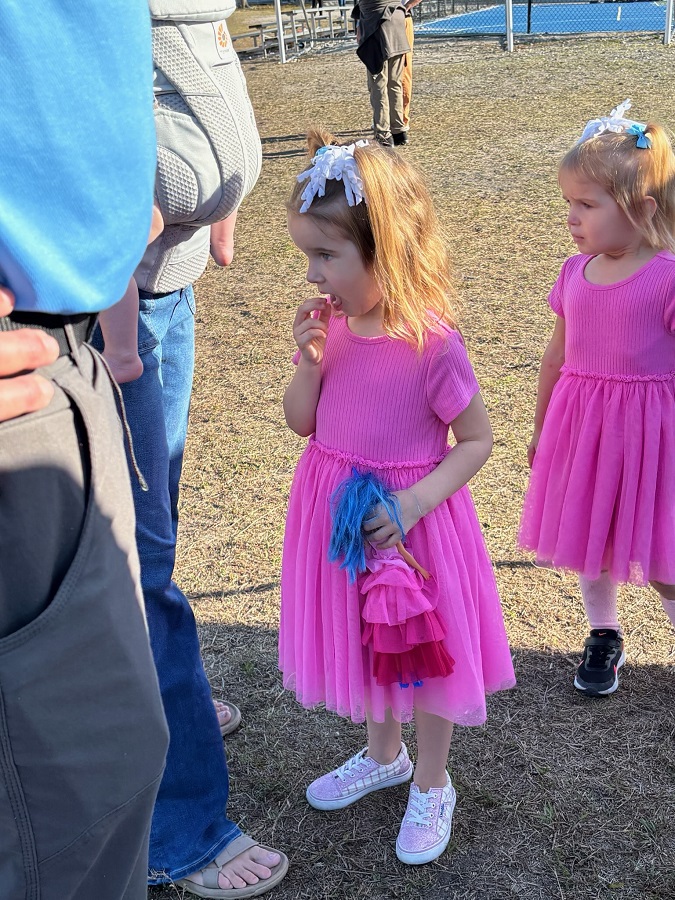
When asked how she felt, she replied, “I liked it.” When asked if she liked the clear balloon’s color, she didn’t have a preference, but her sister jumped in; she’d have picked pink.
Leslie Rankin, an EARS volunteer, felt thrilled about the moment. “Now we can start tracking it. This is such an amazing and wonderful project for the kids and for our organization. I am hoping it travels around the world. Some of them go around a couple of times, they really do!”
Real science. Real students. Real data: sometimes, the best lessons just float up and away.
*Note: Students’ last names have been withheld to protect the privacy of the minors.
Story update: Since publication, Englewood REVIEW received this email on February 25, 2026, from Bill Reed at EARS:
“Since leaving Englewood, The Sky Academy and Englewood Amateur Radio Societies launch of the 15-gram Pico Balloon, it has crossed pass halfway around the world. As of this morning when it sent out data it was in South Central China and looks to be on track to exit just grazing the south end of Japan.
The countries that it has crossed are the following:
Bahamas, BVI, Antiqua, Montserrat, Saint Kits/Nevis, Guadeloupe, Western Sahara, Mauritania, Mali, Algeria, Niger, Libya, Egypt, Israel, Saudi Arabia, Jordan, Iraq, Iran, Turkmenistan, Uzbekistan, Tajikistan, India, China.
Since just before Africa, it got into the Jet Stream and at times the winds have been 177 Miles Per Hour. The communications were very sporadic overnight. Usually when it wakes up in the sun it transmits pretty much error free. Overnight while I was monitoring it wasn’t reporting when it should have had enough sun to do so. Later on, it was able to send out its Grid Square and while that’s not much, it was enough to let us know it was okay and the approximate location. Then we received three complete data transmissions before losing daylight. The problem with the communications were due to how remote the area is with very few Ham Radio operators in these countries.
It has been a learning and fun experience for the students and us older folks as well.
Bill Reed
K7WWR.”