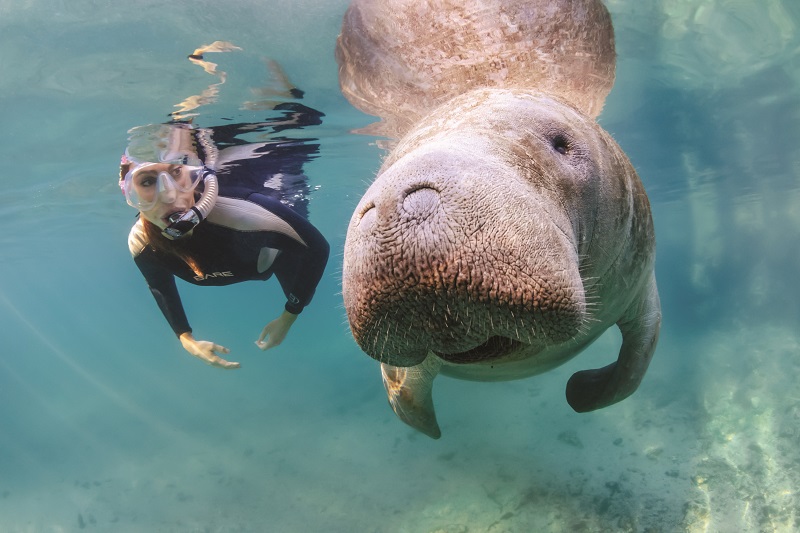
Manatees really are amazing animals. People call them “sea cows,” and it fits. They’re chill, plant-loving giants who move through the water with such calm grace. But don’t let that fool you. These animals are way stronger and more agile than you’d think. They can swim fast when they want to, roll around, and even body surf. They’re also big on socializing, especially moms with their calves, and they depend on warm water to survive, which puts them at risk when boats come around.
Let’s talk size. Manatees can top 10 feet and weigh over 1,000 pounds, sometimes a lot more. Most days, they cruise along at 3 to 5 miles an hour, but if something spooks them, they shoot up to 20 mph. They’re not just floating along; they’ll swim upside down, do barrel rolls, even somersaults. Despite all that mass, they have a gentle, almost huggable vibe. Some manatees even mistake swimmers for moms and cozy right up.
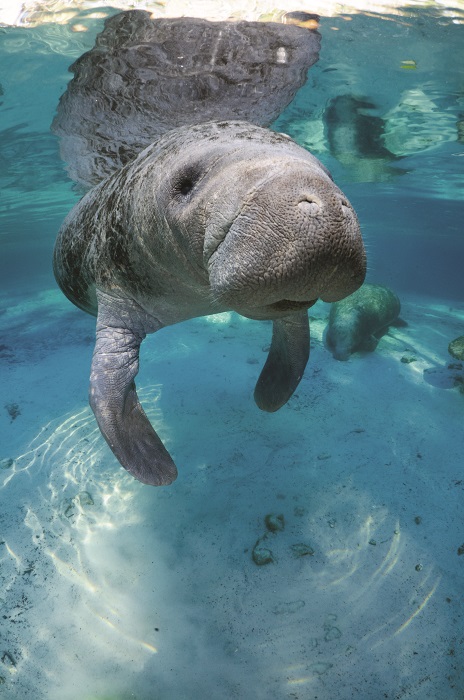
For food, they stick to plants, with no exceptions. A single manatee eats up to 10–15% of its body weight in seagrass and other aquatic greens every day. The way they handle their teeth is wild: as their molars wear down, new ones just keep moving forward from the back. They never run out.
Manatees can’t handle cold water, though. They don’t have blubber, so if the water dips below 68°F (20°C), they must find warm spots. You will find them gathering at springs or even near power plants in winter, just trying to keep warm.
They’re full of surprises. For one, they can hold their breath for up to 20 minutes, though they usually pop up for air every few minutes. Their senses are sharp, with great hearing, even though their ear holes are tiny, and good eyesight thanks to special membranes that protect their eyes.
And they’re smart. Manatees talk to each other with little chirps and squeaks, especially moms and calves, who stick together for years. They pick up tricks and remember people. No wonder so many folks fall in love with them.
Where to go for your best manatee experience:
If you’re hoping to spot manatees near Venice or Englewood in winter 2026, you’ve got a few great options.
Here’s where to go around Venice and Englewood:
Lemon Bay Park & Environmental Center (Englewood): This spot sits right in the Lemon Bay Aquatic Preserve. Stroll the docks and trails, especially early mornings from late fall through spring, and watch for manatees feeding on seagrass.
Venice Jetties (North Jetty at Nokomis Beach and South Jetty at Venice Beach): These rocky points are hotspots for manatees, dolphins, and seabirds, especially when the water gets chilly.
Shamrock Park (Venice): Locals often see manatees cruising through the intercoastal waterways here in the colder months.
If you’re up for some paddling, launch a kayak or SUP from Lemon Bay Park or near the jetties. You can weave through mangroves and seagrass beds where manatees hang out and feed.
Timing matters, too. Winter (November through March or April) is manatee season. Once the Gulf drops below 70°F, they move into the bays and canals. Early mornings are usually best. The water’s calm, the crowds are thin, and the manatees are active.
If you come up empty nearby, don’t worry. Manatee Park in Fort Myers is just about an hour south, with viewing platforms and kayak rentals—perfect during a cold front. Or, if you’re up for a longer drive, Crystal River and Homosassa Springs where hundreds of manatees gather in the springs each winter.
Pro tip: check the weather. On warmer days, manatees might leave the shallow areas, but a cold front usually brings them right back in.
Some quick tips to spot them:
– Grab polarized sunglasses to cut down the glare and see beneath the water.
– Head out early, before the sun warms things up and the manatees move around.
– Want a close encounter? Try a kayak or paddleboard through mangrove tunnels and canals.
– Keep your ears open for the classic “whoosh” sound when they come up for air.
And don’t forget, manatees are protected. Watch from a distance, never touch or feed them, and if you’re in the water, move slowly and stay quiet. Let them do their thing.