
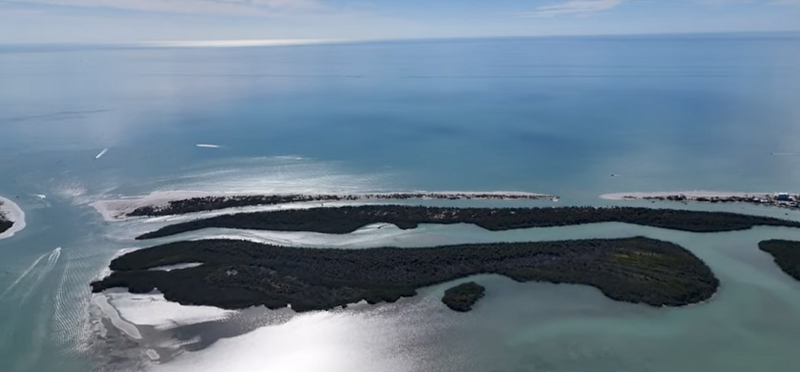
Florida’s plan to close Milton Pass has split Englewood. Some see the new pass as a blessing, a convenient shortcut to the Gulf, carved by Hurricane Milton north of Stump Pass. Others aren’t so thrilled. They worry it’s disturbing the sand flow, could speed up the loss of Stump Pass, and, maybe worst of all, it cuts the state park in half.
Officials made it clear at the Charlotte County Commissioners meeting: they don’t want two passes competing for the same stretch of Manasota Key. The county’s consultants, led by Michael Poff from Coastal Engineering Consultants, want to keep Stump Pass as the main navigation channel, keep the beaches healthy, and don’t let the new pass throw the system out of whack.
Milton Pass is deep, approximately 10 feet in the center, and will not close on its own. Historically, Stump Pass sat right about where Milton Pass is now, until hurricanes shifted it south in the late 1800s. That only adds to the feeling that these barrier islands are always changing, but officials aren’t eager to let nature run its course this time.
Here’s the technical problem: there’s only so much water moving between the Gulf and Lemon Bay. With two passes open, neither works as it should. That means less efficient navigation, and down the road, possible erosion on Englewood Beach.
Meanwhile, beach recovery is another important issue. Hurricanes Helene and Milton chewed up the barrier islands and dumped piles of sand everywhere. The county had two choices: patch up the worst storm damage or go all-in and restore the beaches and dunes. Commissioners went with the second option, a $34.2 million project.
The debate over Milton Pass isn’t just about access or scenery, it’s about keeping the beaches alive, protecting navigation, and figuring out who pays to put things right. When it comes to beach restoration and storm damage, that’s never a simple answer.