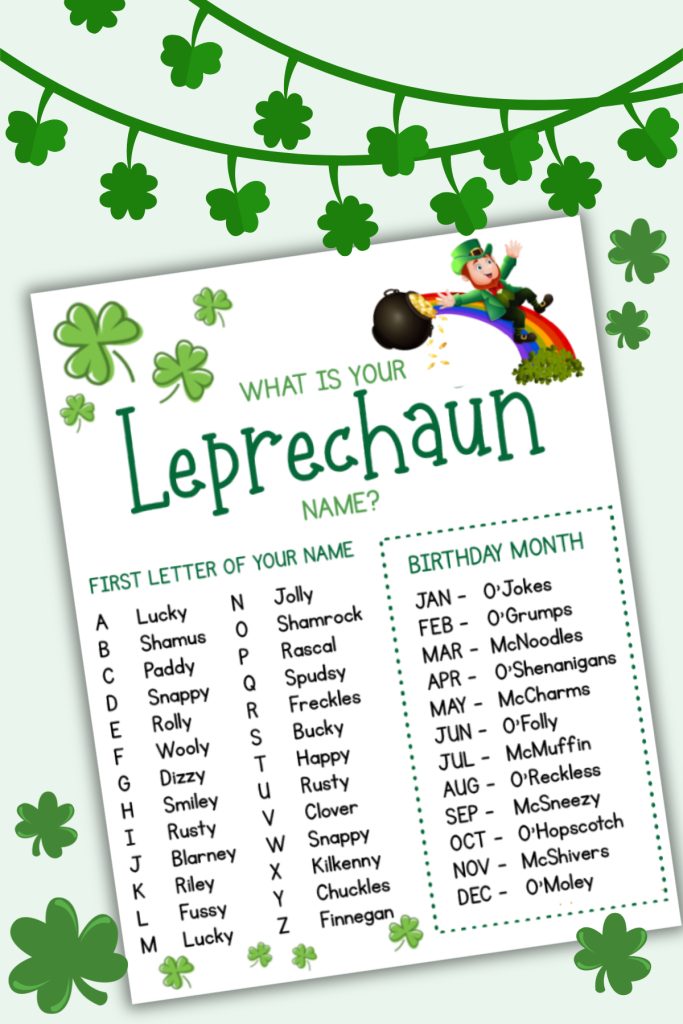
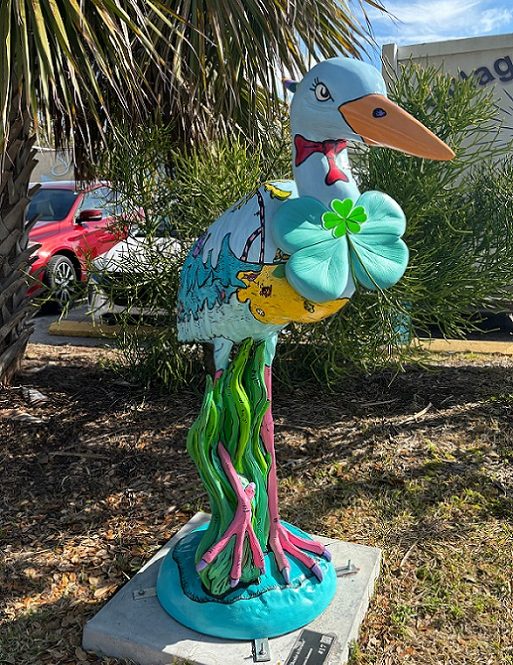
Happy St. Patrick’s Day: the one day everyone suddenly discovers their inner-Irish.
Remember, as kids, when you had to wear green or risk a sneaky pinch? It’s a day for playful pranks and goofy jokes, just like those mischievous leprechauns.
Why shouldn’t you iron a four-leaf clover? Because you don’t want to press your luck.
What do you call a fake Irish stone? A sham-rock.
If you see an Irishman doubled over laughing, you know he’s just Dublin over with laughter.
That’s leprechaun humor at its finest.
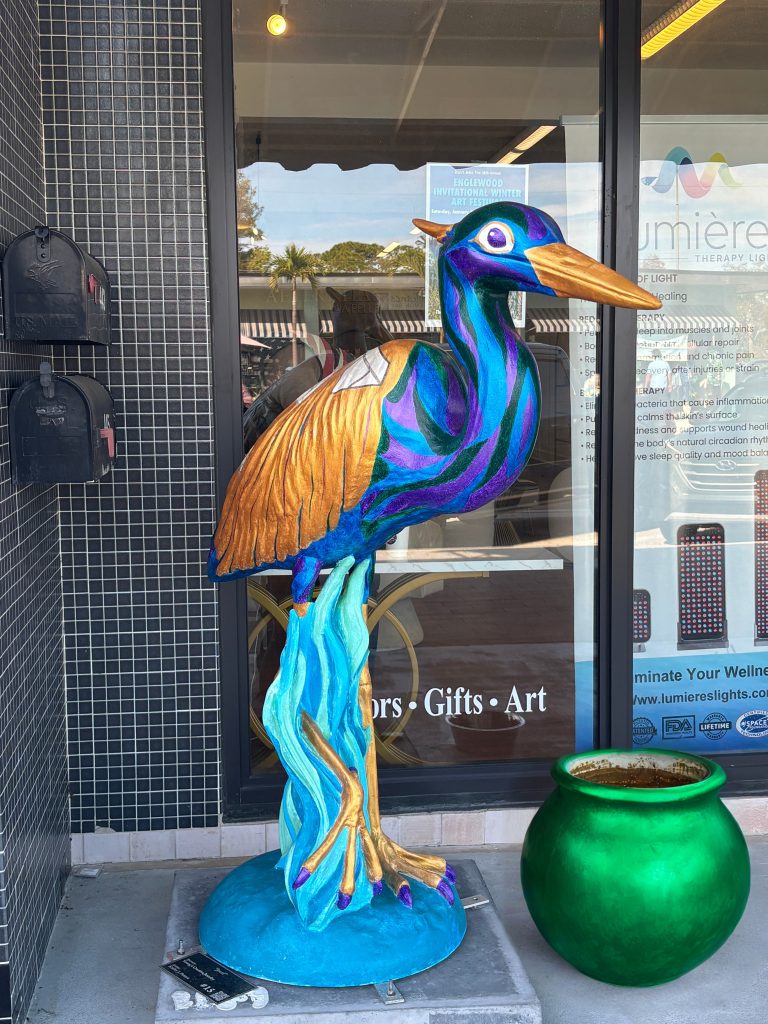
Did you know that the first St. Patrick’s Day celebration in the United States was held in Florida?
Most people think the first St. Patrick’s Day parade in America happened in Boston or New York, but most don’t realize that Florida actually beat them to it.
Back in 1600, St. Augustine, Florida, hosted the earliest known St. Patrick’s Day celebration in what would become the United States. A year later, on March 17, 1601, the town held the first parade, organized by an Irish priest named Ricardo Artur. That’s over 160 years before New York ever saw one. Back then, it wasn’t about green beer or big floats. The day was a religious feast honoring Ireland’s patron saint, San Patricio, long before the holiday turned into the lively, secular bash we know today.
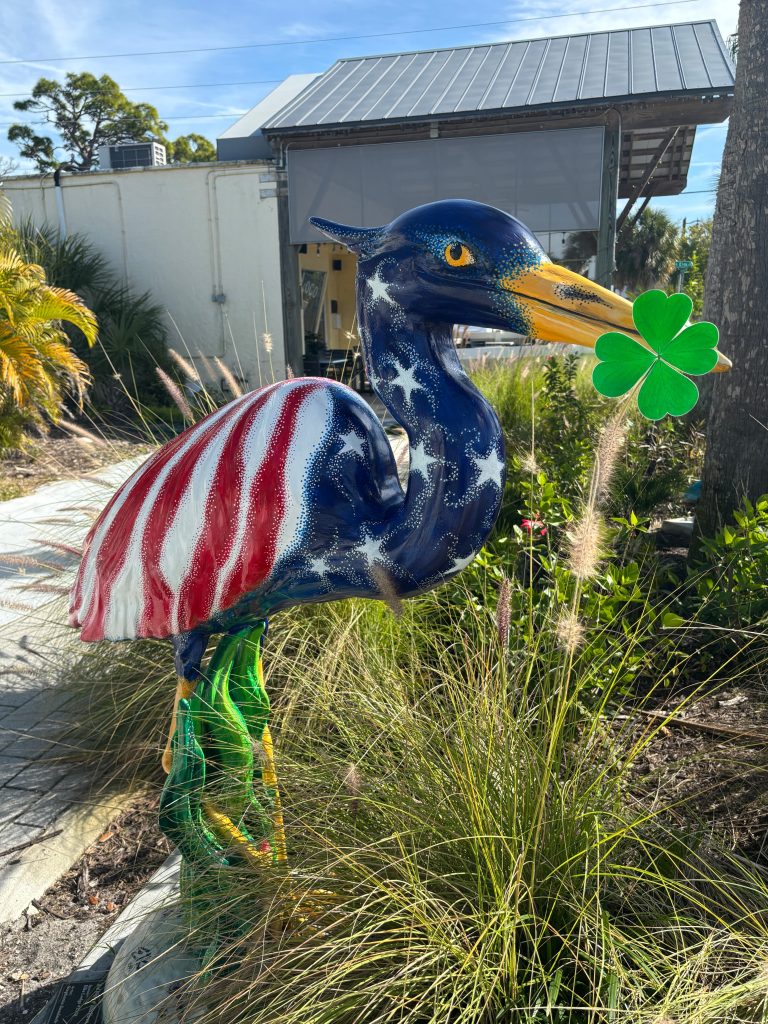
Englewood doesn’t have its own legendary St. Patrick’s Day origin story, but it’s still part of this rich Florida tradition.
These days, the town joins in with the rest of Southwest Florida to celebrate. You’ll find live music, plenty of Irish-themed food, corned beef and cabbage, of course, and folks gathering at local pubs and community centers.
St. Patrick’s Day is a big deal for the local crowd, especially retirees and snowbirds who love a good reason to get together. And yes, you’ll spot a lot of green. That whole “wear green or get pinched” tradition? It’s actually more of an American invention than an Irish one, but it’s all part of the fun.
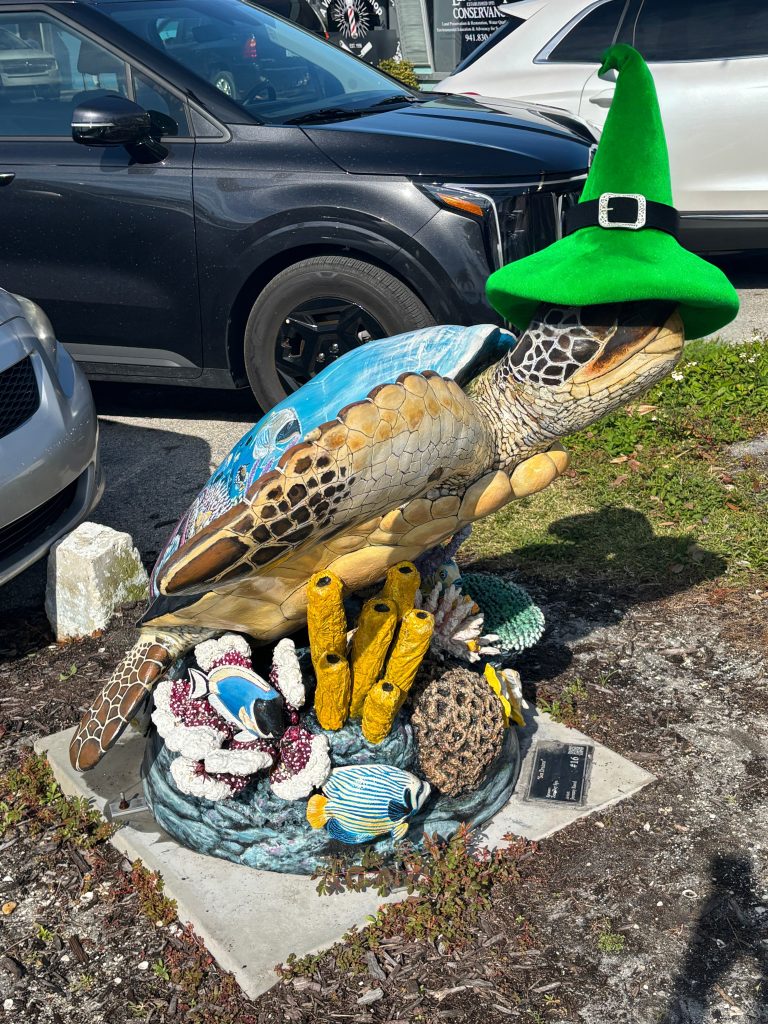
Looking for something beyond the usual McDonald’s Shamrock Shake this holiday? Englewood’s got you covered. All over town, local spots are putting their own spin on the celebration: think hearty corned beef and cabbage, festive cookies, bakery treats, and even a few unexpected drinks to go with your classic green beer. There’s no shortage of flavor or fun here.
St. Patrick’s Day Trivia
1. What’s another name for St. Patrick’s Day?
People also call it the Feast of Saint Patrick.
2. Where was Saint Patrick actually born?
He was born in Roman Britain, which now means somewhere in England, Scotland, or Wales.
3. How long does the NYC St. Patrick’s Day parade last?
It goes on for over five hours. It’s practically a marathon.
4. How much green dye does it take to turn the Chicago River green?
They use 40 pounds of green vegetable dye every year.
5. What do some historians think St. Patrick’s real name was?
Some say his real name was Maewyn Succat.
6. According to legend, what happened during one of St. Patrick’s hillside sermons?
The story goes that while he was speaking, he chased all the snakes out into the sea.
7. What color was first connected to St. Patrick?
Blue, believe it or not.
8. What did St. Patrick use to explain the Holy Trinity, according to legend?
He used the shamrock.
9. What’s another name for Ireland?
People call it “The Emerald Isle.”
10. What does St. Patrick’s name actually mean?
“Patricius” comes from Latin and means “father figure.”
11. Why did Belfast wait until 1998 to hold a St. Patrick’s Day parade?
Protestant hostility toward Irish national symbols kept the parade away for years.
12. How many Americans send St. Patrick’s Day cards each year, according to Hallmark?
A huge 12 million people exchange cards.
13. Why did St. Patrick’s Day happen in May instead of March once?
In 2001, a foot-and-mouth outbreak hit Ireland, so Dublin’s parade moved to May. Even then, 1.2 million people showed up.
14. From 1927 to 1961, where was the only legal place to drink in Ireland on St. Patrick’s Day?
The RDS Dog Show. That was it.
15. Is St. Patrick’s Day America’s top drinking holiday?
Nope—it’s number four, behind New Year’s Eve, Christmas Day, and the Fourth of July.