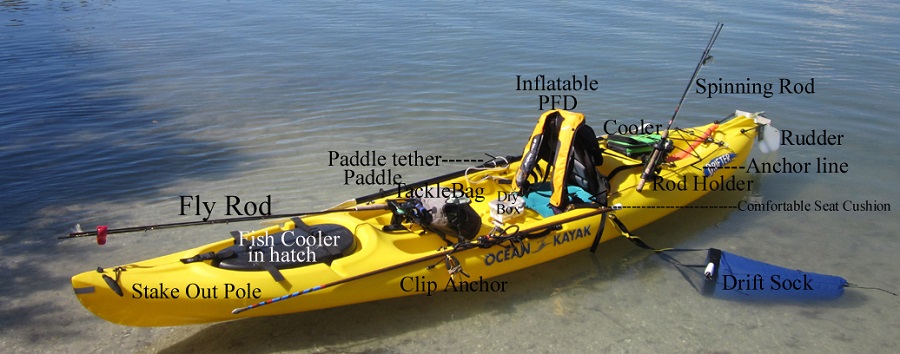
Think small and minimal when choosing kayak fishing gear. The first change will be from a big tackle box to a small tackle bag that carries only what you really need. We both have two small bags for tackle and tools: one for saltwater trips and another for freshwater. There are some tools common to each bag, but having duplicates eliminates transferring them from bag to bag for different trips, so we end up forgetting less stuff.
The tools in both bags include long-nose pliers, a de-hooking device [catfish flipper], serrated scissors for braid, a small lip gripper for controlling toothy fish, a small knife for cutting bait, and a stringer [metal clips on nylon rope type]. Small spools of 20 and 40 lb. fluorocarbon leader and a short length of tie-able wire leader for mackerel are in other pockets along with popping corks, extra hooks, swivels, and split shot weights.
We organize these bags with plastic boxes. For saltwater, there’s one plastic box for jig heads in various weights and colors, with soft plastic shad tails (paddle tails) in natural colors. A second box holds artificial shrimp in various colors [measles is our favorite] although white and clear work well. We also make room for a small fly box since we both like to cast a Clouser or shrimp fly at schools of feeding fish.
The freshwater bag also has plastic boxes. One that organizes plastic worms, bullet weights, and hooks, and another for plastic frog lures and wide-gap 5/0 hooks for them. Be advised that many of the new tougher plastics will dissolve other lures and the boxes they’re in if not kept in their special packaging. Fly casters should also pack a small fly box with popping bugs, foam spiders, and other favorite flies for bass and panfish.
We are not fans of treble hook lures in a kayak. They cause damage to fish we release, plus the length of time it takes to release them makes mortality an issue. Beyond that, the thought of having one treble attached to a thrashing fish and another treble hooked in us is too scary. When we use hard-body lures, we modify them to only have one single hook. Stay safe and have fun!
We use two-piece spinning rods in the 6’-7’ range that break down when paddling through mangroves, under bridges, or on small creeks. Our 2000-size reels are loaded with 10 lb. braid and 2 ft. of 20 lb. fluorocarbon. It’s light tackle for this area, which allows for long casts with light lures in shallow water. Yes, we lose some fish, but each lost fish makes a great “one that got away” story. For fly enthusiasts, we recommend a 9’ two-piece 8 weight rod with floating weight forward line and 8 ft. of tapered 1X leader is our default rig. We usually add a 12” bite tippet of 20 lb. fluorocarbon’s leader too. Keep all your reels elevated above the deck with rod holders to avoid a saltwater soaking.
Of course, you’ll want a small soft-sided cooler for beverages and snacks and a dry bag to carry your personal items and foul-weather gear. This time of year, include a warm fleece for loading the kayaks as the sun sets. Don’t forget bug repellent and first-aid items. We wear long-sleeved shirts and protective hats and gloves to protect us from the sun, and we recommend 50+ lotion on any exposed skin. We pay particular attention to the tops of our feet when kayaking and on the beach.
These are just a few basics we want to share with folks who are joining the growing number of kayak anglers in southwest Florida. Check out our waterproof guide for more launches, tackle suggestions, riggings, tactics and techniques that can quickly help you become a successful and safe kayak angler in Southwest Florida. www.anglerpocketguides.com
Kimball and Les Beery, authors of Angler’s Guide to SHORE and KAYAK Fishing Southwest Florida, contribute these excerpts from both WATERPROOF books to promote the excellent fishing available in the Englewood area. They are available locally at Old Florida Gallery on West Dearborn, and for download at www.anglerpocketguides.com & amazon.com.