Flooding in South Florida has pushed snakes out of their usual hiding spots and right into neighborhoods. Wildlife trappers have seen their call volume triple. The reason is the recent increase in rainfall. It’s driving snakes from the marshes and underbrush straight into garages, yards, and houses.
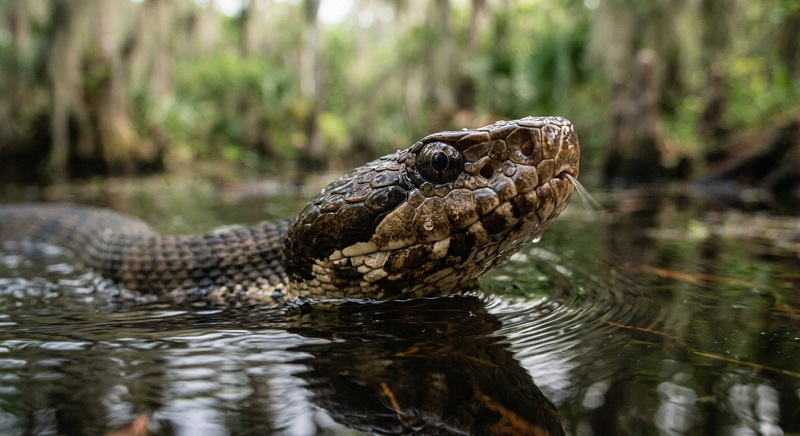
Jay, a trapper with Treasure Coast Wildlife Trappers, says he’s already pulled out close to 50 snakes in the past month according to WPBF. We’re talking about venomous ones too, rattlesnakes, water moccasins, coral snakes. And it’s not just happening near canals or wooded lots anymore; snakes are turning up anywhere you’d least want to see them: next to patios, at front doors, where kids and pets play.
Jay tells stories of finding snakes under porches, inside garages, and even visiting a vet clinic where a rattlesnake settled just outside the door. “The water levels are bringing them up. They want to stay dry, so they head for higher ground,” he explains. With so much flooding, dry spots like driveways and the edges of buildings feel just right for a snake trying to escape the rising water.
Everyday activities, like opening a garage, letting the dog outside, even just walking into the backyard, could suddenly put you face-to-face with a stressed, unfamiliar snake. With the animals displaced and anxious, these run-ins are riskier than usual.
The good news: snake activity should drop off once the weather changes. As the rains slow and temperatures cool, the critters will slip back to where they came from. Experts say this spike in sightings isn’t permanent, just a reaction to the recent flooding.
But if you spot a snake at your place, don’t handle it, and skip the urge to kill it. Call a professional. Dealing with venomous species is a job for someone who knows what they’re doing. Plus, snakes play an important role in the ecosystem.
It’s not just Florida. All over, floods are sending snakes into developed areas. Firefighters have pulled Burmese pythons out of Florida homes. Across the Mid-South, snake encounters shot up 50 percent after heavy rains. Scientists in Florida have tracked the spread of invasive pythons, even using “scout” snakes to haul out over 8,000 pounds of pythons. And in Arkansas, videos show snakes taking over abandoned properties.
What brings snakes close to people? High water fills up their burrows and marshes, so snakes head for dry ground: house foundations, garages, sheds, porches, anything that’s above the flood line. Prey animals like rats and frogs move too, luring hungry snakes right along with them. Both harmless and venomous species, including rattlesnakes, cottonmouths, and coral snakes, often turn up near schools, yards, and driveways when the weather gets bad.
If you live in a flood-prone area, take a few precautions. Don’t catch or corner a snake. Most bites come when someone’s trying to handle them. Look before stepping into garages, storage spaces, and clutter left by the storm. Pull on boots and long pants if you’re cleaning up debris or walking through standing water. And if you find a snake indoors or somewhere risky, call a wildlife expert.
If someone or a pet gets bitten, call 911 immediately and contact Florida Poison Control at 1-800-222-1222 or via Florida’s Poison Control Centers.
Private Wildlife Removal and Pest Control: Companies that specialize in reptile and snake removal (such as Florida Snake Removal / Northwest or national/regional nuisance wildlife operators like Critter Control at 1-800-274-8837) offer 24/7 or same-day emergency removal for venomous snakes.
Local code enforcement, animal control, or the Florida Fish and Wildlife Conservation Commission (FWC) generally do not dispatch personnel to remove nuisance snakes from inside private residences; they typically handle wildlife crimes, injured animals, or provide educational resources. FWC Wildlife Alert Hotline is 888-404-3922.