When you ask Americans what food defines their state, you won’t get a simple answer. You’ll get stories, memories of Sunday suppers, after-school snacks their mom always made, potluck dishes piled high at every family gathering. Locals will tell you what visitors absolutely need to try if they want a taste of the authentic place.
These state favorites didn’t just appear out of nowhere. Geography, migration, and history all shape what ends up on the table. On the coasts, seafood rules. In farming states, it’s all about hearty comfort food. Barbecue recipes handed down for generations are the stars in cattle country, and you’ll find Indigenous and immigrant influences woven throughout regional favorites everywhere else. Some dishes get official recognition; others just earn fierce loyalty. A few even spark heated debates between cities or neighboring states.
What people eat, how they celebrate, and how they remember where they came from, all of that comes through in these foods. Instead of narrowing it down to a single “signature” dish per state, we’re looking at the food folks love most. These dishes are personal, and together, they sketch out a living culinary map of America, one that’s shaped by the people who live there, not by some internet listicle.
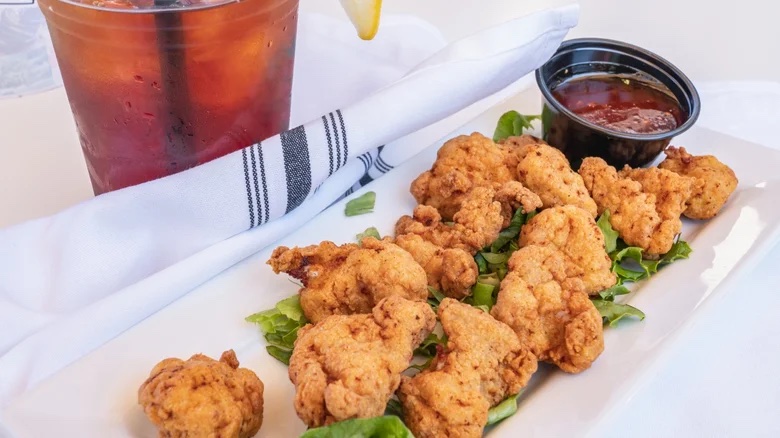
Take Alabama’s fried green tomatoes, or Arkansas’s possum pie. In Florida, nothing sums up the local flavor quite like fried gator. It comes straight from the swampy heart of the state. Alligators are found everywhere in the state, especially in the Everglades, and now many are farm-raised for food. You’ll spot fried gator at fairs, tailgate parties, and more and more often on restaurant menus. Usually, it’s served as nuggets, ribs, or even “wings.” The meat’s mild, slightly chewy, and you’ll almost always get some dipping sauce on the side.
Fried alligator isn’t just a modern trend; it’s rooted in “Old Florida” cooking. Indigenous tribes like the Seminole and Timucua first used alligator as subsistence food, often smoking the meat. Over time, it became a local delicacy.
By the 1960s, overhunting had pushed alligators onto the endangered species list, making it illegal to eat them. But after a major recovery, the ban was lifted in 1987, and alligator farming took off. That’s when deep-fried gator tail really took hold on restaurant menus, transforming the reptile into a homegrown, sustainable “white meat” packed with protein.
Today, gator meat is a proper agricultural product in Florida. Restaurants across the state serve up farm-raised alligator, often with a Southern, Creole, or Cajun twist, but not limited to those styles. Fried alligator bites—sometimes called “swamp chicken”—are now a Florida staple, known for their mild flavor, firm texture, and lean, high-protein, low-fat appeal. The dish is as much a part of Florida’s story as its sunshine and swamps.