In the mid-1950s, a group of 26 young Black artists in Fort Pierce and Gifford, Florida, decided they weren’t going to wait for anyone’s permission to make art. Segregation kept them out of galleries, so they took matters into their own hands. These 26 artists are known today as The Florida Highwaymen.
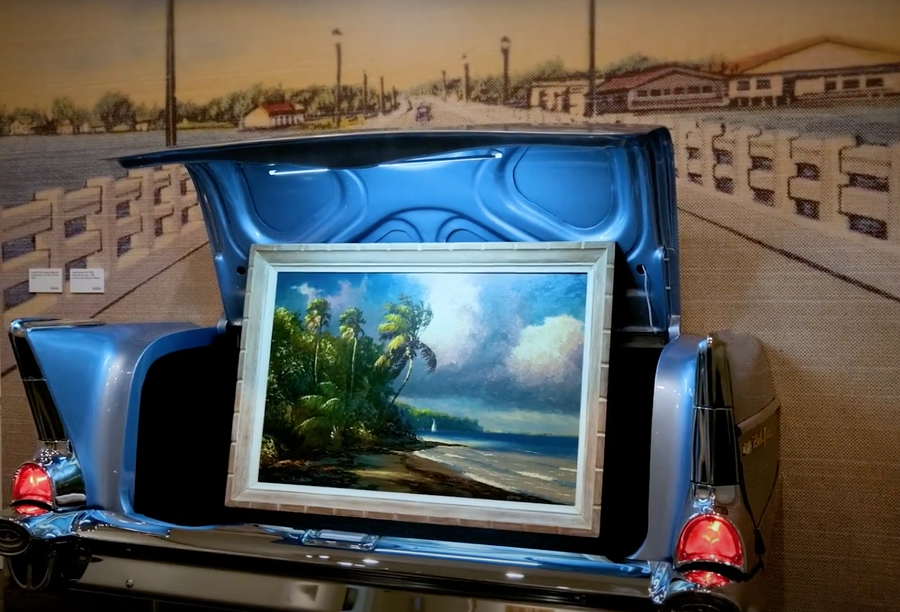
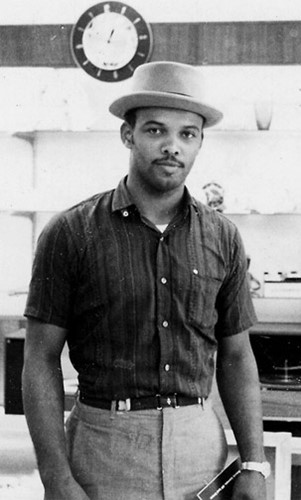
Back then, most career paths open to Black men led to fields or factories. Group founders Harold Newton and Alfred Hair weren’t interested. Instead, they painted fast, sometimes so quickly the paint was still wet when they loaded finished canvases into their car trunks. They’d cruise up and down U.S. 1, stopping at businesses, offices, anywhere tourists gathered, selling their vivid Florida landscapes for about $25 each. No galleries, no gatekeepers, just the open road and their own hustle.
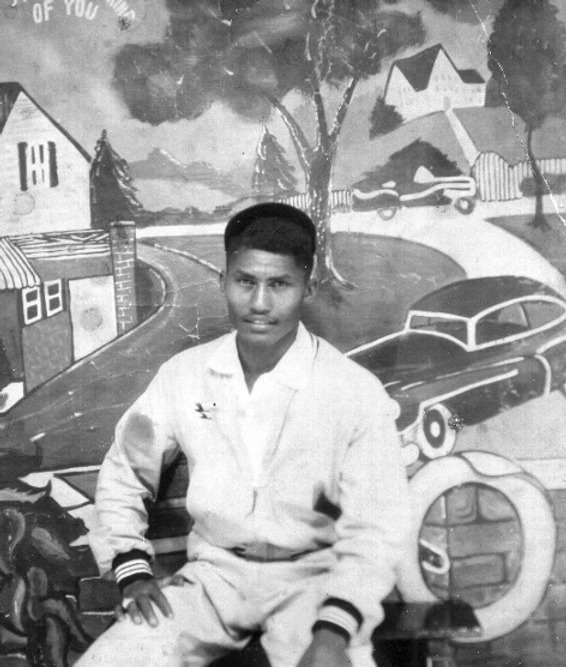
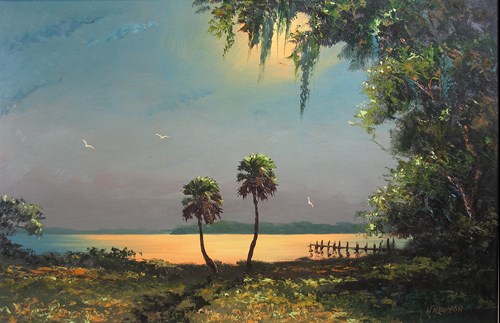
Their paintings captured the wild, lush beauty of “old Florida”—poinciana trees blazing with color, empty beaches, quiet backwaters. Over the years, they produced nearly 200,000 of these scenes, and postwar homeowners and mom-and-pop hotels and motels snapped them up.
The artists didn’t call themselves the “Highwaymen” until much later. It wasn’t until the 1990s, when collectors and dealers started paying attention, that the name stuck, an outsider’s label for their roadside salesmanship.
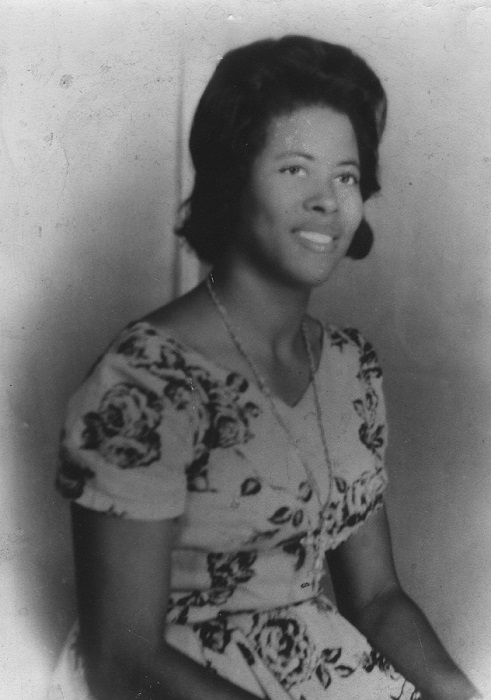
Of the 26 artists, a few stand out for the sheer force of their talent and ambition. Newton and Hair were at the heart of the movement. Mary Ann Carroll, the sole woman in the group, carved out her own place in this story too. Together, they changed the face of Florida art, not by waiting for acceptance, but by creating their own path.
Finding Their Own Voice
With guidance from A.E. “Bean” (or “Beanie”) Backus, a white landscape painter who didn’t just teach them technique but also pushed them to find their own voice, artists like Alfred Hair and Harold Newton started something bold.
What mattered most to these enterprising artists was the work, painting Florida’s wild beauty from the mid-1950s to the mid-1980s. Their spark came from Backus, a well-known landscape artist. Hair met Backus on a school trip. Hair started building canvases for Backus, picked up his painting techniques, then worked by his side, changing things up to fit his own style and to make money fast.
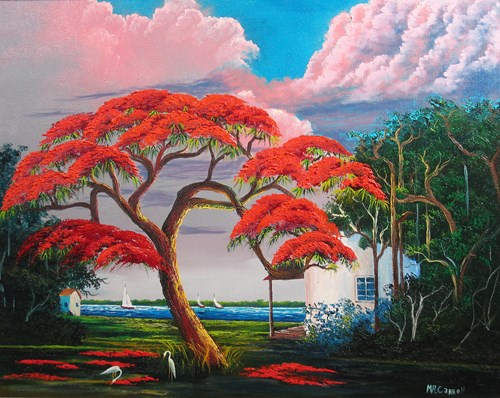
Forget fancy studios. They worked in carports, sheds, backyards, wherever they could set up. Segregation kept them out of galleries, so they sold paintings from the trunks of their cars along highways like A1A and U.S. 1, from Daytona Beach down to Miami. Motels, banks, doctors’ offices, real estate companies, anyone with a wall was a potential customer. The going price of $25 per painting beat picking citrus or scraping by on minimum wage.
During the Jim Crow era, art gave them economic freedom that most Black Floridians couldn’t even imagine. In 1995, art dealer Jim Fitch gave them the name “Highwaymen,” inspired by how they sold art along the highway. In 2004, the group was inducted into the Florida Artists Hall of Fame.
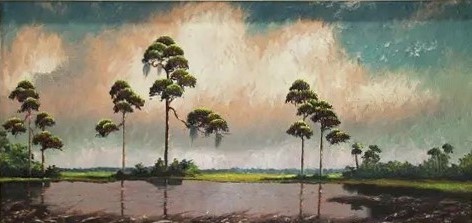
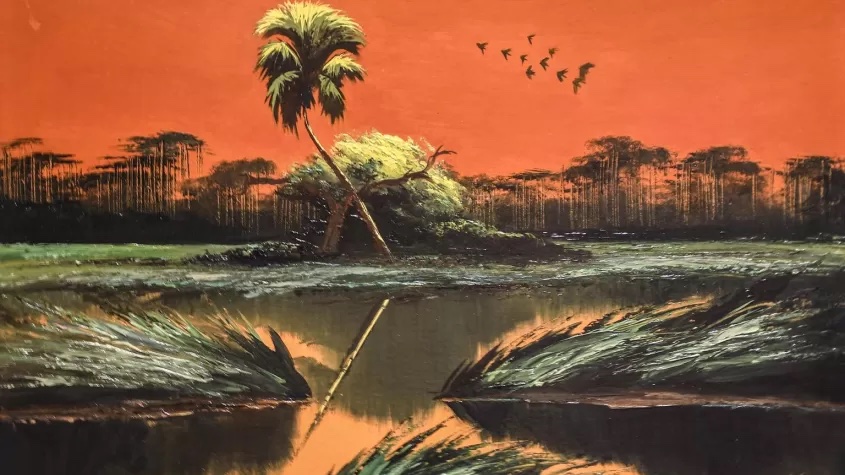
You can spot a Highwaymen painting right away. They captured Florida before condos and highways took over; think moss-draped cypresses, palm trees swaying in summer breezes or thrashing in hurricanes. Sunrises, sunsets, marshlands, native wildlife—it’s all there, vivid and alive.
The Southwest Florida Connection
The Highwaymen didn’t just stick to painting scenes of their home turf. From the 1950s through the 1980s, they expanded their trail past U.S. 1 and hit the road across Florida, selling their vibrant landscapes to anyone who’d buy them.
Southwest Florida was on their route, too. Residents and businesses there bought paintings straight from the artists from the back of their trucks.
These days, Highwaymen art is still a big deal in Southwest Florida. You’ll find exhibitions and appraisals in places like Fort Myers, with original works frequently pop up in local museums.
The Southwest Florida Museum of History, for example, has hosted “Sons of the Sun: The Highwaymen,” showing off pieces from private collections. Local art professionals even specialize in appraising and selling these paintings, many of which are done with oil paint on Upson board, a widely used construction building material that was cheap and easy to get back in the day.
Some of the original artists, like Curtis Arnett and Doretha Hair Truesdell, still show up for events in the region, like at Bay Preserve in Osprey. Their legacy isn’t fading. If anything, it’s becoming an even more celebrated part of Florida’s art history.
The Highwaymen Today
Only about half of the original 26 artists are still around, and some of them still travel the state meeting fans. At a recent event at the Orange County Regional History Center, six of the original Highwaymen showed up to sell art, sign autographs, and pose for photos. Their presence still draws crowds.
The Highwaymen weren’t based in Southwest Florida, but the entire state, its wild, natural side, inspired their work. Today, Highwaymen paintings are some of the most sought-after pieces in Florida, treasured by collectors from coast to coast.
The Highwaymen might not call Southwest Florida home, but their art draws crowds here all the same. Sarasota, Bradenton, and Osprey regularly host their exhibitions, and these events have become local highlights.
Looking ahead to 2026, there’s plenty on the calendar.
On February 1, Bay Preserve in Osprey will hold a one-day show and sale from 11:00 a.m. to 3:00 p.m. You’ll often see original Highwaymen Curtis Arnett, Al Black, and Robert L. Lewis chatting with visitors and signing their work. Check out bigwaterslandtrust.org.
Later that month, on February 28, Palma Sola Botanical Park in Bradenton showcases original paintings from the 1950s and ’60s. Curtis Arnett usually makes an appearance there, too. Check out palmasolabp.org
If you’re in Sarasota, City Hall keeps a rotation of about two dozen Highwaymen pieces in its atrium, thanks to a partnership with the city. Selby Gardens also steps in, hosting big retrospectives like “Interstate Connections,” tying the Highwaymen story to Sarasota’s local African American heritage. For more information, selby.org.
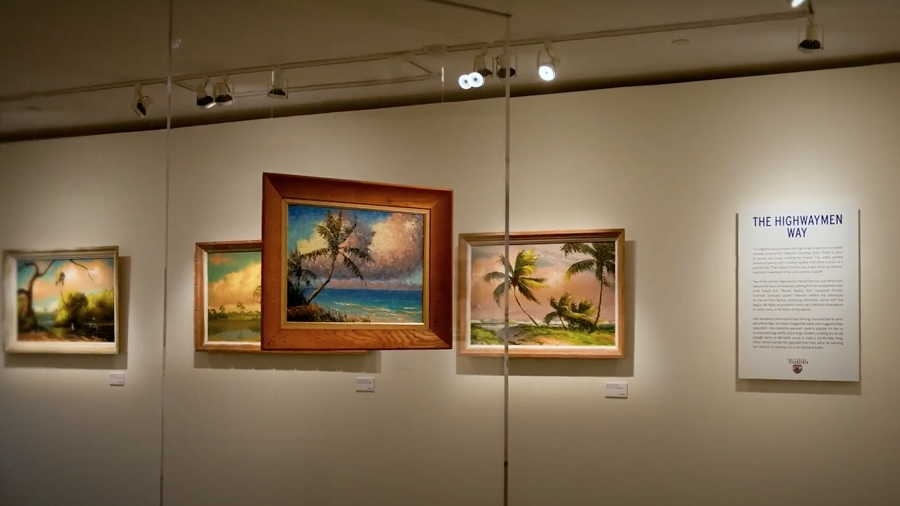
The A.E. Backus Museum & Gallery in Fort Pierce stands as the Highwaymen’s main headquarters, even if it’s a drive across the state. Every February, they throw a major celebration weekend. Mark your calendar for February 13–15, 2026. Collector Roger Lightle also takes the show on the road; curating traveling exhibits that pop up in Southwest Florida galleries and civic centers. Check out backusmuseum.org.
Want to do more than just look? Try a “Paint Like the Highwaymen” workshop. The Visit Fort Myers calendar lists hands-on, three-hour classes where you can test out their fast-painting style for yourself. But hurry, as the next class is February 4, 2026, 1:00 p.m. to 4:00 p.m. For information, see visitfortmyers.com.
The Legacy of The Highwaymen
Here we are in 2026, enjoying the legacy these remarkable people built decades ago. Some of the Highwaymen are still out there, brushes in hand, painting away.
We’re the lucky ones. The Highwaymen gave us more than art. They gave us something as unique as they were. You look at their work, and it hits everyone a little differently. Beauty really is in the eye of the beholder.
The Highwaymen tell a powerful story, packed with decades of raw creativity. So many artists, so many lives touched by their paintings. The Highwaymen are the definition of the American Dream. Perseverance, luck, a dash of fate; they had it all. They pushed forward, young and full of fire, ready to shake things up, which they did.
We all owe them a debt of gratitude that they captured the beauty of old Florida, the Florida before the highways and condos took over. There’s something special about seeing that world through their eyes. Progress rolls on, for better or worse.
Their work isn’t just about creativity, it’s about culture, about history, about the world in which they lived. They chronicled it all: society, nature, the changing land. And through their eyes, the eyes of an artist, they managed to capture the color and energy of what was once The Sunshine State.