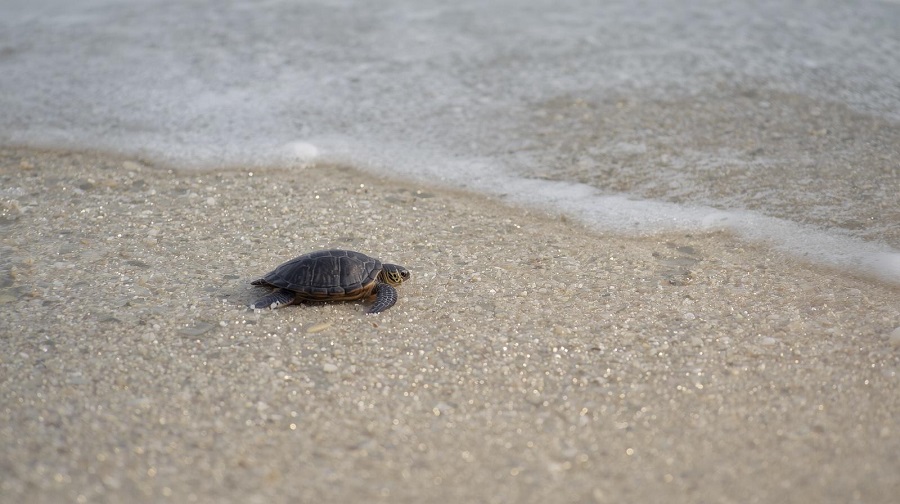
Every year from May through October, sea turtles arrive on Florida’s Gulf Coast beaches to nest, with loggerheads showing up in greater numbers than any other species. You’ll also see Green, Kemp’s Ridley, and the enormous Leatherback turtles laying eggs, mostly on wide, sandy stretches. Gulf County stands out, home to about 28% of all loggerhead nests in Northwest Florida. Other hot spots? Perdido Key State Park and the Gulf Islands National Seashore.
Now, when nesting season rolls around, it’s especially important for everyone on the beach to play their part. That means keep things dark, turn off or shield lights so hatchlings don’t get confused. Pick up your stuff, whether it’s chairs, umbrellas, or kids’ toys, so turtles don’t get blocked on their way to or from their nests. And don’t forget to smooth out any holes or sandcastles, since those can trap tiny hatchlings.
If you’re lucky enough to spot turtles, remember: no flashlights, no flash photos, and give them plenty of space.
Loggerheads, at about three feet long and over 275 pounds, are the regulars here. Greens can reach up to 500 pounds thanks to their hefty shells. Kemp’s Ridleys are the rarest and smallest, barely hitting the 100-pound mark. Then there’s the Leatherback: these massive turtles can grow to seven feet and weigh up to 2,000 pounds.
When cold snaps hit, sea turtles sometimes need help. Organizations like the Audubon Institute step in to rehabilitate them, getting them back to the Gulf where they belong. So, whether you live here or you’re just visiting, you’ve got a role to play in keeping Florida’s beaches safe for these amazing creatures.