
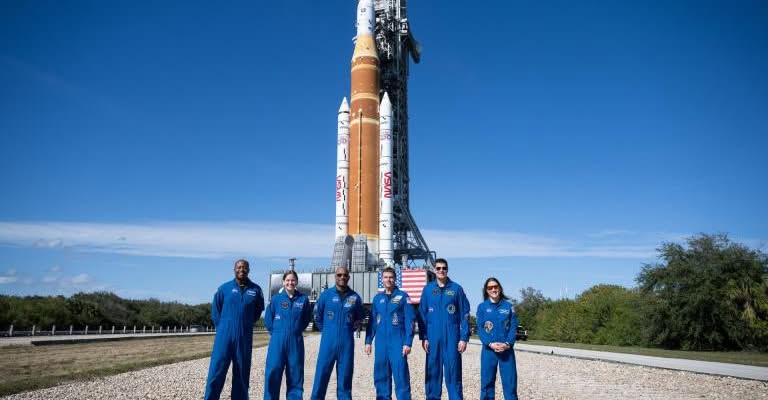
Anyone living on Florida’s west coast, from Tampa, Punta Gorda, and as far south as Ft. Myers, stands a real chance of spotting the Artemis II launch, as long as the weather cooperates. The Kennedy Space Center on the east coast offers front-row seats, but the sheer power and size of the Space Launch System (SLS) rocket lets people across the state catch a glimpse once it lifts off.
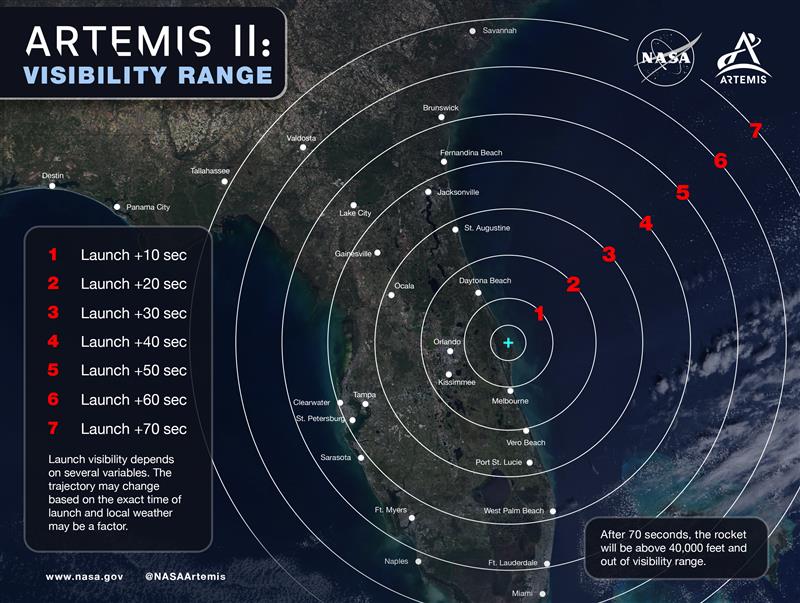
You probably won’t see the rocket right at launch. It needs to climb high enough to break the horizon from the west coast, so expect it to appear about 2 to 4 minutes after liftoff as it rises into the upper atmosphere. Folks over the years have watched major launches from their backyards, and there’s something exciting about the anticipation.
Timing makes a big difference. The launch window opens Wednesday, April 1, 2026, at 6:24 p.m. ET. If Artemis II goes up closer to 8:24 p.m., just as the sun is dipping down, you might get a striking “twilight phenomenon,” which is the rocket’s plume glowing against a fading sky, making it easier to spot from miles away.
Some things could block your view. Clouds are enemy number one. Even if Artemis II launches right on schedule, thick low clouds between SWFL and Cape Canaveral mean you’ll miss the show. The rocket heads East/Northeast out over the Atlantic, so it’s moving away from the west coast, but its engines and size usually make up for the distance. Aim for a wide-open spot, a beach, rooftop, or park, with a clear view toward the east/northeast horizon, and you’ll have the best shot at seeing history in the making.