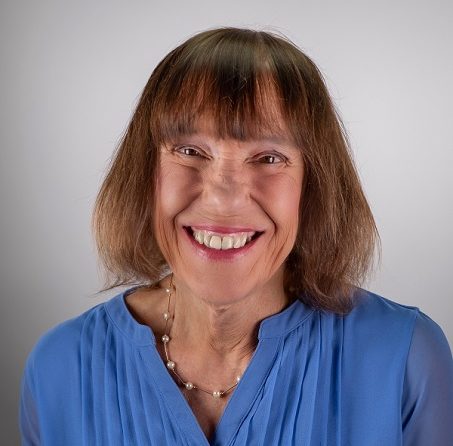

Matthew Montavon, Democratic candidate for Florida’s 17th Congressional District, brings decades of public service, fiscal expertise, and grassroots leadership to his campaign.
Raised in a large family in South Bend, Indiana, Matthew learned the values of teamwork and hard work early on, working various jobs from farmhand to janitor before earning a degree in Political Science and Spanish from the Catholic University of America and a Master’s in Public Administration from Indiana University.
Matthew’s extensive career is defined by global and domestic service. He served in the Peace Corps supporting rural farming communities in Central America, assisted migrant workers through the Illinois Migrant Council, and worked with regional planning councils and the Government Finance Officers Association. For 27 years, he worked with the United Nations Food and Agriculture Organization to combat global hunger. An expert in public policy, he has deep operational knowledge of government at local, state, and federal levels.
Since the 1990s, Matthew has been deeply involved in Southwest Florida communities. He has volunteered for AARP’s Tax-Aide, Habitat for Humanity, hurricane relief efforts, and co-founded the Immigration Justice Coalition of Southwest Florida. A lifelong Democrat, he has championed voter registration and served as president of Sarasota’s Democratic Hispanic Caucus to empower underrepresented voices. Matthew Montavon offers the District 17 community practical, empathetic, and common-sense leadership dedicated to progressive policies that truly work for the people.
Englewood REVIEW sat down with Matthew Montavon to discuss his campaign, his 80-mile “Montavon Marathon” and his plans for the future.
ER: We want to begin with a fascinating part of your background. You served as a Peace Corps volunteer, which is incredibly impressive. Can you share a bit about what you did during that time?
Matthew: I served in a farming community in Costa Rica, right on the Panamanian border. I was working in what they call a land reform colony. The area had previously been a banana plantation that was abandoned, so the government bought up the land and distributed it among landless people who were beginning to farm and develop the community.
A number of government workers were stationed there, and I joined them as a Peace Corps volunteer working specifically in a grain storage program. Because it was a highly humid region, farmers urgently needed a reliable way to preserve their grain so it wouldn’t rot immediately. It was a vital government initiative, and for me, it was a fascinating, wonderful experience that served as a very maturing period in my life.
ER: How old were you when you did this?
Matthew: I was just out of college, so I was probably 21 or 22 years old.
ER: Moving forward in your career, you spent twenty-seven years working within the United Nations system and possess a deep background in international public administration. How does that extensive experience, those decades of global civil service, prepare you to navigate the intense gridlock we currently see in the U.S. House of Representatives?
Matthew: I see it as having two primary parts. First, I formally studied public administration and worked directly with local governments for a number of years, conducting detailed studies and writing structural recommendations on capital budgeting and other fiscal management ideas.
Second, within the United Nations, I worked inside a massive global agency alongside people from all around the world, always maintaining a strict focus on good governance and sound management practices. Throughout my tenure, I was in charge of budgeting, and at various times, I served as a financial certifying officer dealing directly with rigorous audits.
So, my background is heavily involved at both the local grassroots level and the international stage, focused squarely on how things should be managed properly within a government-type structure. While the United Nations is not a sovereign government itself, it carries many of the exact same trappings because member governments contribute to it, oversee it, and demand accountability.
My career has been about figuring out how to make complex structures work better and maintaining a highly practical sense of delivering on a mission efficiently, without waste, and without fraud.
ER: You have voiced very strong support for the John R. Lewis Voting Rights Advancement Act, ending partisan gerrymandering, and completely overturning Citizens United. Given the deeply polarized environment in Washington today, how do you realistically plan to build a cross-party coalition to pass such comprehensive democratic and campaign finance reforms?
Matthew: It will undoubtedly take time, but I firmly believe more and more everyday citizens are feeling the structural failure of our current system when it comes to identifying the best people to represent them. A vast majority of people, regardless of party affiliation, are of the opinion that there is simply too much money dominating politics. When money drives the political system, elected officials stop being beholden to their actual constituents; instead, they become beholden to the big donors and special interest clients who fund them.
We are currently navigating a highly difficult and divisive period, but I believe a tipping point is approaching where a broad consensus will emerge acknowledging that it is time for a thorough reform of our electoral system—ensuring it becomes entirely people-driven rather than money-driven. Right now, Donald Trump maintains a very tight hold on the Republican block in Congress, but he will eventually be a lame-duck president. Even now, you can see people on the Republican side starting to quietly question where our country is heading. This opening could create a real opportunity to establish a consensus around managing elections differently, particularly regarding the sheer volume of money involved.
We also need to establish clear, unyielding standards on issues like gerrymandering and mid-decade redistricting—a practice that simply wasn’t done in the past. Historically, you adjusted districts immediately following the census, you lived with those boundaries, and you waited a full ten years to re-evaluate them. Today, we see districts being aggressively carved up mid-decade solely to favor a specific political party. That is exactly what happened here in Florida. They deny it publicly, but that is precisely what took place, and how the Florida Supreme Court ultimately consented to that map is beyond my imagination.
We must put firm standards in place so everyday citizens can regain confidence in our democracy. Right now, people are losing faith in the fairness of the system, which leads to lower participation, and that is a tragedy. We have to look intentionally for every opportunity to improve our democratic institutions. It won’t happen overnight, and given the realities of time, I don’t know how long I would personally stay in Congress or if I will see the ultimate fruition of these efforts. But I am fully committed to starting the hard work in that direction.
ER: Speaking of campaign finance, you have taken a very strict stance against accepting any corporate PAC contributions, choosing instead to rely entirely on grassroots funding. How do you answer critics who argue that refusing corporate PAC money puts a democratic challenger at a severe financial disadvantage, particularly when running in a traditionally conservative district?
Matthew: The reality is that I was never going to outspend or beat my opponent’s corporate money in a direct dollar-for-dollar match anyway, no matter what kind of funds I accepted. However, I believe there is a growing group of voters who look closely at a candidate and ask, “Where is this person’s money actually coming from?” When they see a candidate raising funds independently through individual grassroots contributions, they recognize that this person will not be beholden to any corporate boardroom. That is exactly the type of representative people are starting to realize they want, and it is precisely how I present myself to the public.
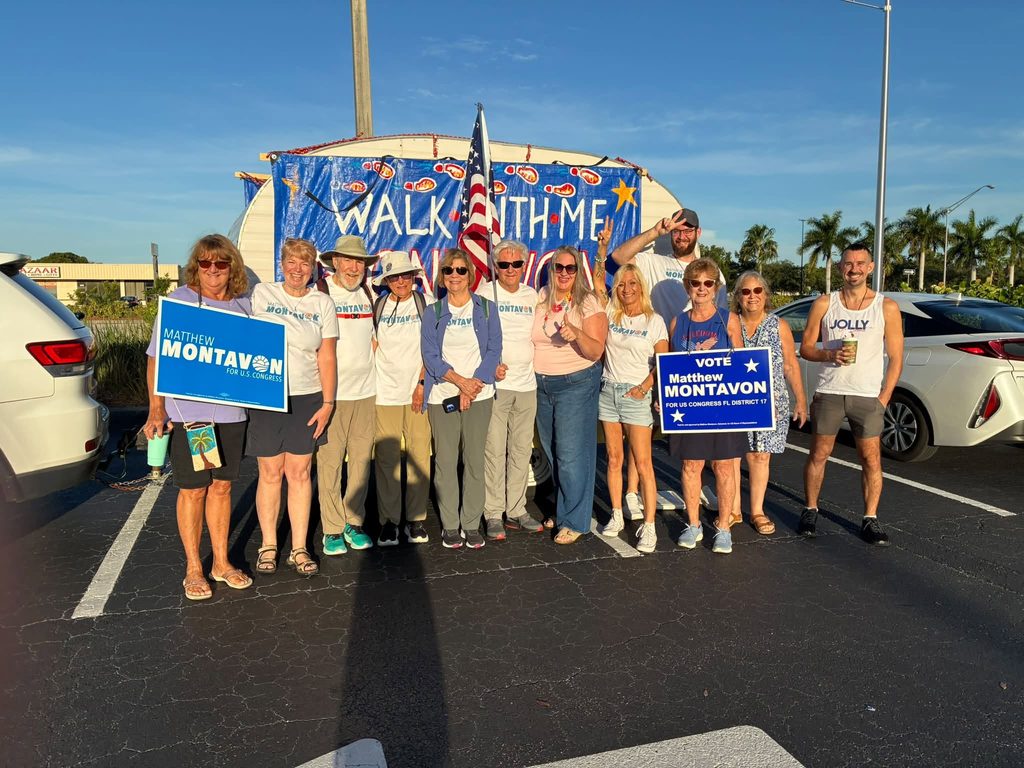
Instead of relying on slick, corporate-funded ad campaigns, I have focused heavily on direct, public engagement. I hold frequent public meetings in local libraries where absolutely anyone is welcome to come and talk with me. I attend neighborhood house parties, and I recently walked across the district—an 80-plus mile trek—just to be out on the street where people can see me. I want people to be able to stop me in the park, meet me at a local restaurant, ask tough questions, and challenge me directly.
I am completely open, which highlights a massive problem we currently have with the incumbent representative, who hasn’t held a single open public town hall meeting since 2019. I am fully committed to the people of this district. I am not beholden to corporate interests, and I will continue to show up in person because I want to truly represent their everyday interests and values.
ER: You mentioned your 80-mile trek, which you’ve called the “Montavon Marathon”—a walking journey from Fort Myers to Sarasota, which covers a major portion of our community. What was the single most common concern or story you heard from residents along that walk, and how will it shape your legislative priorities moving forward?
Matthew: The most widespread issue I encountered is the deep feeling among residents that our current representative is completely out of touch. People repeatedly shared frustrating stories of trying to contact his office and receiving absolutely no response, getting a generic form letter, or receiving an answer that didn’t even address the specific question they asked. Folks feel like they don’t have a functional, attentive representative in Washington looking out for them.
My approach is to bridge that gap completely by showing up, asking how things are going, identifying their core issues, and figuring out what we can do in Washington to fix it.
Admittedly, because I was on a high-profile walk, I had a large number of Democrats come out to meet and support me, so my observations might reflect that sample. But across the board, there is a profound anxiety about the stability of our democracy, the gridlock in Washington, and whether our institutional guardrails are at risk due to systemic mismanagement and corruption. People want to return to a rational, predictable government that methodically addresses their everyday needs, rather than focusing on ego-driven political projects.
Beyond governance, I also ran into many residents deeply worried about everyday affordability. People are highly concerned about the rising cost of healthcare, the impact of inflation, and how far their Social Security checks will actually stretch to maintain a decent, dignified lifestyle in their retirement years.
ER: You recently challenged your opponent to a non-partisan debate, stating that residents deserve to hear both candidates defend their records. The latest information I received indicated he had not agreed to participate. What is the current status of that debate challenge?
Matthew: He simply does not respond. He completely ignores me and ignores the civic organizations that have attempted to organize these forums.
For example, I regularly attend the Tiger Bay luncheons in Sarasota, and the issue was raised directly during one of the meetings. Attendees asked why the congressional candidates weren’t present on stage alongside the candidates for city commission, school board, and other local positions. The organizers reached out to his campaign, but they received no response whatsoever.
Additionally, the League of Women Voters formally invited me to a scheduled candidate debate, which I gladly accepted. However, they had to call me back a couple of weeks later to cancel the event entirely because I was the only candidate who agreed to show up. I told them that it felt unfair to effectively silence the candidate who did participate simply because the opponent chose to opt out, and that they should still bring me in to answer questions. But according to their strict non-partisan regulations, they cannot host a forum featuring only one candidate. He hasn’t formally issued a rejection; he just uses silence as a strategy to avoid giving my platform any visibility.
ER: Given that scenario, what are your tactical plans to draw a clear contrast between your forward-looking vision and his established legislative record for the voters?
Matthew: I am utilizing every single channel available to me. I used the 80-mile walk to publicize the fact that I am present and active across the communities of this district. I am hosting events continuously, including a “Rock the Vote” concert at Payne Park in Sarasota. My campaign is aggressively sending out emails, text messages, canvassing neighborhoods door-to-door, and phone banking every single day.
Our calendar is completely packed with activities designed to reach as many individual voters as possible before they head to the voting sites. We are running a true, high-energy grassroots campaign to make sure the contrast is loud and clear.
ER: Let’s pivot to a highly critical issue that is being heavily debated behind the scenes: technology, the rapid rise of artificial intelligence, and the massive physical infrastructure required to support it. While some officials are quietly backing the development of local data centers, your platform explicitly emphasizes blocking or heavily regulating AI data centers. What are your primary concerns regarding these facilities, and how do you balance technological innovation with protecting local community resources and the energy grid?
Matthew: My primary concern is the massive, undeniable environmental impact these facilities bring. AI data centers generally demand staggering amounts of water cycled through the plants constantly just to cool the intense volume of processing chips and machinery running around the clock. The simple reality is that we do not have that kind of water to spare in Florida. Right now, our local communities are operating under strict water rationing environments, with regional authorities extending water monitoring and use restrictions well into the spring. We simply cannot afford to divert precious water resources to these centers.
Furthermore, these data centers place a massive, unprecedented draw on our regional energy grid. I am deeply concerned that this sudden surge in energy demand will drive up electricity prices for everyday consumers who are already struggling against high inflation. There are also valid, ongoing complaints from residents regarding the severe noise and localized pollution these massive complexes generate. We need to know far more about the long-term impacts before taking such a massive structural risk in Florida.
Our state possesses a highly delicate, unique environment. Perhaps these data centers make sense in other regions, but right here in Florida, given our rapid pace of residential development, the massive physical footprint of these projects makes them incredibly risky. I have spoken twice before the North Port City Commission to urge extreme caution, ensuring that we protect our local environment first.
I also personally visited the site of a planned data center facility in DeSoto County after the company invited a group of us out to review their plans. To their credit, they were trying to make some positive adjustments to mitigate environmental concerns. They outlined plans to recycle water and even explore utilizing wastewater from Arcadia to run through their cooling systems, which would be a valuable step. They were also looking to minimize their physical footprint to preserve local wetlands, and I applaud those specific efforts.
However, even with those adjustments, the project still required an incredibly intense amount of energy. Because they couldn’t draw enough electricity directly from the standard FPL grid without disrupting service, they planned to power the facility using natural gas. But utilizing natural gas is a highly carbon-heavy response, which runs completely counter to our broader goals of reducing carbon emissions.
We must carefully analyze the exact long-term design of what we are inviting into our communities. I’ve spoken with tech analysts who suggest that these massive physical data center plants might actually become completely obsolete within the next ten years. Rapid advancements in microchip efficiency, new software technologies, and the advent of quantum computing could soon eliminate the need for these sprawling, multi-building industrial complexes entirely.
In DeSoto, they are talking about constructing 14 massive buildings across a 100-acre property, located right next to established residential neighborhoods. We must be exceptionally cautious and refuse to jump into long-term commitments blindly. There is obviously a global need for AI innovation, and it will advance regardless of our personal preferences, but we still do not fully comprehend the ultimate consequences it will have on our workforce, economy, and society. Because it is a powerful modern development, we must implement smart, comprehensive regulations governing how AI is deployed, managed, and anchored to our physical infrastructure.
ER: Turning to another vital issue for our region: you have an extensive background volunteering for the AARP Tax-Aide program, working very closely with our district’s large senior population. What specific structural reforms will you advocate for in Congress to guarantee that Social Security and Medicare remain fully funded and protected for future generations?
Matthew: There have been several highly viable, well-studied proposals put forward by experts to secure these programs for the long term. Key options include raising or completely eliminating the cap on earnings subject to the Social Security tax, or taxing other forms of high-value income specifically to subsidize and fully fund both Social Security and Medicare. The legislative options have always been available; it is entirely a question of political will. I have reviewed multiple comprehensive studies outlining different mathematical pathways to achieve permanent solvency. What we need is to get into Congress, sit down at the table, and get lawmakers to actually work together to agree on a shared solution.
It can absolutely be done. The United States is an incredibly wealthy country, and Social Security and Medicare are absolutely vital lifelines for our senior population. Furthermore, our senior demographic will continue to grow steadily as people live longer, healthier lives. It is our fundamental societal obligation to ensure that citizens have a secure, decent, and dignified retirement.
Social Security is a historically amazing program because of its unparalleled success in lifting millions of elderly Americans entirely out of poverty. Before its implementation, if you grew old or lost your job late in life, you were frequently trapped in systemic poverty for the remainder of your days. It is a profoundly valuable program that enjoys near-universal support among the public. We have the resources and the capacity to fix it permanently if we simply muster the political will to do so.
ER: As we wrap up our conversation, I want to make sure I give you the opportunity to address any issues we haven’t covered yet. What final message or additional priority would you like to share with our readers?
Matthew: I want to emphasize another policy area that is deeply important to me: comprehensive immigration reform. The immigration policies currently being executed by our government are often abusive, inhumane, and counterproductive to our economic health. I meet frequently with local business owners who tell me they are facing severe labor shortages, cannot find enough workers, and are struggling to keep their doors open. The reality is that immigrant communities contribute significantly to the strength and growth of our economy.
We can all agree on the absolute necessity of maintaining a secure, orderly border, and we all support targeting and deporting individuals who commit serious crimes. But current enforcement mechanisms are actively targeting people who have lived peacefully in this country for decades. Our immigration system is fundamentally broken. I regularly hear heartbreaking stories of individuals who are actively trying to regularize their status; they have submitted all the proper paperwork and are trying to follow the law, but the backlogs are so severe that it takes five, ten, or even fifteen years to process, all while costing thousands of dollars in fees.
Meanwhile, these individuals are living here, raising families, working hard, paying taxes, and becoming deeply invested in the fabric of our communities. Ripping these individuals out of their homes tears families apart, inflicts unnecessary trauma on children, and inflicts self-inflicted wounds on our local economies. I cannot comprehend the underlying logic that drives such a damaging policy. We must address border security, but we should never do it by ripping the fabric of our society apart.
A stark local example is the recent termination of Temporary Protected Status (TPS) for Haitian nationals, many of whom have built lives here over a long period. We have roughly 130,000 Haitian residents living right here in Florida. You cannot humanely send these individuals back to Haiti right now; the country is currently an incredibly dangerous, unstable environment. These folks have been working hard and contributing to our state, with a massive percentage of them employed directly in essential elderly care and healthcare services. In a state with an aging population like Florida, removing that vital workforce leaves families completely stranded. What is the alternative? It makes no rational sense.
We had comprehensive, bipartisan border and immigration legislation ready to move forward in Congress recently before political maneuvers blocked its passage. We desperately need reasonable, rational, and humane immigration laws.
Ultimately, I am doing everything in my power to present an honest, accessible alternative to the people of District 17. I am fully committed to this community, I have dedicated my entire adult life to public service, and I will continue to give everything I have to this district as an open, approachable, and deeply accountable representative in Washington. Voters can learn more about our specific platform and upcoming community events by visiting our official campaign website at Montavon for Congress.
ER: It has been an absolute pleasure speaking with you and learning more about your vision for the district. Thank you so much for your time.
Matthew: Thank you very much. I truly appreciate the opportunity.
Click here to visit Matthew Montavon’s campaign page, montavonforcongress.com.
As we lead up to the election, The Englewood REVIEW is reaching out to all local candidates to give them a forum to express their views.