
Burmese pythons aren’t confining themselves to the Everglades anymore. They’ve pushed north, spreading past Fort Myers and settling in new areas.
Since removal programs began, contractors have pulled out over 23,500 pythons across Florida. But the snakes find ways to hang on. The Florida Fish and Wildlife Conservation Commission (FWC) says the Everglades used to be the center of python activity, but now they’re established from south of Lake Okeechobee, all the way to Key Largo, and as far west as Collier County. Pythons are masters of hiding, so by the time evidence piles up, they’ve often already settled in and made themselves at home.
Now, there’s a confirmed “satellite population” in Charlotte County, north of Naples and Fort Myers, according to an FWC spokesperson. Adult pythons face almost no threats from natural predators in Florida. They eat just about anything, including plenty of native animals, some of which are already threatened or endangered.
What do these invaders look like?

Adult Burmese pythons can top 20 feet, though most found in Florida are between six and ten feet. They’re hulking compared to native snakes. Their tan bodies sport dark, irregular patches fitting together like puzzle pieces, almost giraffe-like. Look for dark wedges near the tops and bottoms of their heads, and right behind their eyes.
Fighting back, Florida has launched two major programs: the FWC’s Python Action Team (PATRIC) and the South Florida Water Management District’s Python Elimination Program. These initiatives pay qualified people, those with experience wrangling big, nonnative snakes, to track and remove them across South Florida. PATRIC contractors usually pull in over thirty pythons a year. Since the start, state efforts have tallied over 23,500 removals, with over 11,000 handled by PATRIC and the Python Elimination Program.
The call’s open for hunters, anglers, and anyone who knows how to handle an enormous snake. The Python Elimination Program contracts removal agents to patrol Monroe, Miami-Dade, Broward, Collier, Hendry, Lee, and Palm Beach counties. Pay varies depending on where you’re looking, $14, $20, or $30 an hour, for up to ten billable hours a day.
The problem isn’t going away. But for every nest found, and every python caught, it’s a small victory for the native wildlife struggling to hang on.
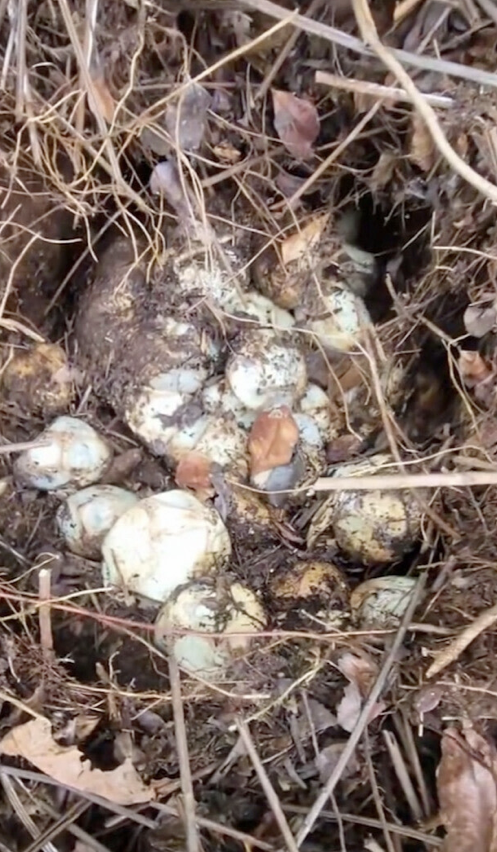
In other Burmese python news, a wild scene played out in Florida, caught on TikTok: a massive female Burmese python coiled protectively around a mountain of eggs, all hidden away in a patch of thick ferns. It looked dramatic, and it was, because that cluster of eggs represented not just one snake, but potentially dozens more apex predators getting ready to push even deeper into Florida’s fragile ecosystem.
The video, posted by thesnakeaholic (@thesnakeaholic), shows what happens when you catch a python brooding over her nest. He explained, “This big female python was coiled up in the ferns, sitting on a huge pile of eggs!” He didn’t stop there. “Removing invasive pythons saves native wildlife, but it is especially important to remove nests like this because it stops an entire generation of invasive apex predators from being born into the ecosystem. We saved A LOT of wildlife with this removal!”
That’s the key: if you only remove the adults as you find them, you chase shadows while their eggs quietly hatch and restart the cycle. Nests are the heart of the problem.