
If you blink in April, you’ll miss it. Blink again in October, and it’s back, wearing colors so bold it looks like someone spilled a box of crayons. This little visitor treats Florida yards like a prized time-share. It shows up, settles in for the cool seasons, then slips away north again without fanfare.
Most homeowners never see it at all. These birds keep a low profile, hiding in leafy thickets instead of flaunting themselves at feeders. But if you catch a glimpse, chances are you’ll abandon whatever you were doing just to watch.
Whether this tiny traveler picks your yard depends on a few simple choices. With the right touches, you might turn your patch of Florida into a Painted Bunting haven before the season ends.
- Meet the Painted Bunting
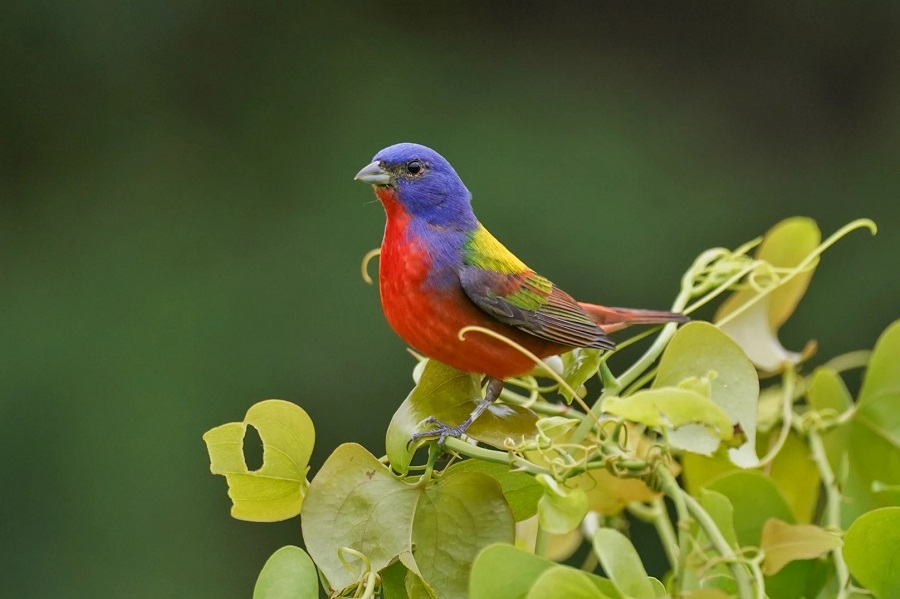
French settlers called this bird “nonpareil,” literally “without equal.” It fits. Many people consider the Painted Bunting (Passerina ciris) one of North America’s most striking songbirds.
Despite the electric colors, this bird is tiny, no bigger than five inches long and barely half an ounce. If you’re looking for clues, notice the short, thick bill, built for seed cracking, and a pale eye-ring that gives it a wide-eyed, curious expression.
They’re shy, preferring dense cover. If you manage to spot one out in the open, you’ve lucked out. To find them, listen for the male’s high, quick-changing song in spring. Once you know it, you’ll often hear him before you see him.
- Males in Technicolor

Male Painted Buntings look like nature’s answer to a finger-painting session gone wild. The head? Royal blue. The back? Vivid green, almost electric. The throat, chest, and rump? Nonstop cherry red. It’s a palette you have to see to believe, so flashy that newcomers often guess the bird escaped from a pet shop.
Here’s something fun: Young males don’t start with this neon suit. They spend their first year dressed in leafy green, nearly identical to females. Over the next two years, they slowly transform. Sometimes, you’ll spot a patchy, half-dressed teen bird, halfway to adulthood. If you keep a close eye, you might track the same individual’s “glow-up” as the seasons pass.
- Females: Green, Bright, and Overlooked

While everyone talks about the rainbow males, female Painted Buntings have their own quiet style. Their feathers are an even, bold yellow-green, sharp and bright, not the dull olive you see in most small birds. They share that same pale eye-ring, giving them a sweet, alert look.
That green isn’t just for show. It’s great camouflage, blending right into the foliage while feeding or nesting. Young males wear the same suit, so telling them apart gets tricky. Watch for tiny blue or red flecks to spot a juvenile boy still changing clothes.
Once you learn to notice females, you’ll start finding them everywhere. Many birders grow to love that splash of lime just as much as the male’s circus hues.
- Their Florida Calendar: Fall Arrival, Spring Departure

Circle October on your calendar. That’s when eastern Painted Buntings roll into Florida, brightening up yards from the Panhandle down to the Keys. They’ll stick around for nearly six months, usually through the first half of April, before heading north to breed.
Males often migrate a week ahead of the females. If the bright ones vanish first, don’t worry. The green birds will linger a little longer. Savvy backyard hosts put feeders out by late September and keep them full until mid-April. A little prep means you get a front-row seat for the color parade.
- South Florida: Their Winter Retreat

It’s not just retirees flocking south for the winter; Painted Buntings are snowbirds too. Most of the eastern population winters in South and Central Florida, plus the Keys. Some even cross to Cuba or the Bahamas.
Why Florida? With mild weather and ample seeds, it’s the best resort a small bird could ask for. Central Florida yards, like Orlando, Tampa, or anywhere with good shrub cover, often get visits as well, but patience is key. Sometimes, it takes weeks for birds to discover a new feeder. Once they do, you’re likely to see familiar faces returning day after day, season after season.
- Northeast Florida: Nesting Neighbors

While many buntings head north in spring, a special group sticks around the northeast coast, roughly from the Georgia border to Cape Canaveral and along the St. Johns River. Here, they breed between May and mid-July, favoring coastal scrub, oak hammocks, overgrown fields, and even wild city edges.
They tuck nests into shrubs or small trees, rarely over six feet off the ground. For anyone gardening in this region, do the heavy pruning in late fall or winter to avoid disturbing hidden nests. Letting a corner of your yard stay wild can give these vivid birds a much-needed safe spot to raise their young.
- Florida: A Double Role
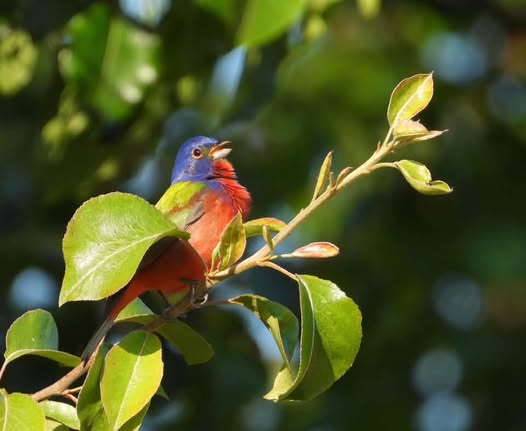
Here’s something to brag about. Florida is the only state where Painted Buntings both nest in summer and winter in large numbers. In other states, it’s usually one or the other: Texas, for example, sees breeders but not winter flocks.
This double role makes Florida crucial for the species’ future. Of course, there are threats. As scrubby, wild landscapes vanish and the illegal pet trade continues, every backyard sanctuary matters. You help by planting native shrubs, going easy on pesticides, keeping cats indoors, and reporting sightings to groups like eBird. In Florida, every yard really does count.
- The Perfect Menu: White Millet, Please

Want to attract buntings fast? Use white proso millet. These birds love small seeds, and millet tops their list. They’ll nibble black oil sunflower seeds and chips, too, anything small enough for that stubby bill.
Painted Buntings even have a trick in the wild: they’ll grab a grass stem, bend it to the ground, and strip off seeds like little acrobats. During nesting, they also snack on bugs for protein, like grasshoppers, beetles, spiders, and even tiny snails.
For best results, set out tube feeders or low trays, and keep them near the ground but safe from cats. Clean the seeds regularly. Florida humidity can turn millet to mush. Once the buntings trust your feeder, you’ll see them returning all day long.
- Give Them Thick Cover
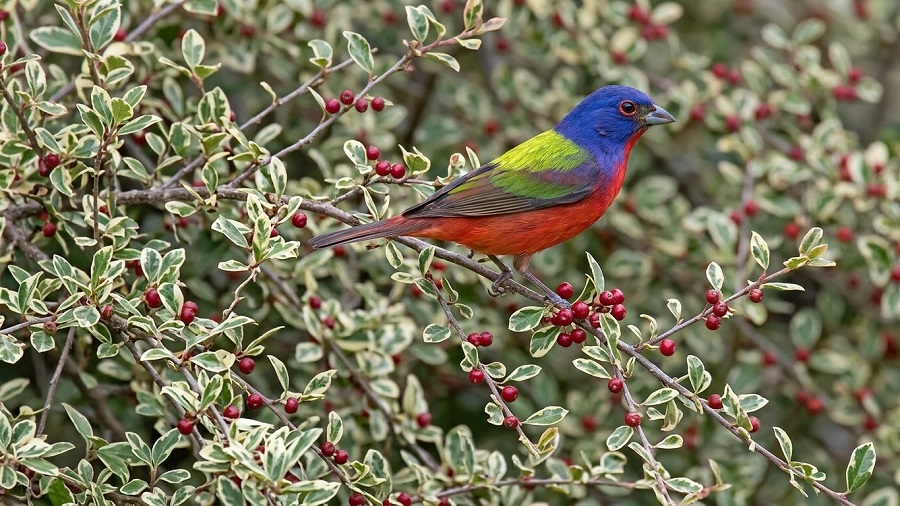
Think of buntings like shy party guests: they want the snacks, but not without a good escape route. They crave low, dense cover: hedgerows, brush piles, wild corners, or tangles of native shrubs. In winter, shrubby spots or grassy patches are favorites.
Place your feeder near shelter. Within ten feet is ideal. This way, birds can dart from food to safety in seconds, dodging predators like hawks or stray cats.
Native plants like firebush, beautyberry, wild coffee, and Simpson’s stopper make excellent choices, growing thick and providing both food and shelter. Let a wild patch of native grass go to seed, too. Birds love the buffet.
Don’t feel pressured to tidy every inch of your yard. Those scruffy, overgrown corners are a paradise for Painted Buntings. And with both food and cover close by, you just might discover a rainbow visitor perched in your garden when the cool season rolls around.
Click here for more information on The Painted Bunting at audubon.org.