
Florida’s Gulf waters are heating fast. Head to the beach lately, and you’ll notice that the ocean doesn’t just feel warm, it feels like a hot bath that won’t cool off.
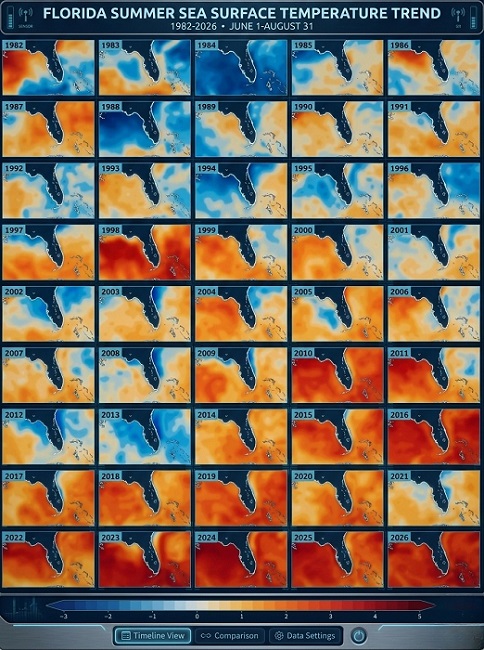
Summers here have always been toasty, but these extreme temps are sticking around much longer than they used to. If you lay out the data going back to 1982, the trend is clear: blue indicates cooler years, yellow and orange point to warming, and now we’ve shifted to solid red, hot summer after hot summer.
Why does this matter? Warmer water doesn’t just make for a sweaty swim. It fuels stronger rainfall, more intense hurricanes, and triggers damage in the marine environment. That includes coral bleaching and harmful algae blooms.
The numbers are striking. Since 1982, average summer sea surface temperatures (SSTs) in the Gulf of Mexico and around South Florida have jumped far beyond the old seasonal ups and downs. We’re talking about a shift from “normal” cycles to long-lasting, extreme heatwaves.
NOAA’s data spells it out: the Gulf has been warming at about twice the rate of the global ocean average. From 1970 to the 2020s, the sea surface temperature has climbed by roughly 1.8°F (1°C), at a rate of 0.34°F per decade. And this heat isn’t just on the surface. It goes down 160 feet beneath the waves.
Lately, especially since 2023, it’s gotten even worse. Average summer temperatures now regularly blow past 88°F. Some shallow coastal spots in South Florida have caught national attention by reaching more than 100°F (38°C), numbers unheard of in past decades.
What’s behind this sudden spike? It’s a mix of human-driven climate change and regional ocean patterns. The Loop Current pulls hot water up from the Caribbean, and lately, shifts in the North Atlantic subtropical gyre trap that heat in the Gulf instead of letting it escape. Plus, climate change has weakened the seasonal trade winds that used to help cool the region off. Now, with less wind to mix up the water and let heat escape, the sun just bakes those shallow waters.
Another piece here is that the ocean itself acts as Earth’s heat sink. Over 90% of the excess energy from greenhouse gases ends up in the ocean, which means these marine heatwaves are just the first sign of stress on ocean ecosystems.
What happens when the water stays this warm for so long? First, tropical storms supercharge. Each 1°C (1.8°F) uptick in sea surface temperature can boost a hurricane’s maximum intensity by 5–7%. That extra heat has amped up storms like Ian, Idalia, Helene, and Milton. More warmth also means more evaporation, loading the atmosphere with moisture that comes down hard as flooding rains.
The marine ecosystem is already taking a hit. Corals, for instance, are living on the edge: they can’t survive prolonged temperatures above their threshold (around 87°F in Florida). When it gets too hot, they eject the algae that keep them alive, bleach white, stop thriving, and get picked off by disease. The Florida Keys National Marine Sanctuary used to have a coral cover of over 40% in the 1970s, but now it’s down to around 1%.
Warming waters also promote toxic algae blooms, especially when you add runoff from farms and cities. Red Tide (Karenia brevis) and blue-green algae (Cyanobacteria) flourish in these conditions, sucking out the oxygen, killing fish, and creating respiratory headaches for folks on the shore.
The Gulf is hotter than ever, and the science is clear: the consequences reach far beyond an uncomfortable swim. It’s transforming hurricanes, pounding the ecosystem, and pushing Florida’s marine life to the brink.
To learn more about the NOAA’s research, click here.