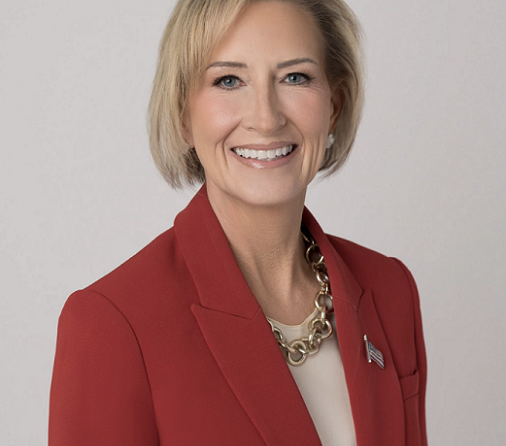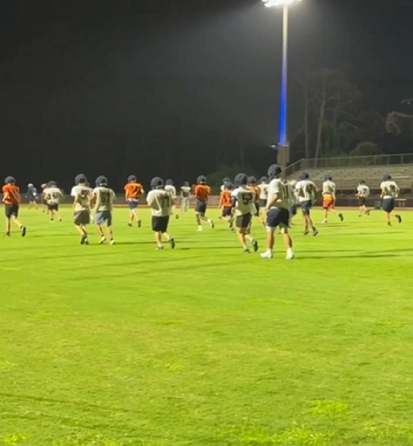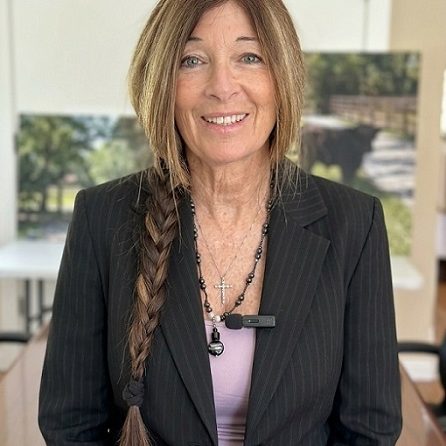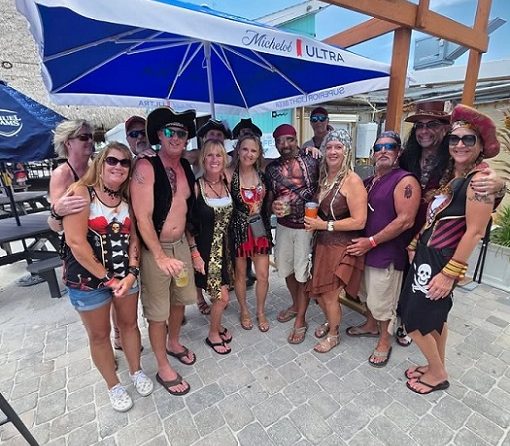
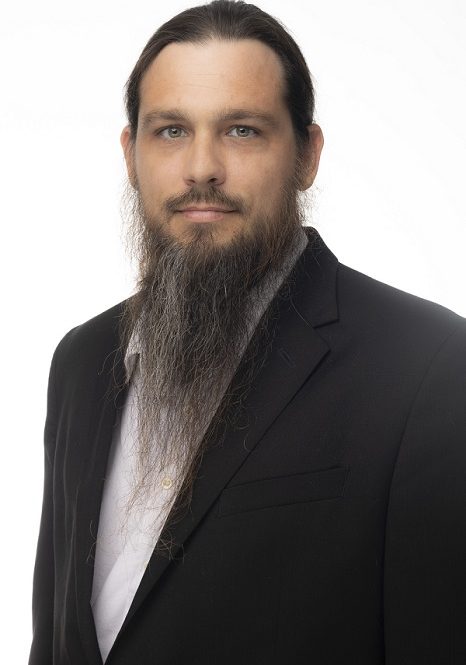
Michael Melton grew up breathing in Charlotte County air. He was born in Port Charlotte, spent his childhood in Englewood, and moved through the hallways of Vineland Elementary, L.A. Ainger Middle, and Lemon Bay High School. He finished high school with the class of 2003 but didn’t stop there. By 2007, he’d earned his civil engineering degree from USF with honors and a lot of long days, working trade jobs throughout school, picking up practical skills that still stick with him today.
After graduation, Mike joined Faller, Davis & Associates as an engineering intern and consultant. He spent those early years working on Florida Department of Transportation projects, stormwater systems, environmental permitting, and efforts like Rails-to-Trails and Safe Routes to School. He helped improve sidewalk networks for local students and worked on the Coral Creek Bridge extension near Cape Haze. All these projects taught him something deeper: good things happen when agencies and people collaborate, and he saw firsthand the impact strong communities can have.
Securing his engineering license was a milestone. With his first child on the way, Mike decided it was time to build a home base, literally and figuratively. He launched Enterprise Engineering Service in Charlotte County, focusing on residential engineering and septic design. Over the last decade, he’s supported homeowners and builders throughout Charlotte, Sarasota, Lee, and DeSoto counties.
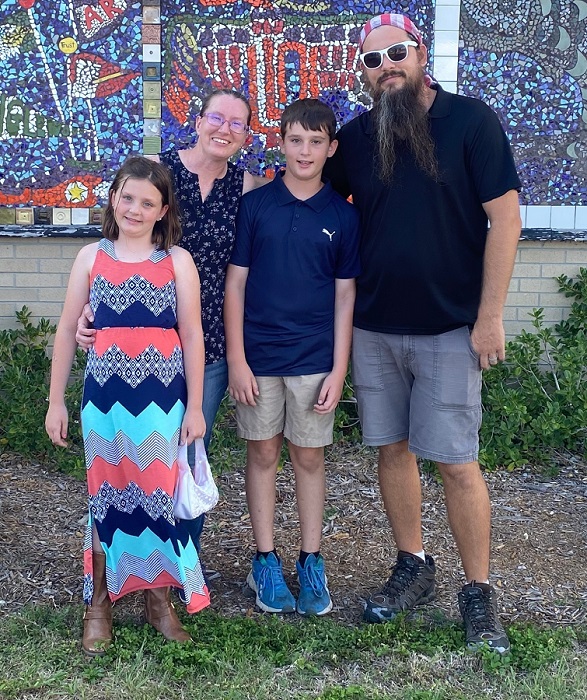
While growing a business and raising two kids with his wife, a local teacher, Mike has also stepped up for public service. He’s dedicated seven years to the Charlotte County Construction Industry Licensing Board, serving two years each as Chairman and Vice Chairman.
Mike isn’t just watching the changes in Charlotte County; he’s deeply concerned. Recent hurricanes have laid bare the region’s vulnerabilities. He sees a need for much clearer, more honest communication between local government, developers, and the people who call this place home. Mike worries that outside interests sometimes seem to get more attention than long-term residents and Florida’s beautiful, fragile environment. He’s no opponent of growth. He just believes development works best when it’s balanced, where building new homes and roads goes hand-in-hand with protecting natural resources and honoring what makes Charlotte County special.
Engineers learn one thing early: every decision leaves a mark. Mike always asks, “Will this still work in 10 or 20 years? Who pays the price if it fails? Does this serve residents, or is it for outsiders?”
Mike’s hands-on engineering experience, the commitment to local service, drives Mike to run for County Commission. He’s here to advocate for Charlotte County’s health, resilience, and future, with residents at the center of every decision.
Mike is running to make sure we get it right: planning responsibly, protecting coastal communities, and putting residents ahead of outside developers. This is about keeping Charlotte County the paradise that drew people here in the first place.
Charlotte County needs leaders with a commitment to transparency, willing to think ahead, listen to the people who live here, and act with independence and integrity. That’s what Mike promises to bring.
Michael Melton sat down with the Englewood REVIEW for an in-depth interview.
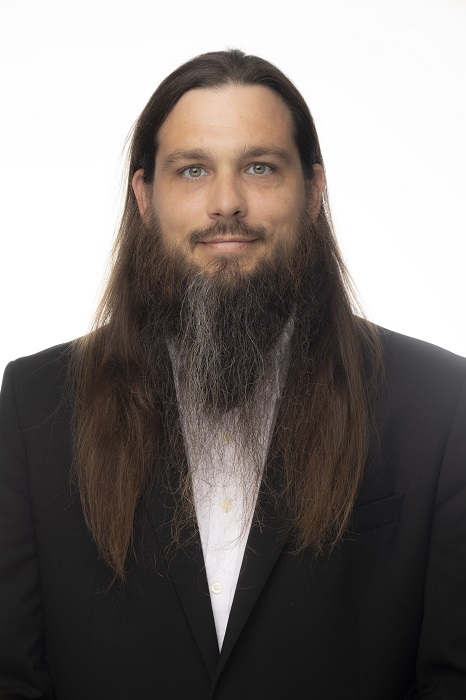
ER: Thank you for taking the time to meet with us, Michael. You’re coming into this race with No Party Affiliation. Commissioner Stephen Deutsch said you seem like a nice person, and you have experience and some background. Deutsch also added, and I quote, “The problem is she can raise half-a-million dollars, and she has the connections that she may raise another half-million.” What’s your strategy going to be with running against this political machine?
Michael: I’m just following the plan, and that’s using their identity, essentially, against them. Many people nowadays are sick and tired of the political machine and everything that comes with that: the bloat, the lack of true representation, the snail’s pace. Being an independent, I get a chance to take shots at both sides and call it as I see it.
And for the longest time, it was my opinion that the Democratic Party struggled with being able to follow through with its messaging when it was campaigning. In my mind, this simply equates to bad leadership.
But with the Republicans, they’ve always been rather truthful and upfront with their goals and intent. Deregulation, more freedom for big business to do what they do, the famous trickle-down economics concept.
Now that we’re 25 years into that experiment, I think people are questioning how much that really is benefiting them at home, on a personal level. I’m just planning on using that momentum and, almost like a Tea Party style, return to constitutional roots, local government, local representation having more power, being more connected with the community. Then essentially kind of driving a wedge between the people who are typically considered Republican voters but giving them an opportunity to choose between a constitutionalist and a modern-day Republican. I feel like they might choose to pull back towards the middle and support the Constitution as opposed to continuing to support the Republican Party. Since 1984, Florida’s had one non-Republican governor. And yet, they’re still continuing to campaign on “let us fix the problem.” Well, you’ve essentially been the leadership over this problem. So, how much do we have to continue to trust you to fix the problem?
That’s kind of the strategy in a nutshell, because I’m not going to be able to raise anywhere near as much money as she has. Early on, I have been telling people, “I don’t even need money from you, really. I just need you to trust me and give me an opportunity to show you that a local person with local concerns at the forefront of their decision-making, with a technical background, is worth the risk. It’s worth taking a risk on somebody like that versus just continuing to vote for the Republican Party.”
ER: So, you have been focusing on local messaging and authentic representation.
Michael: Exactly. I’m never going to say that I know the answer to every question all the time, but if I don’t know it, I’m not afraid to say, “Let me look into that. Let me get back to you.”
I look to the position of the commissioners as the liaison between the people who are the voting constituency, and also, the business machine behind the county, and whatever is in their way for success. If it’s some kind of local ordinance or something that might get in their way, how can we address that? If we can’t, I can explain to them, “Okay, this is why this is here. This is not a negotiable item here.” Because one thing I’ve learned from an engineering standpoint is that through the variance process, the county will give anybody an opportunity to plead their case.
But if you don’t meet certain criteria, mostly having to do with hardship, not putting yourself in this position or doing it strictly for financial reasons, then there are ways to modify the code and modify the rules without totally breaking down the framework.
ER: Being a local business owner, an engineer, as well as a lifelong resident of Englewood in Charlotte County, you understand the complexities of both sides.
Michael: Yes, helping people in the business and in the community navigate the complexities of the system. My background is in the building codes, but I would hope to expand that to the tax code and land development, neighborhood issues, working within the code and explaining what their options are.
And giving them more of a voice. Being available, putting myself available, I’d say like a park after hours for two hours in the evening so that people who feel that they can’t access me at a board meeting, or at one of these official events during business hours, gives them an opportunity to come out and say, “Hey, this is who I am. This is what I’m upset about.”
ER: Many people say that they’re tired of the lack of transparency when it comes to the government, development, and the environment. With your background, you have a firm basis for understanding the complexities and, like you said, navigating and also finding, not loopholes necessarily, but legal ways to do the right thing.
Michael: Well, yes. If the code is essentially open to interpretation, then I feel it would be in my best interest as a commissioner to interpret it in a way that benefits the citizens of the community.
If they want to live in a community that respects environmental limits and boundaries and doesn’t want overdevelopment, then that’s really the direction that we need to go. And if there’s not clear protections codified, then perhaps maybe that’s something that we pursue, right?
The city of Sanibel Island, when it originally got started, essentially did something like that. Obviously, times have changed and things are a lot more difficult now, but essentially a group of citizens got together and decided, “We’re going to put a moratorium in place on any kind of development.” I will not use the M-word; we’re not talking about moratoriums here, obviously, but that’s what they did.
ER: But their community worked together and took a stand early in the process.
Michael: They essentially said, “No more building until we figure out what we want to have as the heart and soul of representation of our island. We’ll get that codified, and then you guys can operate within that framework.”
Englewood specifically, and having grown up here, I feel like I know this intimately. The city itself, Englewood proper, is divided. A lot of Englewood, the downtown heart and soul of Englewood, is Dearborn, and it’s in Sarasota County. But I grew up in Englewood East, which was deep in the heart of Charlotte County.
ER: I see.
Michael: And so, when somebody thinks of themselves as being from Englewood, it’s like, “Well, are you Sarasota or Charlotte County?”
Absolutely, and if we ever incorporated, we could be a force to be reckoned with, and population-wise, we would not be insignificant. I know that’s never going to happen. But the heart and soul of Englewood still exists in that way.
I plan to work with Sarasota County on things that have to do with the area that we share. Like Manasota Key, it is a great example of that because you have one part in Charlotte County and one in Sarasota County.
If the middle gets broken, like when a washout happens, every time we get a halfway decent storm that skirts the coast, that road gets washed out, and now you’re really in a pickle. It just benefits us as a whole to work together.
ER: Data centers have been in the news lately. What’s your opinion?
Michael: I’m probably going to North Port on Monday to speak. They’re talking specifically about AI data centers. I guess it’s going to be a pretty big event, heavily attended by the citizens of North Port.
One of the propositions puts a data center pretty close to the Charlotte County line, and so I’m going to go over there and represent the citizens of Charlotte County.
With all the noise, environmental concerns, and power problems, I feel like we need to be working with these adjacent cities: Sarasota County, North Port, and Wellen Park.
ER: What are the most important issues for Charlotte County and your top priorities?
Michael: Okay, one and two go hand in hand, and that’s the development and/or environmental impacts that are going to be associated with just modern human existence. I feel like we’re way behind the eight ball when it comes to that because of the damage to the ecosystem.
I’ve lived here my whole life. This applies to all of Southwest Florida. No matter where you go, you see beautiful ecosystems; you see pristine waterways, beautiful sunsets, and animals all over the place. But progressively over time, to somebody who has been here for 40 years, it used to be so much better.
It’s still beautiful. It’s still paradise to people who come from Kansas and Wisconsin and places like that. We have wonderful beaches. The salt flats, the swamps, that’s the heart and soul of true Florida. We still have that, but it’s not what it used to be; it’s not as high caliber as it used to be.
The native Indian tribes that used to come in through here, the waterways were so plentiful that they didn’t even have to worry about farming and agriculture. The early settlers who came from European origins all thought that these people were backward because they didn’t understand farming, even more so with the Calusa tribes because they didn’t have any farming. But then they came to realize that they didn’t need to do all that kind of stuff because the water gave them more than they could ever need.
And now you fast-forward to today, and it’s just like mullet schools are not what they used to be like even when I was a kid. I remember seeing just thousands; they’d be popping all over the place. And now, it’s just not like that anymore.
We didn’t do our job nurturing and taking care of the environment to make sure that we didn’t push it past its tipping point. Because if you take care of these systems within their ability to repair and not overexploit them, then they can last forever. Management, right? Resource management.
ER: How about your No Party Affiliation status? Do you see it more as a help or a hindrance in this situation?
Michael: It’s definitely a hindrance. It is a constant hurdle. However, I don’t see it so much as a challenge right now. Locally, I feel like it’s an advantage to be an independent person at this point. I definitely feel that at the local level, being an independent is a tremendous advantage, even without the money part of it.
ER: There has been a lot of talk regarding Kim Amontree’s resident status in District 4 in Charlotte County. What are your thoughts?
Michael: I’m going to make it a point not to do any of that kind of negative campaigning. One, I don’t have the money for it, right? I’m focusing my message on what I can do for Charlotte County. My strategy is not to really mention her that much because I need people to be focusing on me and what I’m bringing to the table.
ER: Please tell us about your family.
Michael: My wife is a teacher at SKY Academy. I have a growing family, but they’re very supportive, especially at this time. My wife just started back to school, so she’s really busy, too.
We have two children. My son is 12 and my daughter is 10. And they go to a local school here in Englewood. Shelby goes to Englewood Elementary. I drop her off there all the time. I drive past here every day. We park at the park and we walk to school. My son, Robert, goes to school at SKY Academy, and he’s actually in my wife’s class right now.
I grew up in Englewood East and would never really come over here very often. I come from a rather poor upbringing. My mom was a single parent, worked very hard, but salt of the earth kind of folks, right?
This area is beautiful now; it’s really come a long way to provide people with opportunities.
ER: Let’s talk about development. As a professional engineer, how do you approach balancing these issues? What can we do about decisions and deals that were made 20 years ago? Is there any way to undo any of that damage?
Michael: There probably isn’t any way to undo anything that’s already been legally worked through in past administrations. Moving forward at a local level, we need to be more aggressive when it comes to the people who want to modify the existing zoning requirements for their benefit. I feel like the PD, which is a planned development zoning classification, that’s what the Manasota Key Inn was trying to do, I believe it was written in a way to allow for projects that were in environmentally sensitive areas that wouldn’t meet standard zoning rules. But you still had to respect the environmentally sensitive portion of that neighborhood that you’re applying for a PD.
You have to know the developers tricks they’re going to use with their number game when it comes to things like wastewater, water quality numbers, traffic counts, make sure they’re not underselling the long-term potential effects of what they’re proposing; hoping that by the time you realize it, it’s too late.
We have to stop under-projecting and then wondering why we don’t have the capacity for the growth. It is a big issue that needs to happen at the commissioner level, and I’m all for becoming more aggressive with perhaps putting forth ordinances, providing for additional environmental protections, specifically because you’re talking about data centers in Charlotte County. There really is nothing in the code written for data centers, because when the code was written, they didn’t exist. When there isn’t exact direction, we have the ability to make the rules and say, no, this is not something that, even under the most intensive industrial zoning, you could put in that kind of area.
But taking a piece of agricultural land and turning it into a location where they can put a data center isn’t right. We should be able to step in and say we don’t want this kind of development in these types of areas. Being a lot more aggressive about that and letting the community know. We’re seeing it, just like with the Oppose Manasota Key Road group.
Why can’t we just have a community that doesn’t look like Siesta Key or Fort Myers Beach? Right. If you want those, then go there; don’t come here. Don’t come to Englewood. It’s not fair to the people who want to be here and enjoy this area for what it is. This small, sleepy, little fishing village, a place where we work hard and play hard. I could talk about my community all day.
This is the kind of community that really cares. They might be divided on a few things, but, you know, as far as what’s best for Englewood, I think most people are in agreement and want to reach out and help.
When driving down Winchester every morning, there’s a lovely older lady who drives her e-bike and she just drives down the road picking up trash all morning. She deserves a medal.
ER: It’s that Englewood community spirit.
Michael: Exactly. You see, I’m an introvert. But I’m ready to put myself out there to advocate for the health, stability, and future of Charlotte County’s unique and cherished community. I’m ready to make a positive impact on my community.
It’s to the point where it’s more uncomfortable for us to sit on the sidelines than it is for us to get out of our comfort zones and actually get out in the community and really make a difference. That’s what I’m hoping to do. When I started my business, that expanded my comfort zone on one level, and I’m looking to potentially expand it again.
Click here for Michael Melton’s campaign website.
Click here for Michael Melton’s Facebook page.
Click here for Charlotte County Voter Focus information.
“As we lead up to the election, The Englewood REVIEW welcomes all local candidates the opportunity for an interview to provide a forum to express their views.”