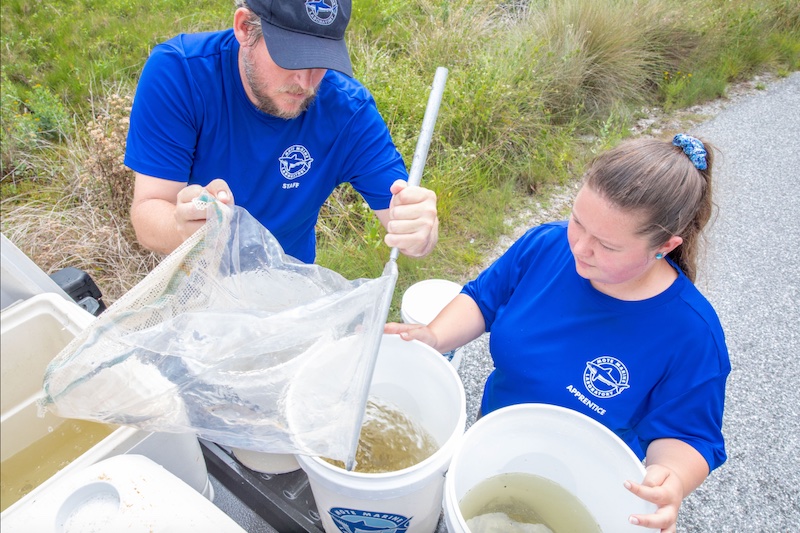
Mote Marine Laboratory recently released 22,000 young snook into Sarasota Bay, pushing forward its ongoing efforts to restore a species hammered by Florida’s harsh 2010 winter and more recent red tide outbreaks.
This release is just the latest in a long-running project. Mote’s been at this for almost thirty years. Their scientists keep tweaking their marine stock enhancement strategies for snook and other native species, always trying to find smarter, more responsible ways to give wild fish populations a boost.
Dr. Ryan Schloesser, who heads up Mote’s Fisheries Ecology & Enhancement Program, put it plainly: their priority is growing healthy fish, releasing them at the right times and places, and collecting the data that shows what actually works. It’s not just about dumping fish into the water and hoping for the best. It’s about science, planning, and figuring out how these efforts can help wild snook populations stay resilient in the long run.
When Mote picks spots for release, they look hard at the environment and the habitat. It has to be the place where young snook stand a real chance, plenty of shelter, good food, and the right conditions for them to grow. Before release, each batch goes through a thorough health check so only the strong survive the transfer.
The science doesn’t stop once the fish leave the lab. Mote’s team tracks what happens out in the wild: who survives, how the fish use their new habitat, and whether the introduced snook truly strengthen native populations. They are also using advanced genetic tagging, in addition to the traditional physical tags. By knowing the genetic profiles of parent fish, scientists can match any snook caught later back to its family tree using tiny tissue samples. This lets them track success without stressing the fish out with extra handling.
Dr. Schloesser says this genetic approach is a big leap, allowing the lab to monitor stocking outcomes with minimal disturbance to the fish themselves.
Florida’s snook aren’t just a biologist’s concern, either. They’re a staple for local anglers and play a big role in the coastal economy. Mote’s efforts, guided by research and experience, aim to keep these iconic sportfish thriving for years to come.
Click here for more information about Mote Marine Laboratory.