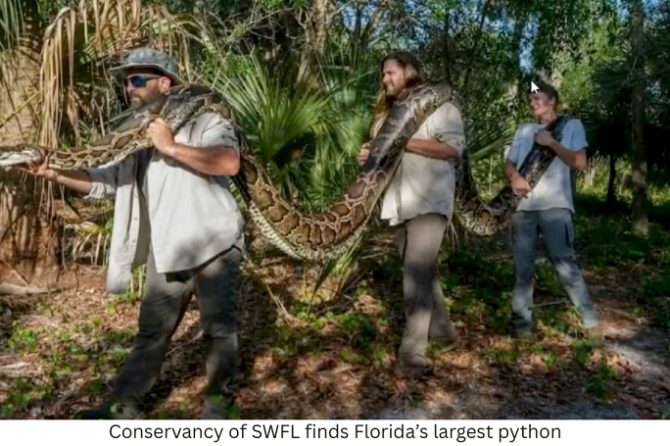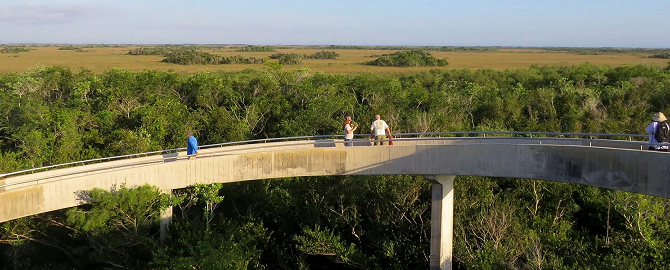
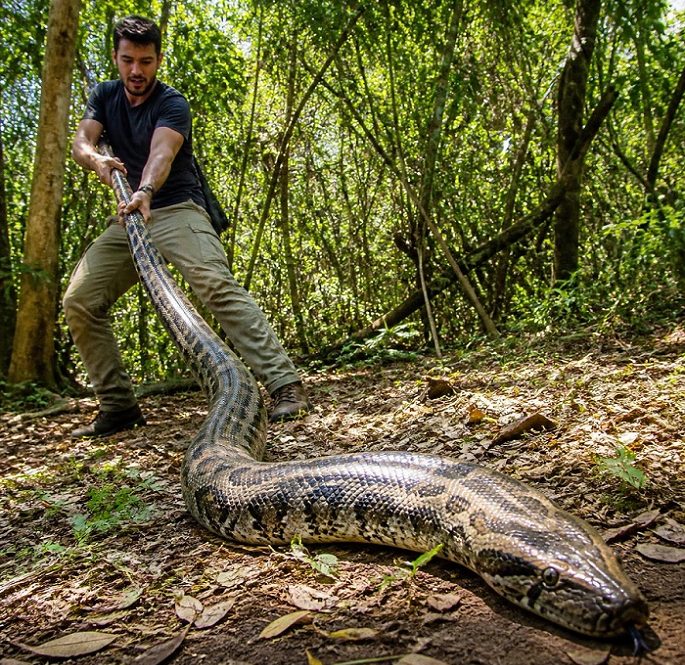
Florida is kicking off its ninth annual Python Challenge on Friday, July 10, 2026 at 12:01 a.m. and will run for ten days through Sunday, July 19, 2026. Hosted by the Florida Fish and Wildlife Conservation Commission (FWC) and the South Florida Water Management District, this annual event unites professional hunters and novices to remove invasive Burmese pythons protecting the fragile Everglades ecosystem.
This event is ten days of tracking down Burmese pythons in the Everglades, all for a shot at $25,000 in prizes. The goal is simple: get rid of these invasive snakes. But if you were thinking about hauling one home for dinner, hold up. Florida’s Department of Health flat-out says don’t eat pythons; their meat is too high in mercury.
Here’s the odd thing: it’s not actually illegal to eat python in Florida, and a few adventurous chefs, hunters, and the just plain curious keep trying to make the tough reptile meat taste good. Pineapple juice marinades, curry, Cuban mojo; people experiment with anything that might make python more palatable. Some grind it up for tacos or pizza; the brave recommend curry to mask the flavor.
That’s probably for the best. Last March, the Department of Health tested mercury levels in 487 pythons and found enough risk to issue a strict “do not consume” warning for all pythons caught in Florida, big or small. Their tests used an eight-ounce portion, the same as for fish, since there’s no standard snake serving size. The conclusion: there’s just too much uncertainty about mercury exposure.
Environmental factors play a big role in whether python meat is more or less risky. Pythons from southwest Florida have a little less mercury than those from the Everglades. That’s likely because the Everglades gets sulfur runoff from upstream farms, which helps turn natural mercury into methylmercury, the really dangerous stuff that piles up in the food chain. Interestingly, a recent study found that mercury levels in pythons don’t always track with their age or size. Unlike ocean fish, where the biggest have the highest mercury, with these snakes, it’s a little more unpredictable.

Most python experts don’t bother eating them. 2025 Python Challenge champ Taylor Stanberry has handled enough to know: “I’ve been musked on by so many, and the smell is NOT appealing.” (Python musk is a foul odor they release from glands by their tail.)
The Burmese python invasion kicked off in Florida in the mid-1980s, probably thanks to accidental or not-so-accidental pet releases, according to the state’s control plan. By 2000, these snakes were everywhere in the Everglades, reproducing in the wild. Today, no one really knows how many lurk in South Florida. The state has tried nearly every idea to get rid of them: cash incentives, hired hunters, the annual Challenge. People have removed about 21,600 since 2017, with 1,406 coming from the Challenge events alone.
Still, pythons remain stubbornly embedded in the landscape. Education efforts like the Python Challenge help keep public attention on the problem. Every python removed is a win for Florida’s ecology. But the idea of eating these invaders to extinction? That’s just not on the table.