By Kimball and Les Beery
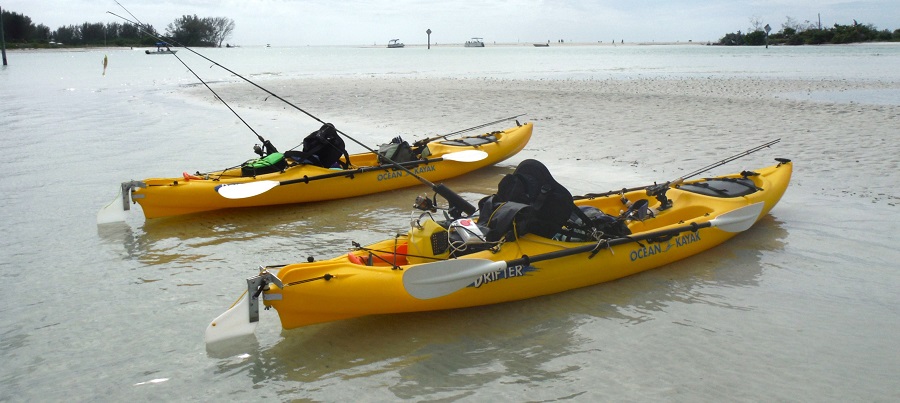
October brings Halloween and some great fishing for those who know where to find it. As our seasonal readers return to Southwest Florida, we’re sharing a few “treat” launch spots and “trick” tactics for each launch that should help kayak anglers make the most of fall conditions.
Lemon Bay Park and Environmental Center
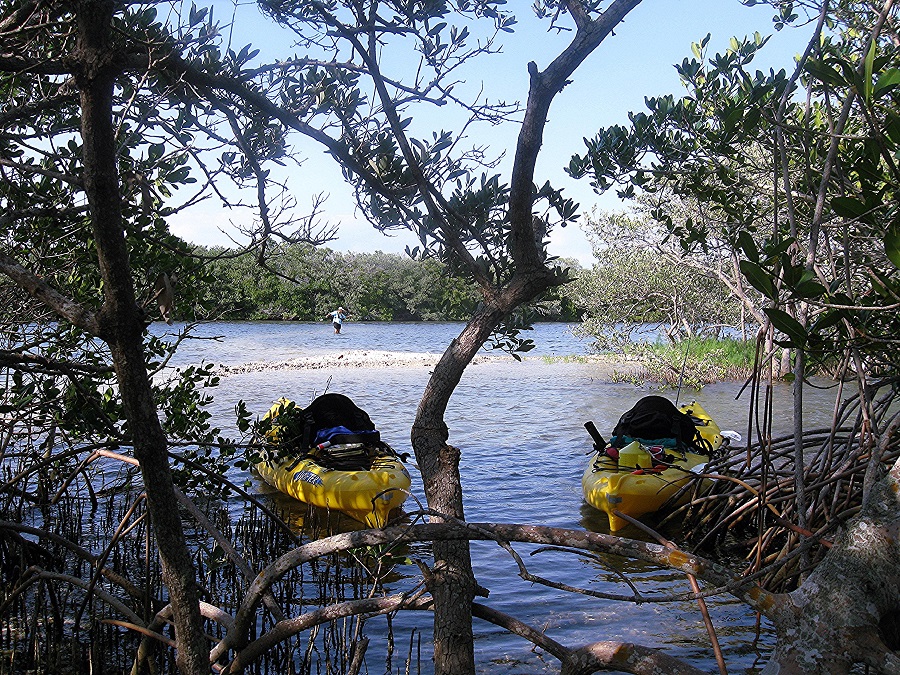
Treat: Lemon Bay Park is usually productive and now easier to launch from. Recent storms removed the old staircase and left a gentle sandy slope that’s far more dolly‑friendly. Nearby waters offer shelter and action in nearly any wind direction. Easterly winds are ideal, but paddling south will lead you around a sandbar to protected water if the north winds pick up.
Trick: We like to paddle north about three‑quarters of a mile to a couple of small mangrove islands. Deep flats along the way produce trout, pompano, and the occasional redfish. Once at the islands, park the kayak and wade the oyster/sandbar. Walking west toward the ICW puts you on a natural funnel where water and bait move north and south — and predators follow. Walking east toward the shoreline creates another tight corridor between mangroves and the bar, concentrating fish moving along the shore. It’s a great lunch stop followed by productive wading.
Oyster Creek Environmental Park
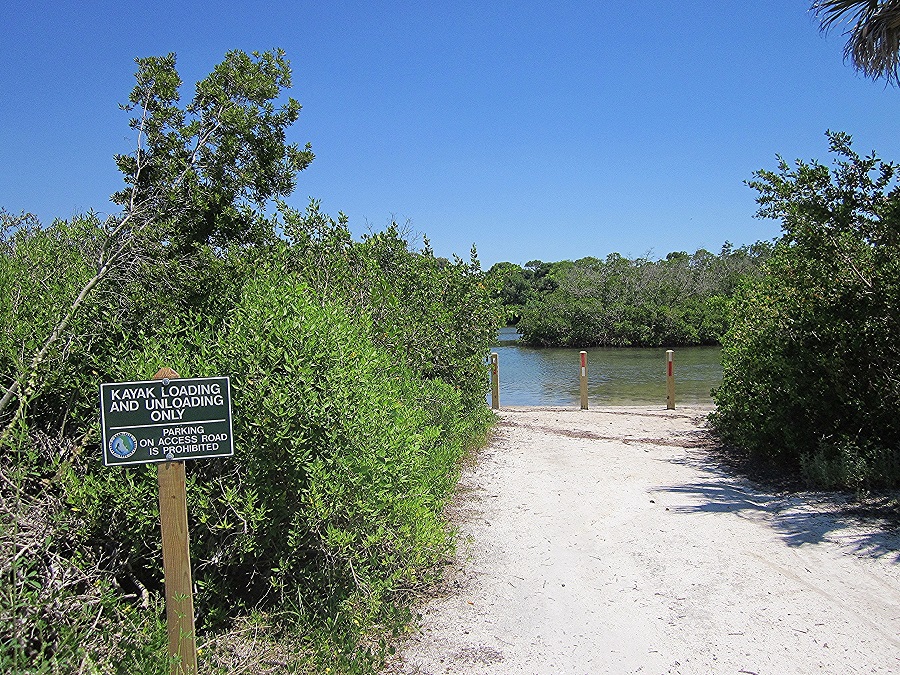
Treat: This easy “back‑down‑to‑the‑water” launch is a favorite for its simplicity and reliable fishing. This launch puts you directly east across the ICW from Stump Pass Beach State Park, ensuring strong tidal flows. In windy weather, the creek itself becomes a sheltered fishery with seawalls, mangroves, and shallow flats that warm quickly in winter. Toward Lemon Bay, Oyster Creek opens into a shallow bay with oyster bars and mangrove islands that attract bait and game fish — and discourage boat traffic.
Trick: Paddling west toward the ICW, a shallow lagoon on the right invites a few casts on higher tides and offers a less windy route into Lemon Bay. Turning north on the bay leads to water protected from north winds. This area is a redfish haven. In winter, the dark bottom warms quickly. Oyster bars provide structure and food; and the shallows offer secure footing for wading anglers. Fish the mangroves on higher tides; when the tide drops, move out to deeper flats for plentiful trout.
Stump Pass Beach State Park
Treat: Stump Pass is still a good launch spot, but parking is severely restricted after recent storms. An early arrival and patience are essential. The gate opens at 8 a.m. and closes at sunset, and the line forms around 7:30. Bring coffee and a donut for the wait. The water here is protected from nearly every wind direction except northwest.
Trick: The kayak launch puts you on “Ski Alley,” which can be busy and hazardous. The opposite shore, however, has small sandy beaches that let kayak anglers escape the crowds. The best fishing lies along the winding channel between Peterson Island and Whidden Key — a designated slow zone with sand bars, deep pockets, and mangrove shorelines. Strong tidal flow allows anglers to drift north or south. We anchor on shallow spots and fish lures into deeper pockets down‑current. At the north end of Whidden Key, the opening to Lemon Bay features a deep channel along southern mangroves and productive flats to the north. Sheepshead, snook, redfish, small grouper, ladyfish, jack crevalle, and pompano are common catches.
A Final Halloween Message
We hope these tricks and treats help kayak anglers find quality fish in Southwest Florida. Please practice catch‑and‑release in these heavily fished areas. It’s more fun to catch a big fish twice than to eat it once — and mature fish are the best stocking program we know.
Kimball and Les Beery, authors of Angler’s Guide to SHORE and KAYAK Fishing Southwest Florida, contribute these excerpts from both WATERPROOF books to promote the excellent fishing available in the Englewood area. They are available locally at Old Florida Gallery on West Dearborn, and for download at www.anglerpocketguides.com&amazon.com.