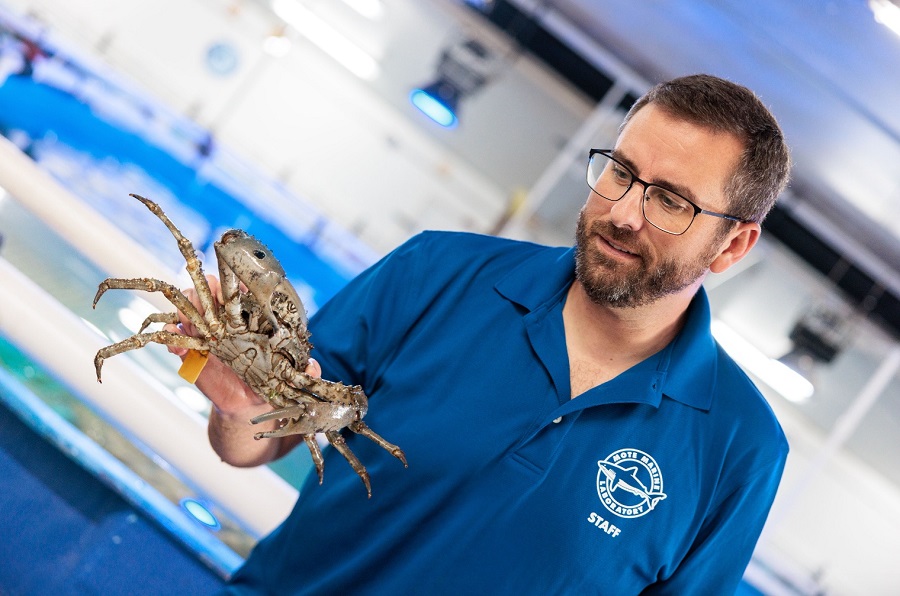
In a breakthrough for marine conservation, Mote Marine Laboratory & Aquarium recently completed the first-ever release of hatchery-raised Caribbean king crabs onto Florida’s Coral Reef. This milestone, announced in April 2026, marks a pivotal shift from research to active, large-scale ecosystem restoration.
The initial release took place at a restoration site in the Lower Florida Keys, specifically near Summerland Key. These juvenile crabs were born and raised at Mote’s Coral Reef Restoration Crab Hatchery Research Center, a 6,000-square-foot facility at the Mote Aquaculture Research Park in Sarasota.
Nature’s Ultimate “Reef Weeders”
Caribbean king crabs are often called “allies” by scientists because they are elite grazers.
Superior Consumption: They consume more algae than any species of parrotfish and rival the grazing rates of sea urchins.
Unmatched Palate: These crabs readily eat chemically defended or calcified algae that other herbivores typically avoid.
Restoration Synergy: By clearing nuisance algae that smothers coral, the crabs create space for coral larvae to settle and grow, which is essential for the Mission: Iconic Reefs initiative.
Scaling Up for the Future
While the first release involved a smaller batch, approximately 25 crabs, designed to refine transport and introduction protocols, Mote has ambitious plans to scale up production.
Production Goals: The Sarasota hatchery currently houses over 300 adult broodstock, with a long-term goal of producing 250,000 juvenile crabs annually.
Deployment Roadmap: Researchers plan to release nearly 35,000 crabs across the Florida Keys National Marine Sanctuary over the next few years, stretching from Key Largo to west of Key West.
“Caribbean king crabs have emerged as champions in the fight to rescue threatened coral reefs,” said Dr. Jason Spadaro, Mote’s Coral Reef Restoration Program Manager. He noted that while this isn’t the single solution to reef decline, it is a “groundbreaking and monumental milestone” in building long-term reef resilience. The National Marine Sanctuary Foundation and the National Oceanic and Atmospheric Administration (NOAA supported this project).
For more information, check out Mote Marine Laboratory & Aquarium at mote.org.