With Election Day approaching, the race for the District 4 Charlotte County Commission seat has intensified following the disclosure of an email exchange involving Republican candidate Kim Amontree. The correspondence details campaign strategy regarding a controversial 6,000-home rural development project and has raised questions from local community advocates about transparency and political influence.
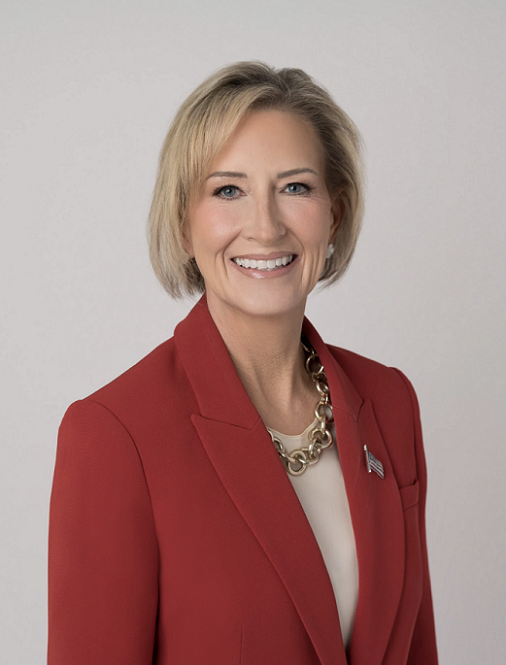
Amontree, who secured the Republican nomination after defeating incumbent Stephen Deutsch in the primary, faces non-party affiliated (NPA) candidate Michael Melton in the November general election.
The Email Exchange
The controversy stems from an August 22, 2026, email invitation sent to Amontree by Mary Ann Tipton, a retired U.S. Air Force Colonel and coordinator for a local resident group. Tipton’s group opposes overdevelopment and extensive mining operations along rural US 17 and State Road 74 (Bermont Road).
“My role is simply to gather and share information of interest to Charlotte County residents,” Tipton said, emphasizing her neutrality. “Issues, not politics, as I mentioned. Representing the group’s interest, I wrote separate, identical emails after the primary election to Kim Amontree and Michael Melton, wishing them both good luck in the general election and suggested that a true debate between the two would be good. Mr. Melton responded immediately with thanks, saying ‘That’s a great idea.'”
Though Tipton’s initial invitation made no mention of specific developers, records show that Amontree forwarded the email three hours later to Southwest Florida political consultant Terry Miller. In her message to Miller, Amontree explicitly connected the group to the proposed 6,000-home PulteGroup development in eastern Charlotte County, writing:
“These are the people in the area near the proposed Pulte development. I offered to meet with them previously to hear their concerns and they refused. I feel like this is a no win situation. If I speak specifically re Pulte will I have to recuse myself from a future vote. Give me your thoughts. Politely refuse? Offer to meet to hear their concerns after the election?”
Miller replied six minutes later, advising Amontree against giving specific positions on the project:
“No, you will not have to refuse [sic] yourself whatsoever. However, I would not give them any specifics on how you may or may not vote – I would just make it a listening session – but also at the end of the day they will have plenty of public comment at commission meetings where the facts will be presented. And you know me, I like just the facts!”
Following this exchange, Amontree responded to Tipton on August 24, suggesting a “listening session” rather than a standard debate format and requesting detailed logistics regarding the audience, question selection, and rebuttal rules. She also noted she would be traveling during much of September and early October.
Advocates Raise Questions
The email thread was inadvertently exposed when Amontree’s forwarded exchange with Miller remained attached to her final response to residents. Tipton shared the message with Dr. Robert Robbins, an environmental scientist and head of the advocacy group Friends of Cape Haze.
“They didn’t even notice Miller’s comments sitting right there in the thread,” Robbins said. “When I read it, I was stunned. Why would a candidate include this in a reply?”
Robbins, who has tracked local land-use conflicts and the county’s Rural Settlement Area Overlay District (RSAOD) guidelines for years, argued the exchange points to a broader systemic concern. “When voters look at county commission candidates, they want two things: independent judgment and direct accountability,” Robbins said. “Instead, when faced with the biggest local issue, the Pulte development, Amontree didn’t talk with her neighbors first; she went straight to her consultant.”
Campaign Finance and PAC Connections
Campaign finance records show that in addition to operating as a political strategist, Miller chairs two active political action committees (PACs) in Southwest Florida: The Southwest Florida Jobs Alliance and Just the Facts.
Financial filings from the Florida Department of State Division of Elections indicate that the Southwest Florida Jobs Alliance PAC accepted a $5,000 contribution from developer PulteGroup in March 2026. That same PAC later transferred $175,000 to the Just the Facts PAC, which is currently funding attack mailers targeting candidates in the local race.
“When a candidate hands off decision-making on development issues to a consultant funded by a PAC supported by the developer, it’s impossible to tell who she really serves: her voters or outside interests,” Robbins asserted. “Given the scope of the 6,000-home development and the high community interest in land-use decisions, this connection between candidate strategy, developer-funded PACs, and voter transparency is a story voters deserve to see before casting their ballots.”
The Englewood REVIEW notes that regarding campaign finance networks and campaign consulting, beyond the unedited email thread, there is no verified evidence of direct legal violations or illicit coordination.
The Legal and Structural Reality
To provide objective clarity on the mechanics of local campaigns, the Englewood REVIEW consulted Bethany Conrad, an Assistant Professor of Political Science at Florida Gulf Coast University. To maintain academic neutrality, Conrad was interviewed regarding general campaign procedures without disclosing the names or specific identities of the individuals involved in this story.
Addressing the boundaries between campaigns and political action committees, Conrad explained that legal restrictions depend heavily on how a committee is organized under Florida law. While federal and state rules strictly bar “Super PACs” (independent expenditure-only committees) from coordinating with a candidate’s team, standard PACs operate under different provisions.
“PACs can give money directly to campaigns, and they’re allowed to coordinate with the campaign team,” Conrad noted. “So yes, they can talk to candidates or staff, and even act as consultants if that’s the arrangement… If it’s a standard PAC, then this kind of back-and-forth with the campaign is typically allowed under the law.”
Conrad also clarified that consulting a strategist regarding a public forum does not run afoul of Florida’s strict voting conflict statutes. Under Florida Statute 112.3143, a county commissioner’s duty to recuse themselves from a vote is triggered only by direct, personal financial stakes.
“The voting conflict law really comes into play with actual voting situations—not general debates,” Conrad stated. “Essentially, the law says public officials can’t vote on things where they, or close family, or their employer, could gain or lose personally; it’s about direct profit or loss tied to a specific vote.”
Furthermore, Conrad emphasized that expressing a policy stance or campaign promise during an election does not legally disqualify a candidate from participating in subsequent legislative votes if elected. “If they took a public position on a development issue before getting elected—maybe promised to support or oppose it—and then the issue comes to a vote after they’re in office? That, on its own, doesn’t disqualify them,” Conrad said. “Politicians make campaign promises all the time, and following through isn’t grounds for disqualification.”
Parties Diverge on Current Involvement
Questions remain regarding the current status of the proposed 6,000-home eastern county development. When contacted for clarification regarding its financial links to the active PACs, PulteGroup issued a statement indicating it has withdrawn from the development.
“PulteGroup is no longer involved with this project and is not the developer,” said Ally Boyle, Senior Manager of Corporate Communications for PulteGroup. “We will share your inquiry with the appropriate party for consideration.”
When we reached out with follow-up questions, Boyle did not respond as to when PulteGroup ended its involvement, and the current developer remains unverified.
PulteGroup, Amontree, and Miller were initially contacted for comment on September 16, 2026. PulteGroup responded to our request. Follow-up requests were extended leading up to publication with deadlines extended to September 18, then to September 22, 2026. As of October 5, 2026, neither Amontree nor Miller has responded to requests for an interview or statement regarding the email trail or campaign strategy.
_________________________________________________________________________________________________________________________________
Unedited Email Transcripts
From: Community Organizer
To: Kim Amontree
Date: August 22, 2026, 8:49 a.m.
“Kim, we have a much larger group now with representation from all areas of Charlotte County. We are very interested in a debate/forum with you and Melton to hear and discuss our issues. We were hoping for one before the Primary but there’s still time before the General Election, and probably more appropriate. Are you interested? Melton is. Perhaps the two of you can work together to make this happen?”
_________________________________________________________________________________________________________________________________
From: Kim Amontree
To: Terry Miller
Date: August 22, 2026, 11:39 a.m.
“These are the people in the area near the proposed Pulte development. I offered to meet with them previously to hear their concerns and they refused.
I feel like this is a no win situation. If I speak specifically re Pulte will I have to recuse myself from a future vote. Give me your thoughts. Politely refuse? Offer to meet to hear their concerns after the election?”
_________________________________________________________________________________________________________________________________
From: Terry Miller
To: Kim Amontree
Date: August 22, 2026, 11:45 a.m.
“No, you will not have to refuse [sic] yourself whatsoever. However, I would not give them any specifics on how you may or may not vote – I would just make it a listening session – but also at the end of the day they will have plenty of public comment at commission meetings where the facts will be presented. And you know me, I like just the facts!”
From: Kim Amontree
To: Community Organizer
Date: Monday, August 24, 2026, 1:19 p.m.
“Thank you for reaching out. Before I confirm, I want to better understand the purpose of the meeting.
Is this meant to be an opportunity for you to get to know the candidates, or is it primarily to share your concerns about the future of the Highway 17 and the Bermont area?
If the goal is the latter, I think a listening session would be more productive. That format would allow me to hear your concerns before taking my seat, if I am elected in November.
If you are planning a candidate forum, could you let me know the format in advance? Specifically:
Location
Audience (public or private)
How will questions be chosen?
Will the same question be asked of all candidates?
What is the time limit for answers?
Is there an opportunity for rebuttal?
Will there be time for opening and/or closing statements?
On a scheduling note, I am taking some personal time for the first time in a year. I will be out September 1 through September 16, and again September 24 through October 11. I have included a link to my availability below.
Schedule a Meeting.
Looking forward to your response.
Thank you,
Kim”
Click here for more information, to read the full email thread, PAC contribution reports from the Florida Division of Elections, and campaign mailers on a reference page.
This is a developing story and will be updated.