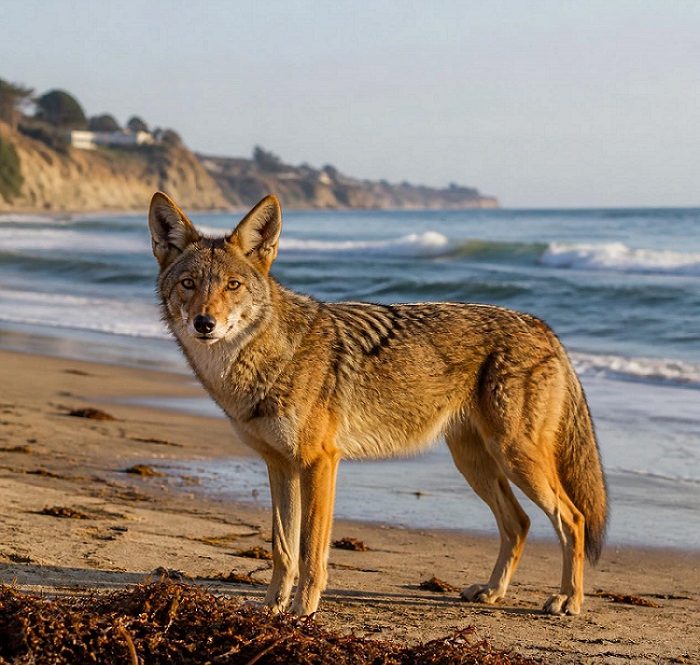
Coyotes are outsmarting efforts to protect sea turtle nests on Sanibel and Captiva islands, and right now, the Sanibel-Captiva Conservation Foundation team is feeling the frustration.
Last summer, coyotes feasted on turtle eggs by digging deep into the sand while the turtles were still developing; the eggs, packed with fats, acids, protein, and vitamins, offered a jackpot for a scavenger.
This year, researchers tried a new strategy at Bowman’s Beach: they put out decoy nests, markers and all, but no real eggs underneath. The hope was simple. Make the coyotes lose interest by letting them waste energy on fake nests with nothing to show for it.
For a little while, the plan seemed promising. The coyotes dug at the decoys, just as the scientists wanted. But then, that stopped. The animals started skipping the fakes and went right back to the real thing.
“We’re throwing every method approved by the Florida Fish and Wildlife Conservation Commission at this problem,” says Kelly Sloan in an interview with WGCU, the foundation’s coastal wildlife director. “We’re even trying ideas no one’s tested before to bring those predation rates down.”
They need results. Depredation rates have jumped, this summer, as much as 42% of nests were hit, way over the loggerhead recovery plan’s target rate. It’s not just a local problem, either. State data show that the beaches at each end of Sanibel Island, as well as on Captiva Island, are consistently in the top twelve of over two hundred Florida beaches for nest predation.
Things are bad enough that the Sanibel City Council’s now pitching in to fund a coyote population study. Those typically cost well into the six figures.
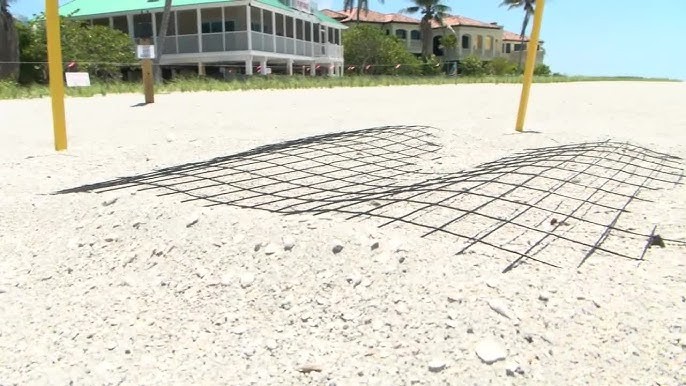
Out on Bowman’s Beach, you’ll see the classic markers: four wooden stakes, bright warning tape, metal grates, everything to show, both for people and for coyotes, that a nest should be there. The team picked this stretch because last year, it had the worst predation between Sanibel and Captiva. The idea was to blanket the beach with so many nests, some real, some fake, that coyotes would get nothing for their efforts and eventually leave the real nests alone.
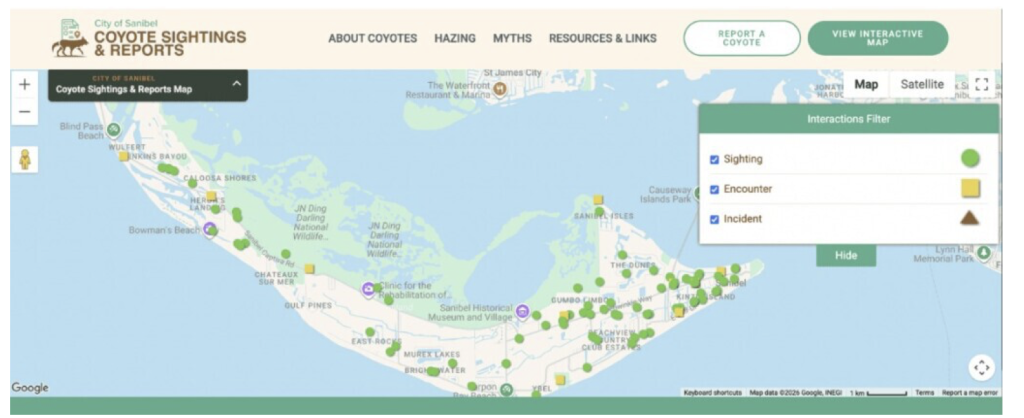
It worked for a while. At first, coyotes went after the decoys, but soon enough, they caught on. It slowed down at first, but now they’re just hitting the real nests and ignoring the decoys.
No one really knows how the coyotes reached these barrier islands in the first place, but the leading theory is they walked across the causeway one night years ago.
However they got there, they’ve learned to trust their noses over visual markers. And that creates a puzzle researchers haven’t solved yet.
Click here for more information.