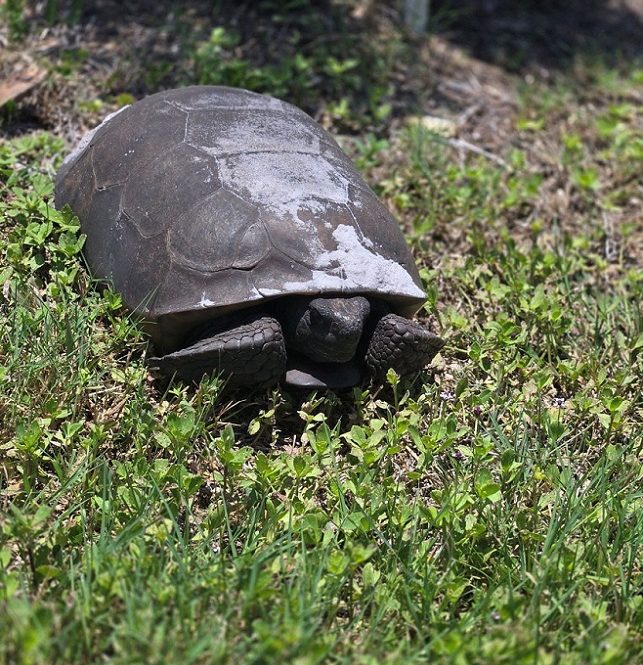
In Florida, gopher tortoises aren’t just another wild animal; people in our community care deeply about them, and the state protects them by law.
These tortoises do more than dig holes. They create long burrows that offer shelter to many other wildlife, like the Eastern indigo snake and the Florida mouse, protecting them from Florida’s heat and wildfires.
Now, any time developers want to build on land where gopher tortoises live, special rules kick in. Trained, licensed agents have to move the tortoises to approved wildlife refuge sites.
Here’s where waif gopher tortoises come in. If you dig into the dense Gopher Tortoise Permitting Guidelines, you’ll see in Appendix 14 that a “waif” has a unique status. Basically, a waif tortoise is one that someone picked up from the wild but that wasn’t part of an official relocation, so nobody knows exactly where it came from. For example, if someone scoops a tortoise off a busy road to save it, or brings an injured one to a vet, it becomes a waif. The state lets properties with at least five acres of good, connected gopher tortoise habitat serve as safe sites for these waifs, if they get official approval.
According to a statement from the Lemon Creek Wildflower Preserve, “Lemon Bay Conservancy (LBC) has not been approved as a waif site yet, but we are working with FWC to determine if they have the appropriate habitat and will apply for a permit when the timing is right.”
“If we receive that permit and can raise some funding to help with the temporary pen that needs to be in place to receive tortoises, then we would be open for placement. Also, this is not for those tortoises being displaced by development. It is for tortoises in which their home range is unknown and need a new location to take up residency. This is also NOT an opening for anyone to drop off unwanted tortoises. That is against the law and will not be tolerated.”
Bringing even one waif tortoise (maybe two) to Lemon Creek will take a special state permit. Only healthy tortoises that can survive on their own qualify. The Florida Wildlife Commission’s real aim is to get these rescued tortoises back into nature, and Lemon Creek’s natural environment makes it a strong option.
Please monitor the Lemon Bay Conservancy Wish List for more updates.
Click here for more information about the Lemon Bay Conservancy.