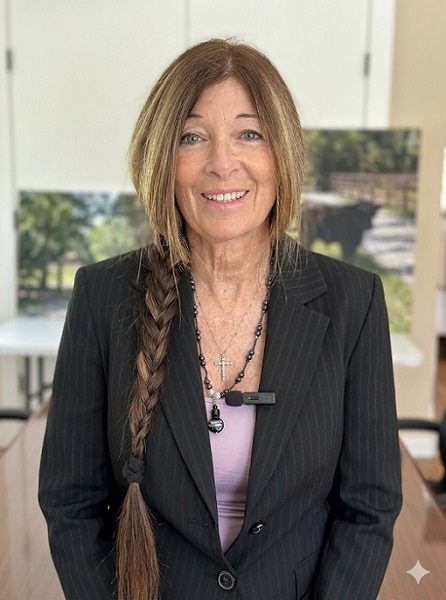
Kelly Bauman on the Fight Against the Manasota Beach Road Extension
A proposed 2.06-mile road linking State Road 776 to South River Road has become the focus of a legal and political dispute in Southwest Florida. Approved by the Sarasota County Commission through an unsolicited public-private partnership (PPP), the Manasota Beach Road Extension would cross floodplains and wetlands. Regional developer Pat Neal has described the project as an important connectivity and safety improvement. Local resident Kelly Bauman argues that it could benefit nearby development while shifting costs and environmental risks onto taxpayers and residents.
Kelly Bauman challenged the project’s Environmental Resource Permit (ERP) through the Division of Administrative Hearings (DOAH), then withdrew her petition, citing an unworkable schedule. She has since appealed to Florida’s Second District Court of Appeal in Tampa. In this interview, Bauman explains her objections and the next steps in the dispute.
PART I: FROM DOAH TO THE APPELLATE COURT
ER: Pat Neal has characterized the DOAH dismissal as a victory, saying the mitigation plan met the state’s public-interest requirements. How do you respond?
Bauman: There was no final evidentiary hearing and no ruling on the merits establishing that the project’s benefits outweighed its environmental impacts. Due to the denial of an extension, the county not providing discovery but deflecting to the Economic Stimulus Working Group, whose discovery was then due to me on the same day as my depositions, there was not equitable and reasonable time to prepare my final case. The case was dismissed without a judge hearing our evidence. Our concerns about flooding, drainage and wildlife were never adjudicated. That is not a decision against our facts; it means the case was never heard.
ER: Why did you decide to withdraw?
Bauman: It was agonizing, but I did not have the time needed to gather information or complete discovery. Proceeding with incomplete evidence would have meant presenting a distorted version of our case. I was also concerned about putting local residents and witnesses through depositions and intense scrutiny on such a compressed schedule. Withdrawing was the responsible choice and preserved our ability to continue challenging the project.
ER: What happens now that you have appealed?
Bauman: I submitted the appeal to the Second District Court of Appeal. The court must decide how to proceed, and we may face a motion to dismiss from the Southwest Florida Water Management District or Neal’s group. The court could also ask for clarification. If the case clears those procedural steps, I will have 70 days to prepare and submit my legal brief.
ER: Do you expect a different kind of legal process in Tampa?
Bauman: I believe the appellate court will focus on administrative law, due process and compliance with statutes. I found the DOAH process subjective, especially in some of the interactions and decisions around the schedule. I am not alleging wrongdoing by individual county commissioners, but I believe the appellate venue offers a more objective review of the legal questions.
PART II: KEYWAY ROAD AND THE PUBLICLY FUNDED ALTERNATIVE
____________________________________________________________________________________________________________________________________
THE DECOY ROAD AND THE KEYWAY ROAD OBLIGATION
| Road Project | Funding Source | Current Status / Legal Standing | Developer Benefit |
| Keyway Road Connection | 100% Developer Funded | Binding obligation under Ordinance 2022-095 | Cuts through Neal’s active Boca Royale East development, threatening luxury home sales. |
| Manasota Beach Road (MBR) | $15 Million Taxpayer Funded | Approved via unsolicited Public-Private Partnership (PPP) | Serves as a bypass, allowing developer to avoid building Keyway while heavily marketing “beach access.” |
ER: Why do you believe the Manasota Beach Road Extension is being advanced now, and what does it have to do with Keyway Road?
Bauman: When residents asked why the project was needed, Neal emphasized ‘connectivity,’ but I have not seen independent traffic studies or hard data that, in my view, answer the community’s questions. I believe the extension is also being promoted as beach access that could increase the appeal and value of nearby developments.
The central issue is Keyway Road. Under Sarasota County Ordinance 2022-095, Neal’s Boca Royale East development is required to build a connection to Keyway Road at the developer’s expense. The connection is mapped and, as I understand it, is a binding obligation. Building it would bring a major traffic connection near homes in Boca Royale that Neal is marketing. Company materials referenced a ‘Quit Keyway Committee’ made up of residents opposed to that connection.
The alternative now being promoted is the Manasota Beach Road Extension, which would use $15 million in public funds. In presentations to the County Commission, projected traffic was shown ‘without Keyway Road,’ even though the existing obligation had not yet been resolved. My concern is that a road the developer is obligated to build privately is being replaced by a taxpayer-funded project that his group proposed and would build.
ER: County transportation staff say Manasota Beach Road has long been on the thoroughfare plan, and that east-west connections are needed roughly every seven miles. Doesn’t that support the project?
Bauman: The road has appeared on a plan, but other planned roads have been removed when they no longer suited development interests. Gissinger Road, now Boca Royale Boulevard, is one example. In October 2025, Transportation Director Spencer Anderson reportedly acknowledged that development interests had helped get Gissinger Road removed from the county plan. That raises questions about how consistently the plan is applied.
The seven-mile argument also deserves scrutiny. The distance from Jacaranda to Indiana Avenue and River Road is already about 6.5 miles, according to the figures I have reviewed. Anderson also said the road ‘wasn’t a glimmer in anyone’s eye until it made developmental sense.’ I believe the county should explain why this particular route is being fast-tracked and why Keyway is being treated differently.:
Neal has also argued that Keyway would cost more because it would require four lanes, citing a 2025 report. But a two-lane road across wetlands, with a 150-foot right-of-way, would also carry significant costs. When Keyway’s removal was raised at the April 23, 2025, commission meeting, I did not hear commissioners or staff address the ordinance or the developer’s existing obligation.
PART III: WHO BENEFITS, AND WHO PAYS?
ER: Pat Neal has said none of his active communities are ‘on’ Manasota Beach Road and that he cannot imagine a benefit to his company. What is your response?
Bauman: The wording is narrow. A development may not have an address on the road but can still border it or sit nearby. Palmera borders the road to the northeast, and Wysteria, Avelina and Everly are also close to the proposed extension. Sales agents at Boca Royale East have reportedly marketed homes as being about five minutes from Manasota Beach via Manasota Beach Road, even though the extension has not been built.
If there were no benefits, why would Neal’s group bring the unsolicited PPP proposal to the county, seek $15 million in public funding and advocate removing Keyway? Those are questions the public deserves to have answered with documents and independent analysis, not just assurances.
ER: Who will maintain the stormwater facilities?
Bauman: The project’s environmental permit names the Sarasota National Community Development District (CDD) as responsible for maintaining the road’s stormwater ponds. A CDD is a special taxing district, so those costs can be covered through assessments on residents within the district. My concern is that long-term maintenance costs would be shifted to homeowners while the developer’s original Keyway obligation is avoided.
ER: Supporters say the extension will create a safe connection for students, walkers and cyclists. What concerns you about that claim?
Bauman: The plans show a 10-foot multi-use recreational trail extending from Wellen Park, but, as I read the plans, it ends at the back property line of Beach Walk rather than connecting safely all the way through. That could leave pedestrians and cyclists at a dead end. Neal also acknowledged that the remaining 1,200 feet to the west is constrained to two lanes because a previous developer did not preserve the necessary right-of-way. I worry the project could funnel users and traffic into a bottleneck.
PART IV: TRAFFIC ESTIMATES AND FLOODING
THE CONFUSED NUMBERS AND THE FLOODING RISK
TRAFFIC EXPANSION FLOODGATE
[ 5,500 Cars ] -> Current Baseline Claimed
[ 9,000 Cars ] -> Peak Flow Estimate
[ 21,280 Cars ] -> IMMEDIATELY ADDED CAPACITY CAPABILITY
*Data Source: Stantec Engineering Docs / Developer Presentations (2025)
ER: Traffic projections appear to vary considerably. What numbers have you found?
Bauman: Neal has recently cited roughly 5,500 vehicles a day, or 9,000 during peak periods. But slides from his presentations to the commission on April 23 and August 27, 2025, say the extension would ‘immediately add capacity for 21,280 vehicles per day’ between State Road 776 and South River Road. Those figures describe very different levels of use. Residents need a clear explanation of what the estimates mean and how they were calculated, especially given the proposed 150-foot right-of-way and $15 million public cost.
ER: What are your main environmental concerns?
Bauman: The Environmental Resource Permit relies on an older foundational permit, and I do not believe the review adequately accounts for cumulative impacts from paving a road through an already stressed floodplain. Other commercial and residential developments could proceed once the extension is built, but I have not seen the combined drainage effects fully addressed.
Residents in and around Englewood could bear the consequences if drainage patterns change or flooding worsens. Some homeowners are not currently required by lenders to carry flood insurance. I want to know whether the developer or county will guarantee that nearby homes will not face greater flood risk, and what would happen if flood maps change and insurance becomes mandatory.
People are already worried about selling homes and about localized flooding. In my view, paving wetlands and adding development in a floodplain could threaten homes rather than solve the area’s infrastructure problems. These concerns should be assessed independently before construction begins.
PART V: PUBLIC OUTREACH AND NEIGHBOR NOTIFICATION
ER: Neal has said he held workshops, bus tours and house calls, and that organized opposition did not emerge until August 27, 2025. Is that accurate?
Bauman: The agreement between Sarasota County and Neal’s Economic Stimulus Working Group called for public workshops at both the 30% and 90% design phases. I say the 30% workshop was skipped and only one workshop took place at the 90% phase, when the engineering plans were already well developed.
On September 19, 2025, weeks after the commission voted to approve funding on August 27, the county emailed me that public involvement ‘will occur’ at the 30% and 90% design phases. That timing was confusing: the email described public participation as future work after the funding vote had already occurred.
ER: Were the homeowners directly along East Manasota Beach Road notified?
Bauman: To my knowledge, no homeowner on East Manasota Beach Road was notified or contacted by the county or Neal’s group before the controversy became public. Neal has said he knocked on doors but could not reach homes behind security gates, and he has referred to only six residents on the road. I count 27 residents with East Manasota Beach Road addresses who could be directly affected; eight live on the unpaved portion. Those families have maintained and graded that road at their own expense.
I believe outreach focused instead on Boca Royale residents concerned about Keyway and on Sarasota National residents, whose right-of-way was needed for the project. The project corridor is 2.06 miles long, and people along other parts of it should also have been contacted.
ER: When did residents first raise objections?
Bauman: There was a large gathering at Jacaranda Library on August 19, 2025, before the August 27 commission meeting. The room was so crowded that some people were turned away under fire-code limits. I did not attend because I had not been notified of the meeting. I also dispute the account that Neal had contacted Mary Beth Jones; she has stated publicly that he did not contact her.
When I spoke to Neal outside the commission chambers on August 27, he told me, ‘I know nothing about a road, the County hired me to build a MURT.’ He later called and left a voicemail. I returned the call, but we did not speak again.
PART VI: THE ROAD AHEAD
ER: There is also disagreement about ownership of the right-of-way. What is the issue?
Bauman: Neal’s statements have varied. At the April 23, 2025, meeting, he said the county owned the right-of-way except for one small section; by August 27, he said, ‘You own it.’ There is also a 1998 easement agreement that the county and developer have cited. My concern is that an old easement is being used to argue that residents cannot object to a major road extension. I believe the 2018 interlocal agreement between the county and Sarasota National is also important to understanding the project.
ER: What do you see as the fundamental flaw in the county’s handling of this deal?
Bauman: The project crosses wetlands, wildlife habitat and areas connected to several communities, yet it moved forward through an unsolicited PPP. My understanding is that this process required only one public hearing and a 14-day public-notice window. Public records also show Neal requested a ‘short review’ from county staff.
A project of this scale should be evaluated through a transparent process, with independent engineers and contractors who do not have financial ties to the developer. The public needs to understand the road’s costs, benefits, environmental consequences and alternatives. When the same group proposes and builds a project, the county must demonstrate clearly how conflicts of interest and public accountability are handled.
ER: What is your message to Englewood residents as the appeal moves forward?
Bauman: This effort is not over. Residents need the complete, unredacted data behind the proposal and an explanation of why Keyway Road was dropped. Before trees are removed or wetlands are paved, the county should answer those questions publicly and account for the possible long-term effects on traffic, drainage, wildlife and nearby homes.
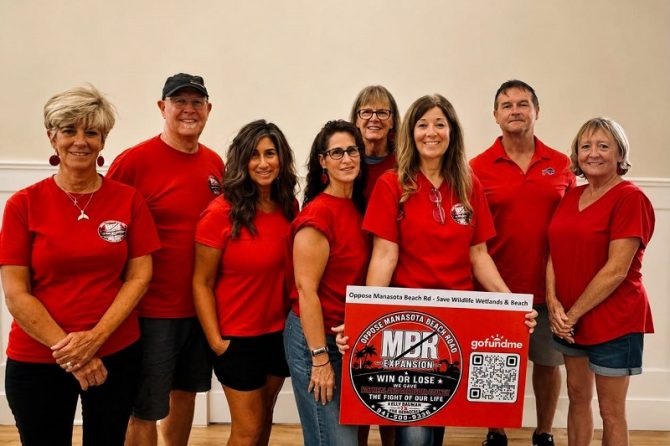
We intend to pursue the legal and administrative options available to us. That work requires community participation and financial support. The people who will live with the project’s impacts deserve a meaningful voice in the decisions being made.
ER: Kelly, thank you for your time.
Bauman: Thank you.
How to get involved:
• Facebook action group: Oppose Manasota Beach Road Extension
• Community hotline: 941-500-9356
• Grassroots legal fund: GoFundMe, “Help Save Wetlands & Wildlife – Stop Pat Neal”