
“The miracle of the light pours over the green and brown expanse of saw grass and of water, shining and slow-moving below, the grass and the water that is the meaning and the central fact of the Everglades of Florida. It is a river of grass.” Marjory Stoneman Douglas, Founder of Friends of the Everglades
The massive reservoir south of Lake Okeechobee, touted by Governor Ron DeSantis as the “crown jewel” of Everglades restoration, won’t be enough to save Florida’s iconic wetlands. That’s the blunt conclusion from a new report by Friends of the Everglades. Even though this reservoir is large, it only meets a small part of what is required.
The advocacy group envisions something much bigger: a reservoir in the Everglades Agricultural Area stretching 77,000 acres and 13 feet deep. That’s far larger than what’s already being built amongst the endless sugarcane fields. The current project, with its $3.5 billion price tag, is the largest the Army Corps of Engineers has ever attempted. Still, it doesn’t meet the scale of the problem.
Tom Van Lent, the science advisor for Friends of the Everglades, led the report. After reviewing extensive scientific literature, he concluded the region needs to store an additional million acre-feet of water, on top of what the EAA reservoir can hold, to restore the Everglades’ natural flow and relieve the battered coastal estuaries from regular hits of polluted water.
Click here for a link to the full report.
“It would look like a very large but relatively shallow lake—a smaller Lake Okeechobee in the landscape,” Van Lent explained. He recognizes the political and financial challenges, calling such a reservoir a true long-term investment in South Florida’s future. The alternative is more of the same: entrenched problems, ecological decline, and vulnerable drinking water for millions.
This EAA reservoir sits at the heart of a $27 billion effort to revive the Everglades, a watershed that shapes most of peninsular Florida. The restoration project is a response to decades of drainage, which, while making Florida’s modern development possible, unleashed problems statewide. In 2018, the flood of polluted water from Lake Okeechobee fueled a toxic algae crisis, hurting people and wildlife and pushing the issue to the forefront of DeSantis’ first campaign for governor. Since then, DeSantis has poured billions into the restoration, fast-tracking the reservoir’s construction with help from the federal government.
His efforts haven’t come without controversy. The governor’s environmental record faced criticism, especially over clashes surrounding the short-lived Alligator Alcatraz migrant detention facility near the same region.
Still, the state points to measurable successes: the South Florida Water Management District claims investments have tripled storage capacity, sped up restoration, and finally pushed Florida Bay’s salinity levels back to healthy targets.
The Army Corps echoes the importance of the EAA reservoir, highlighting construction progress this year and calling the project a key tool for moving clean water south, away from coastal estuaries, toward the Everglades.
Reviving the River of Grass
The Everglades used to sprawl across South Florida, moving like a lazy, endless river. Now, it’s sliced up and boxed in, divided by roads, levees, and farmland. Restoration efforts focus on bringing this slow river back to life and protecting the region’s drinking water: no small feat, especially with the population booming.
Imagine it: three snapshots in time. First, the Everglades as they were, water gliding south. Then, a tangled, altered flow choked by development. And finally, the vision, with restored wetlands, water pulsing naturally again.

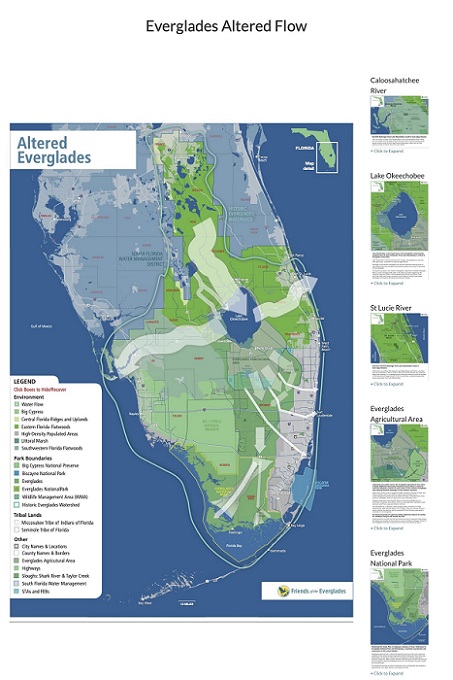
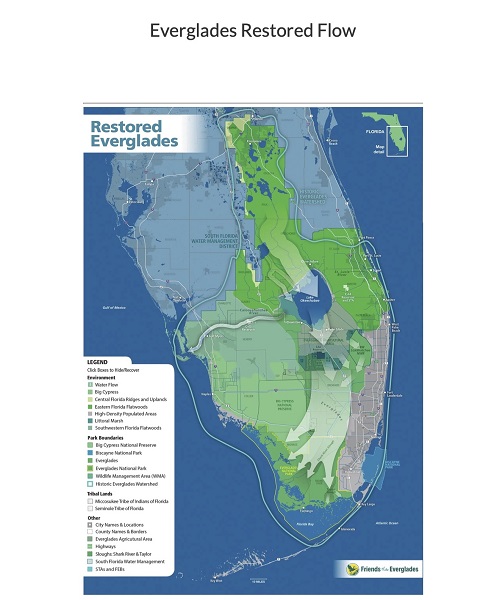
According to the Friends of the Everglades, building more water storage in the Everglades Agricultural Area will help recapture that historic flow. It’s a simple idea: let the water follow its old path, and the ecosystem stands a fighting chance.
History makes this clear: for centuries, the Everglades’ waters moved gradually, just inches deep, across the landscape. The more water we can hold and filter in the right places, the closer we get to replicating that lost, life-sustaining flow.
According to the Friends of the Everglades’ report, new storage must sit in the Agricultural Area to truly revive the river of grass. Storage north of Lake Okeechobee, though helpful for the lake and estuaries, won’t reach the Everglades itself. They call for a staggering scale: the current EAA reservoir holds about 240,000 acre-feet over 10,000 acres, but the report says we need four times that amount.
This matches earlier findings. A 2015 University of Florida Water Institute report, requested by the Florida Senate, also called for a million acre-feet of new water storage to ease the damage from Lake Okeechobee’s polluted outflows. That research predates the current EAA reservoir and underscores just how large the restoration must be.
Arguments over the EAA reservoir’s design and effectiveness aren’t new. Environmental groups questioned its ability to move enough water and clean it to proper standards. They flagged the lack of attention to climate change, among other concerns, long before construction started.
These disputes triggered bitter legal fights, including accusations by the Everglades Foundation against Van Lent, who says his real offense was raising the alarm about the project’s limitations.
Van Lent believes the entire future of South Florida hinges on decisions made right now about water storage. Rising sea levels, intensifying heat, and climate change make the stakes that much higher. “Any analysis tells you storage is the determining factor. And if you ask where the storage belongs, it’s the EAA. No exaggeration: what happens in the EAA determines South Florida’s fate,” he said.
With DeSantis leaving office after his second term in January 2027, the next governor faces a tremendous opportunity for the Everglades. Eve Samples, executive director of Friends of the Everglades, sees room for bold action: buying more land in the Agricultural Area and sticking to science, not wishful thinking.
“The Everglades is one of the most critical ecosystems in the world,” says Friends of the Everglades, “providing unique habitat for wildlife, protecting the water supply for millions of Floridians, and safeguarding our coastal communities and economies. However, this precious resource remains imperiled due to lack of water storage and treatment. Join the groundswell of people rallying around a clear solution.”
Click here for more information about Friends of the Everglades.