
Florida’s beaches are gearing up for another rough summer as sargassum season kicks into full swing. Scientists keep sounding the alarm, as 2026 might bring one of the biggest invasions of this stinky seaweed on record.
Local governments aren’t sitting back. In Palm Beach County, cleanup plans are already rolling out. Crews hope to clear out the thickest piles at Ocean Inlet Park and South Inlet Park by midweek. In Jacksonville Beach, workers first have to check for turtle nests before they can tackle the mess. The rules don’t stop there, though. Some towns, like Fort Lauderdale, are looking past the hassle. Instead of dumping the seaweed, they compost it, turning it into rich black soil for city landscaping. While these are the first reports, Southwest Florida is also experiencing the dreaded sargassum.
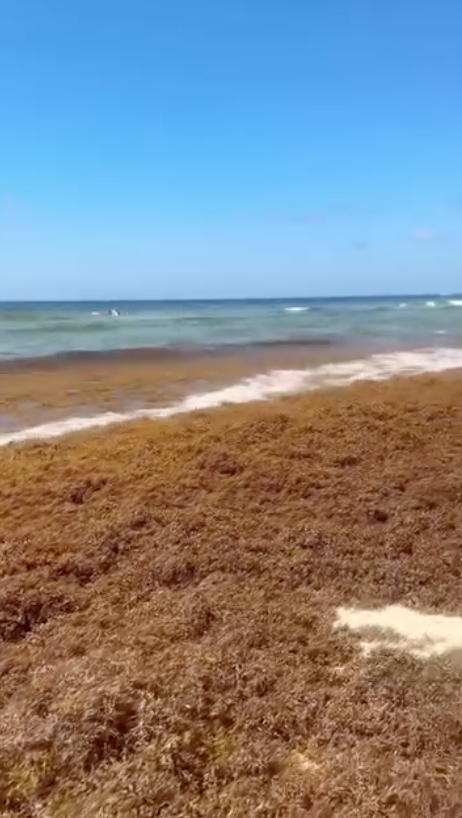
This isn’t some minor inconvenience. Thick, reeking layers of sargassum keep smothering parts of South Florida’s coast, forcing cleanup teams into a non-stop grind. Someone rakes it away one day, and within 12 hours, more just rolls right back in.
The actual concern is that this is probably just the beginning, a preview, not the main event.

Projections from the University of South Florida paint a worrying picture. Their 2026 outlook predicts that beaching events along the Caribbean and Florida’s southeast coastline will keep ramping up. Even Louisiana and Texas might get hit. By next summer, sargassum totals are likely to smash records, far surpassing normal levels.
So, what exactly is sargassum? It’s a leafy, rootless type of floating seaweed that rides the ocean currents in vast, drifting mats. Out at sea, it’s an environmental heavy-hitter, soaking up carbon dioxide and giving shelter to fish, sea turtles, birds, and other wildlife. Near the shore, though, the stuff quickly turns from helpful to a headache, choking beaches, disrupting the local balance, sending away tourists, and throwing a wrench into fishing operations.
If you’ve ever wondered why it smells so bad, it’s the rot. Once the sargassum lands, it breaks down in about two days, releasing foul gases like hydrogen sulfide, methane, and ammonia. According to a 2025 University of South Florida study, there isn’t yet enough data on long-term health effects, though researchers say the immediate risks for vacationers and residents are low. Cleanup crews who spend lots of time knee-deep in the muck, though, are another story.
Cities are spending big to keep the beaches usable. In Fort Lauderdale, for example, workers use special beach rakes designed to avoid sea turtle nests. Workers haul off any seaweed they collect, not just for disposal but to create nutrient-rich soil, which cuts city dumping costs by about $100,000 each year. Sometimes, blending seaweed and sand can provide a little ecological payback, helping build up sand dunes and creating food and shelter for some coastal species.
So, why are these sargassum blooms exploding in the first place? Scientists started seeing major changes in 2011, when the drifting mats ballooned in size so much that satellites could spot them from space. Blooms usually reach their worst in summer, thanks to longer days, warmer seas, and prime conditions for growth, according to NOAA.
For now, there’s no way around it; beach season in Florida comes with a side of sargassum. And with record-setting years looming, communities along the coast have no choice but to gear up and brace for the next wave.