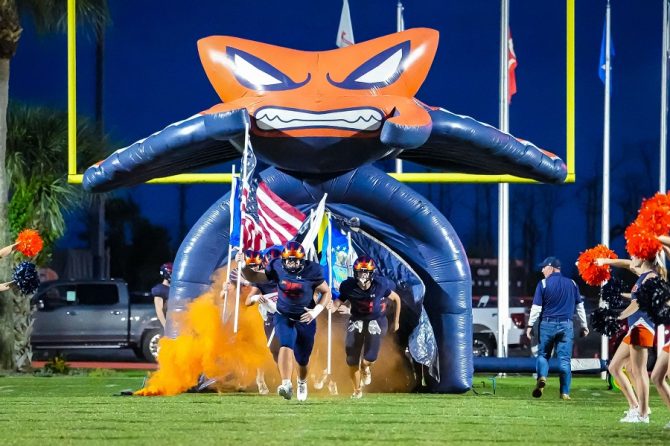

A routine heart screening changed everything for Cameron Crider, a 15-year-old sophomore at Calvary Christian High School. He never felt sick, not a single symptom. All his life, he’d been running, playing sports, doing everything you’d expect from a healthy teenager. Then came Florida’s new rule: every high school athlete must get an electrocardiogram before competing, thanks to the Second Chance Act.
This law took effect on July 1. For the first time, every student athlete in grades 9-12 needs an ECG screening before their first game or meet. Hundreds of students have already gone through it this school year, and for Cameron, it was life changing.
Initially, he experienced confusion. Why would he need a heart test? “I was confused at first because I have been playing sports my whole life and I haven’t had any symptoms of anything,” Cameron told WWSB ABC7 News.

The nonprofit Who We Play For performed his screening. That’s when they found the problem. Cameron was born with two small holes between the upper chambers of his heart, a defect he never knew about.
Doctors explained that the danger lies in how quietly the damage builds. With this specific type of defect, the danger is slow heart damage over time. By the time symptoms show up, it’s often too late.
Cameron still wanted answers. “I didn’t know what it was. I just wanted to know how to fix it,” he said.
Screenings like this matter because most student athletes look and feel healthy. That’s what makes these heart defects so tricky. Andres Barona, a cardiac sonographer at Sarasota Memorial Hospital, put it plainly: “The student athletes will have no idea they have these problems, and the small percentage that we have with positive findings can change their lives.”
Florida passed the Second Chance Act after a tragedy. Chance Gainer, a high school athlete, died after suffering sudden cardiac arrest during a football game on September 6, 2024. Chance wasn’t the first, or even the eighth, student to die like this that year. His mother, Equillar Gainer, couldn’t accept that nothing would change. “Chance was the eighth child to die that way the year he died, so something had to be done,” she said.
She teamed up with Evan Ernst, the co-founder of Who We Play For, to push for the law. The organization estimates that out of 100,000 Florida students screened, about 300 will discover a life-threatening heart condition before it’s too late.
For Laura Crider, the families who turned their heartbreak into action made all the difference. “In their grief and anger and everything else they had to feel, they decided not anybody else’s kids,” she said.
Now Cameron faces heart surgery in October. He’s got six months of recovery ahead of him, but already he’s waiting for the day he can get back on the field.
Click here for more information about Who We Play For.