
Spring has sprung, and summer is on the way.
In the freshwater creeks around here, the bass are spawning, frogs are singing, and bugs are biting. It’s a great time to be kayak fishing in Southwest Florida, if you’re prepared.
Nothing beats springtime for the sheer beauty of a creek in a kayak. Flowers are blooming, the cypress are budding out, the rains will soon put freshwater into the creeks, and they’ll start flowing again after winter’s dry weather and the bass are responding with their usual springtime aggression.
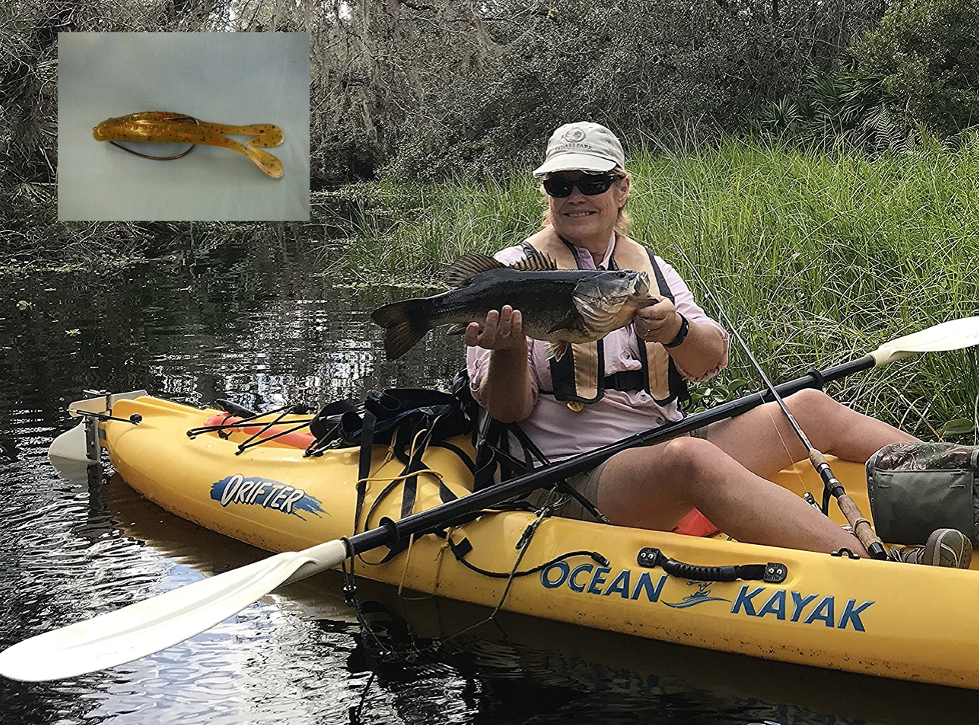
There are many creeks in this area to kayak, and most have healthy bass and bream populations. Spring is our favorite time on these creeks as frogs become active. Their croaks, chirps, and mating calls create a raucous sunset serenade, if you are up a creek and listening.
Unfortunately for the frogs, bass enjoy this time of year too and feast on these amphibians with enthusiasm. Frogs are easy to catch and slide easily down their throats compared to bream or bait fish with sharp spines. They represent a bite-sized dose of high-quality protein that just can’t be passed up. Many of the strikes kayakers hear along the bank and back in the weeds are bass eating frogs.
We have used the Zoom Horny Toad™ rigged weedless on a 5/0 wide-gap hook for years. Just put the hook into the nose and bring it out about ¼” back under the chin. Then place the bend of the hook between the legs and barely stick the point into the back of the frog to make it weedless. When the bass chomps down on the frog, the hook deploys and sets in the jaw. Many frog lures we have tried feature double hooks on the back that don’t seem to have a gap wide enough for a solid hook set.
If you must fish during the middle of the day, focus on shadows and those overhanging hard to fish spots.
Accurate casting and even some skipping will get your frog into spots few anglers ever reach, resulting in big fish being fooled. Another technique is to cast the frog onto some floating vegetation and “tickle” it across the top. Bass holding underneath notice the movement and track the bait to any open spot where it is attacked. To do this best, cast onto the mat, hold the rod tip high and just jiggle the tip. Make sure the line goes slack between mini-jerks. Too much pressure causes the frog to hang up, then leap 5-10’ towards you as the bass loses track of it. Using just the tip of the rod and allowing slack to form between jerks will cause short 3-5” hops across the mat. Often bass will attack from underneath and come right up through the mat to get the frog. That’s exciting, but it’s hard to land these fish that are tangled in a ton of salad.
Frogs are feasting on insects that take over this time of year. Nearly every time you hook a good fish in a small creek, it will take you into the bushes while you land and release your prize. Spend as little time there as possible. Mosquitoes, biting flies, ticks, and other critters are happy to join you there. At sunset they’ll even find you out on open water, so long sleeves, long pants, a cap, a buff, and plenty of repellent will help you enjoy this time of day. The magic hour around sunset is often the best bite of the day if you’re protected.
As you’re exploring the bushes on the shoreline while landing a good bass, be sure to notice what type of plants you are crashing into. There’s a type of ivy here unlike the ground cover we commonly associate with poison ivy. This poison ivy creates sturdy vines that climb trees and hang into the water. It has shiny leaves the size of your hand in groups of three. Not only are the leaves dangerous, but even the bark of this plant can cause a lot of suffering. The poisonwood tree may also be present, so look at the shoreline vegetation and avoid hanging a lure in any of this stuff as it is hard to retrieve the lure without exposure. If a lure hangs up in it, and the rod tip fails to dislodge it, we get as close as we can then safely cut the line.
Besides hungry fish, springtime brings out a bouquet of native flowers along these creeks. The spherical blossoms of the buttonbush and the delicate spider lily, to name a few, are easy to find, so take a break from fishing and enjoy the seclusion, isolation, silence, and beauty of springtime on a Southwest Florida creek.