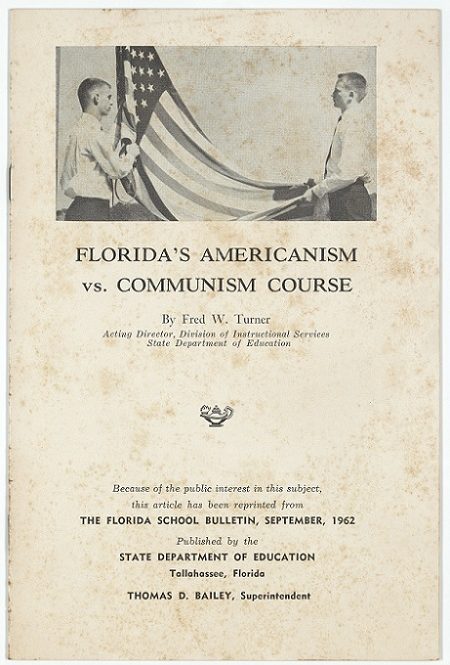
Back in the early 1960s, Florida lawmakers responded to the Bay of Pigs Invasion with a new mandate: every public high school student had to take “Americanism vs. Communism.”
The course, which started in the 1961–1962 school year, ran for six weeks or a semester and focused on showing the dangers, errors, and perceived evils of communism when stacked up against American values. This requirement stuck around for over two decades before the legislature repealed it, officially in 1983, according to state archives, replacing it with economics. Even after the repeal, though, some schools hung on to remnants of the course before eventually phasing it out.
Now, Florida is back in the spotlight as it expands communism instruction for students in grades 6 through 12. This isn’t just a history lesson; students are diving into specific regimes like the Soviet Union, Mao’s China, and Castro’s Cuba. The new curriculum highlights the suppression of speech, religion, and individual freedoms that occurred under those governments.
This expansion lands right in the middle of a fierce political debate over what young people should think about capitalism and socialism. With socialism and even communism garnering increased attention, and some degree of favor among younger Americans, there’s fierce discussion over how schools should present these ideologies.
This question strikes especially close to home in Florida, where around 2 million residents have direct experience fleeing from communist or socialist governments in countries like Cuba, Venezuela, and Nicaragua. For many students, this means they aren’t learning about these ideologies just from textbooks; they’re hearing firsthand stories from family or neighbors who lived through it.
The intention behind the expanded curriculum is clear: to give students a deeper look into the history and ideological roots of communist movements, but also to let them grapple with actual accounts of life under these regimes. Beyond abstract definitions or dusty theory, they need to understand the practical tradeoffs, especially the consequences that come with concentrating too much political or economic power in the hands of the state.
Recent polls show a sharp generational divide. About 53% of Gen Z participants had a favorable view of socialism; just 45% felt positively about capitalism, and 38% viewed communism favorably. Numbers like these make the case, at least for some, that more comprehensive education around these topics isn’t just useful; it’s necessary.
As debates over political and economic systems continue nationwide, Florida’s curriculum changes look set to fuel discussions about how schools teach communism, socialism, capitalism, and what it all means for the next generation.