On August 26, 2026, Desiree Rabuse, along with other nearby property owners, sued the Charlotte County Board of County Commissioners. The lawsuit challenges a proposed mine and solid waste landfill, dubbed “Waterside,” that sits just off Bermont Road.

Back on July 28th, the commissioners approved this project. The central issue of the lawsuit is a question of process. The plaintiffs argue the Board misused Rural Community Mixed Use land designations and Planned Development zoning, leaning on administrative approvals when they should have required full-scale amendments to the Comprehensive Plan and proper commercial mining and landfill zoning changes.

In short, they say the County sidestepped the usual protections, skipping the public input and state review that should come with a project like this.
Developers, attorneys, and staff have learned to work around these layers of oversight, and this case is just the latest example. They also promoted the project simply as a method to restore an old citrus grove to a native preserve without mentioning a mine or landfill.
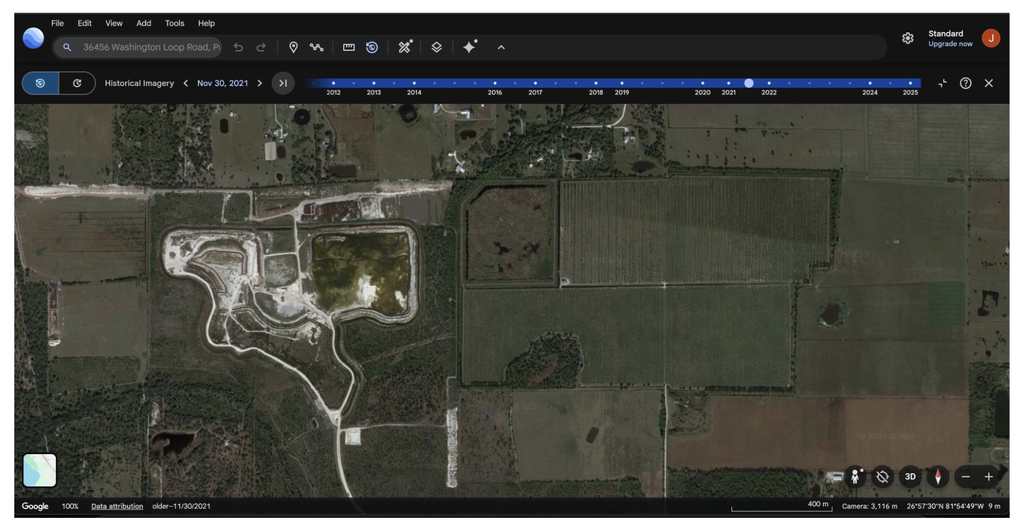
Englewood REVIEW sat down with Desiree Rabuse to break down what’s really at stake and to explain the intricacies of the case.
ER: The public notice for this project stated it was “only to allow for an existing grove to be restored to a preserve with native vegetation.” When did you and the other adjacent property owners first realize that this was actually a proposal involving commercial mining and large-scale yard-waste operations?
Desiree: We became concerned after experiencing substantial noise and dust at our home. At first, I understood the activity to be temporary agricultural work. After a former neighbor contacted me and explained more about the project, I began reviewing the applications, technical documents, agency records, County materials, and applicable regulations.
As I reviewed those materials, the project’s scope became clearer. Although it had been described publicly as restoring an existing grove as a preserve with native vegetation, the documents also addressed substantial excavation, off-site movement of material, groundwater-management measures, and the proposed use of significant quantities of yard waste or composted material in reclamation. Subsequent environmental and permitting documents described the proposal as a mine or sandmining and reclamation project.
Those differing descriptions raised serious questions for us about the project’s classification, applicable zoning and land-use requirements, excavation and setback provisions, and the proposed handling of yard waste. I then contacted County and state agencies to seek clarification and raise those concerns. The legal significance of those differences is part of the pending legal challenge.
ER: What was your immediate reaction, and how did the community mobilize once the scope of the Waterside project became clearer?
Desiree: We were concerned about the potential effects on neighboring properties and began reviewing public records, attending hearings, submitting written objections, and communicating with County and state agencies.
We also compared the applications, technical materials, site plans, agency records, and hearing testimony. That review raised questions about the project’s description, land-use classification, excavation, reclamation, groundwater, traffic, and the process used to approve the project.
ER: In your view, how deliberate was the notice, and what does it say about the transparency of the local government and developer?
Desiree: I cannot speak to anyone’s private intent, and I do not want to speculate about whether the wording was deliberately chosen to mislead anyone.
Our concern is whether the notice and approval materials adequately described the nature and scale of the project and whether the public received the process required by law. Those are legal issues presented to the court to be resolved.
ER: What are the long-term risks to Charlotte County if this method of approving major land-use changes is allowed to stand?
Desiree: My concern is that land-use planning may become less predictable if a project is publicly described one way but later approved with materially different activities without comparable notice and review.
Comprehensive plans and zoning regulations help residents understand potential development around their homes and businesses. This case asks whether the approval process used here complied with the governing legal requirements. These decisions can set a precedent for what happens in the future.
ER: How has County staff or the land-use attorneys justified using Planned Development zoning for an operation that residents contend functions as a commercial mine and large-scale yard-waste facility?
Desiree: That issue was not definitively resolved before the Board approved the Final Detail Site Plan. During the July 28 hearing, commissioners openly questioned whether the project was using the existing agricultural and Planned Development framework as a “backdoor” to mining.
The record also shows that the mining or excavation permit classification was left for a later administrative process. Commissioner Constance specifically noted that a mining permit would not come back before the Board, but would instead “go through staff,” and expressed “grave concern” about relying on staff to make those later determinations. County staff likewise stated that the excavation administrator and County Attorney’s Office would later determine what specific permit the project required.
That unresolved classification and permitting issue is one of the matters we have challenged.
ER: As an adjacent property owner, what are your primary concerns regarding the day-to-day operations of this project on Bermont Road?
Desiree: We’re concerned about the groundwater, noise, dust, truck-traffic, odor, drainage, air quality, quality of life, and duration-related effects. The materials describe activities expected to continue for an extended period, including excavation, groundwater-management measures, trucking, the handling of reclamation materials, and property values. We already have documented, non-speculative issues that are corroborated by the record and a local Sheriff’s report.
ER: How could this project affect your property value, quality of life, and the local ecosystem?
Desiree: Residents have raised concerns about potential effects on noise, dust, odors, traffic, groundwater, drainage, wildlife habitat, and the compatibility of the proposed activities with neighboring rural residences.
Groundwater is particularly important because nearby residents depend on private wells and ponds. The precise effects on individual property values or environmental resources would require qualified expert analysis, and I do not want to assign a dollar amount or make conclusions beyond the record.
ER: The area is designated as a Rural Community. What could approval of this project do to the character and identity of the neighborhood?
Desiree: Residents understand the area to include homes, acreage, agricultural uses, livestock, ponds, native vegetation, and open land. They are concerned that extensive excavation, trucking, pumping infrastructure, and the handling of substantial quantities of material may be inconsistent with that surrounding character.
The issue is not an opposition to all development. Rather, it is whether this specific project complies with the applicable planning and zoning framework and whether the legally mandated process was followed.
ER: The Board of County Commissioners approved the project on July 28 despite these concerns. What took place during that meeting, and did you feel the commissioners genuinely listened to residents’ objections?
Residents raised concerns during the July 28 hearing about excavation setbacks, the project’s classification, reclamation materials, groundwater, and differences between the earlier Planned Development and the final site plan. The applicant and County staff responded, and the Board approved the Final Detail Site Plan.
I cannot speak to any commissioner’s private views or state how each commissioner evaluated the evidence. I can say that residents did not believe their concerns had been adequately resolved before approval. Our petition asks the court to determine whether the applicable legal and procedural requirements were satisfied and whether the decision was supported by the evidence required under the governing standard.
ER: What is the core legal remedy you are seeking through the petition? Is the goal to force a total reversal or mandate a large-scale state review?
Desiree: The immediate relief sought in this certiorari proceeding is narrower than either description. We ask the Circuit Court to review the County’s approval and, if it determines that the proceedings denied procedural due process, departed from the essential requirements of law, or were unsupported by competent substantial evidence, to quash the decision and remand the matter for proceedings consistent with law.
The court is not being asked in this proceeding to reweigh the evidence, redesign the project, or substitute its policy judgment for the County’s. A certiorari court’s remedy generally is limited to quashing the challenged decision; it does not direct the local government to enter a particular order. Separate environmental permits and issues involving other agencies may involve different proceedings, statutes, and remedies independent of this filing.
ER: If other communities in Florida or elsewhere are facing similar administrative practices, what lesson do you hope your legal challenge sends?
Desiree: Residents should look beyond a project’s title or brief summary and review the underlying applications, technical documents, site plans, agency materials, hearing records, and applicable land-use regulations. They should understand the relevant procedures, participate in public meetings, and raise important questions early so those concerns become part of the official record. The lesson I hope people take from this experience is that careful review and timely participation in the public process matter.
The silver lining in all of this has been the formation of an extraordinary group of hundreds of community advocates who have come together. The experience also inspired me to pursue a career in environmental law. So even difficult situations can lead to positive outcomes.
This is a developing story. Check back for updates.