
Spring in Southwest Florida brings a familiar issue, and you’ll spot it on nearly every car in town: pollen. It settles like a dusty film on windshields and paints a yellow sheen across your ride, marking windows with little white circles. The same pollen you find on your car is in the air you breathe, and it doesn’t just stick to vehicles; your skin and sinuses get their share, too.
Let’s start with the cars. Pollen is a little acidic, and if it’s left on your car’s surface long enough, it eats at the clear coat. Depending on how healthy your paint is and whether you park outside, it can really dig in, leaving behind marks that don’t always come off easily, even if you scrub by hand or run through an automatic wash.
It gets worse when pollen mixes with rain or morning dew. That combo turns it abrasive, so if you clean it off the wrong way, you risk scratching or swirling the paint. Fixing that kind of damage costs a lot more than a quick wash. If you’re cleaning it yourself, use a microfiber mitt or sponge; don’t drag it off with a dry rag.
What’s good for your car is good for you, too. Health experts recommend showering before bed. If pollen coats your vehicle, it’s also riding on your hair, your skin, your clothes. And don’t forget the animals. Your pets can drag in pollen, so keep outdoor animals out of the bed if allergies are bothering you.
Here in Florida, pollen allergies hit especially hard. A lot of folks in Southwest Florida come from other states, so their bodies aren’t used to the mix of plants native to the region. It’s not unusual to develop new symptoms after moving here, even if you skated by allergy-free up north.
So, what’s stirring up all this pollen? The usual suspects this time of year are slash pines, bald cypress, and live oaks. Slash pines, in particular, throw off the most visible yellow dust you’ll see on cars and patios. As the bald cypress trees refoliate and bloom, they add their share, too, and the live oaks, another Florida staple, chip in as well.
The problem feels worse this year because of a drier spell since last summer. The conditions have made pollen more noticeable everywhere you look. Whatever the reason, this spring’s pollen is sticking around, and Southwest Florida is feeling it.
Allergy Hotspots in the United States
If you’re sneezing a lot more in recent years, you’re definitely not imagining things. Pollen allergies are really getting worse. Longer, stronger pollen seasons, thanks to climate change, mean that if you struggle with allergies, those symptoms stick around and hit harder. Some parts of the country barely catch a break; they deal with tree, grass, or weed pollen nearly all year. Cities get it even worse, since warmer air trapped by urban heat boosts both pollution and pollen production.
The Asthma and Allergy Foundation of America (AAFA) tracks all of this in its Allergy Capitals® report. Each year, they rank the 100 biggest cities in the lower 48 states by just how tough they are for people with pollen allergies.
AAFA isn’t just sharing numbers. They want to help people recognize and manage their symptoms. Yes, it’s possible to get a handle on allergies. The report offers real tips and treatments, breaks down info on tree, grass, and weed pollen, explains how mold plays into allergy season, and spells out the role of climate change. There’s also plenty of data to back up community solutions for the bigger problems causing seasonal allergies.
Allergy Capitals 2026
This year, shifting weather patterns caused some big changes in the rankings. Out West, intense rain, warmer days, and drought sent pollen counts soaring and stretched out the allergy season far longer.
Here’s AAFA’s Top 20 out of 100
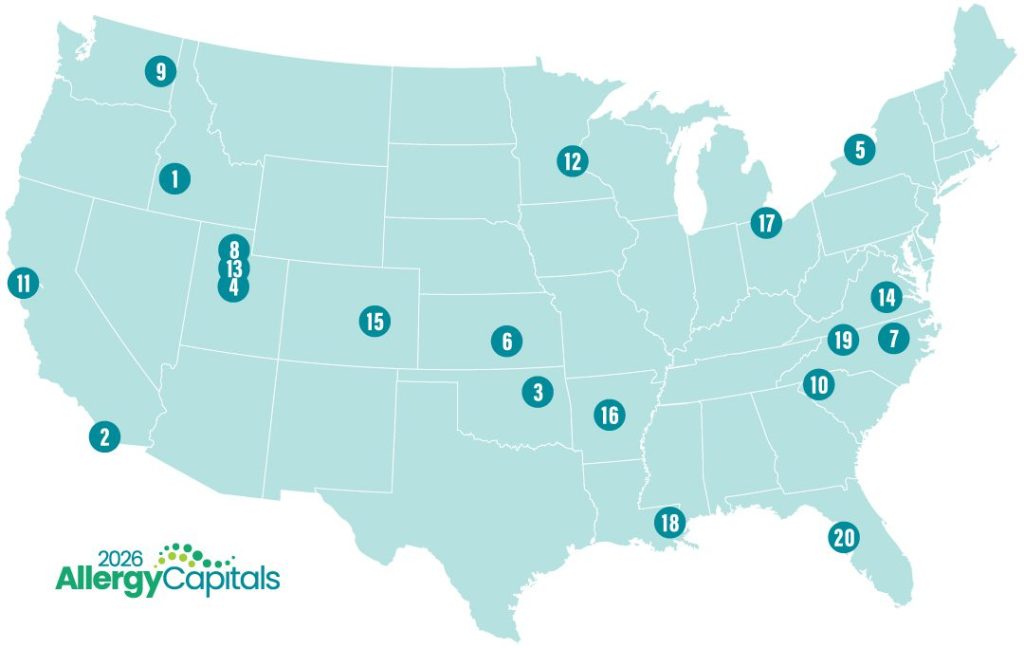
These cities are the toughest places to live with pollen allergies:
- Boise, ID
- San Diego, CA
- Tulsa, OK
- Provo, UT
- Rochester, NY
- Wichita, KS
- Raleigh, NC
- Ogden, UT
- Spokane, WA
- Greenville, SC
- San Francisco, CA
- Minneapolis, MN
- Salt Lake City, UT
- Richmond, VA
- Colorado Springs, CO
- Little Rock, AR
- Toledo, OH
- New Orleans, LA
- Winston-Salem, NC
- Lakeland, FL
For information and tips check out aafa.org.