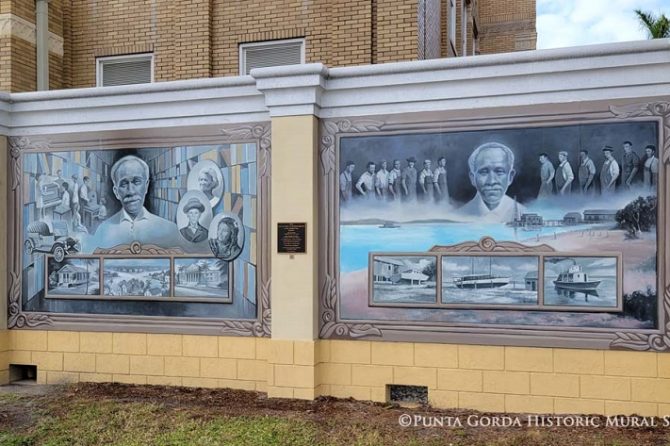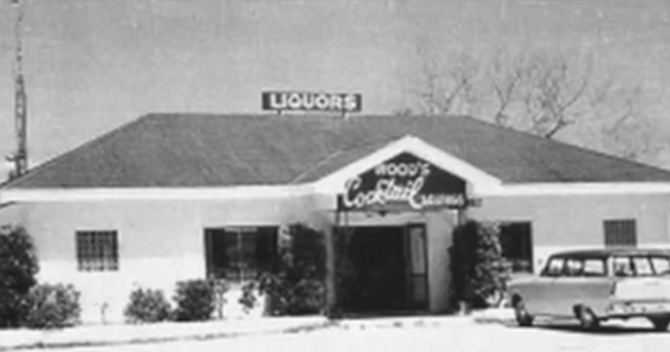

To celebrate Pioneer Days, let’s take some time to revisit the stories and spirit that shaped Englewood, especially its beloved Dearborn Street and the development of Tamiami Trail.
How Dearborn Street Got Its Start
Dearborn Street carries a name brought south from Illinois, thanks to the Nichols brothers. They came from Englewood, Illinois, and in 1896, they laid out a new town here, giving the main street a familiar title.

Oddly enough, the street itself followed the same path the Goff family used. William and Mary Goff had been the first white settlers in the region. When they arrived at Lemon Bay in 1878, the Goffs made do with a tent before putting up a log cabin. Wilderness surrounded their sixty acres, with the closest neighbors scattered as far as what’s now Nokomis, Punta Gorda, and Boca Grande. The trail the Goffs carved out by horseback, later by wagon, turned into a main road for the new town.
The Nichols brothers had high hopes for Englewood. They wanted to turn it into a lemon-producing hub. Nature had other plans. Two brutal freezes wiped out their lemon trees by the mid-1890s, forcing them to scrap that dream.
By 1912, their involvement in Englewood was winding down. That year, they sold the town’s only supply business, along with the post office rights, to Peter and Florence Buchan, all for $315. The catch? The deal didn’t include the building, the land on Yale Street, or the dock. So, on top of the purchase, the Buchans had to pay $10 every month for rent.
Determined to avoid ongoing rent, Peter Buchan bought land at the corner of Dearborn and Olive Streets for $100 in 1913. There, the Buchans put up a big two-story building, a store and post office on the ground floor, and everyone’s living quarters upstairs. They also took the time to build their own dock, stretching 250 feet into Lemon Bay.
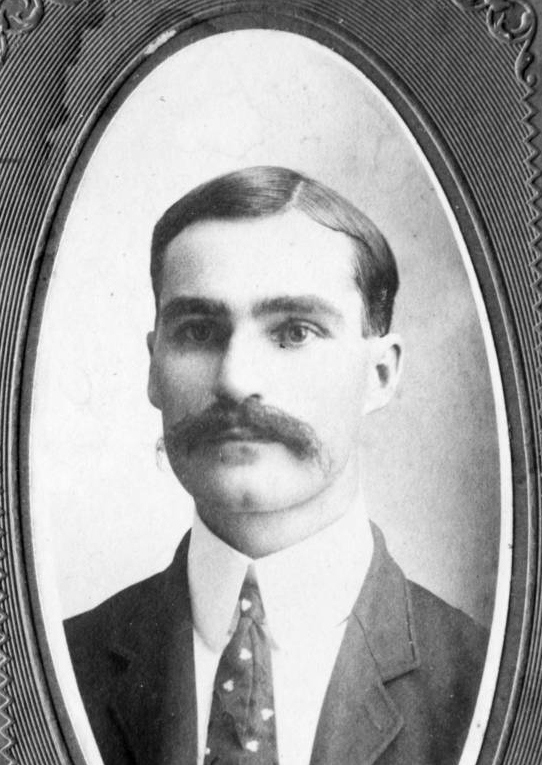
Back then, no roads connected Englewood with the outside world. Every bit of merchandise for the store came in by sailboat. Buchan’s place quickly earned a new nickname: Buchan’s Landing.

Moving the store was a gamble. People thought shifting the business those extra blocks away from Yale Street, then the heart of town, just didn’t make sense. But others soon followed, and before long, Dearborn Street became Englewood’s new center of commerce.
The Tamiami Trail is Born
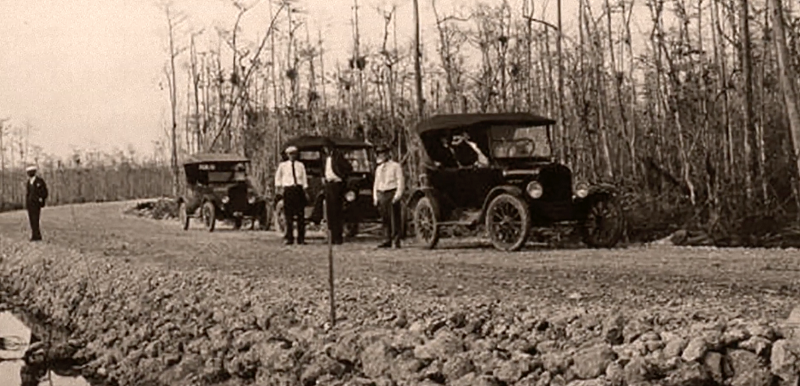
When work on the Tamiami Trail kicked off in 1923, every small town along the route lobbied to be included. Englewood wanted in as well. By 1925, the town incorporated, spanning thirteen square miles and becoming Sarasota County’s second-largest town in terms of acreage. That gave Englewood a stronger case to get the Trail routed through town. As planned, the Tamiami Trail would come in on Olive Street, cross east on Dearborn, then follow River Road out.
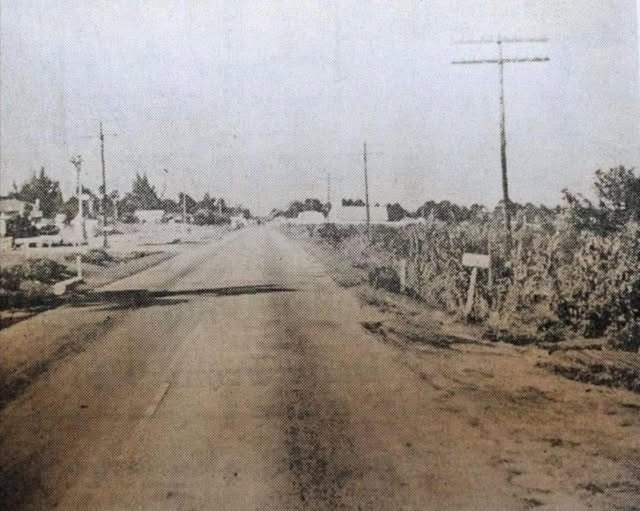
When the Trail officially opened, folks marked the occasion in style. On April 25, 1928, the governor’s motorcade stopped in Englewood for speeches in front of Ziegler’s Store on Dearborn Street.
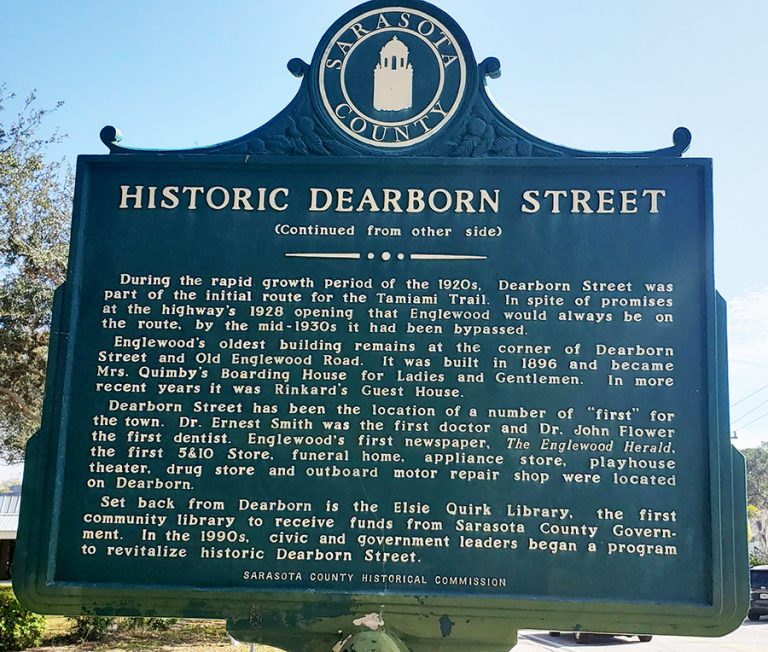
Even after the Trail’s route moved elsewhere in the 1930s, Dearborn Street stayed the heart of Englewood’s business life. It’s where locals experienced so many “firsts”—the first newspaper, doctor, dentist, bakery, 5 & 10 store, barber, modern bank, drugstore, auto garage, flower shop, shoe store, funeral home, appliance store, and even the community theater. Dearborn Street has long been more than a road. It’s the backbone of Englewood’s history and the stage where so much of its story played out.
To learn more about the history of Englewood, visit the Lemon Bay Historical Society, click here.