Punta Gorda, proud of its “Mural Town” identity, in a surprising move has ditched wall painting entirely. The alternative approach: murals on panels, mural cloth fixed to removable aluminum, so the art stays safe, even if the building doesn’t.
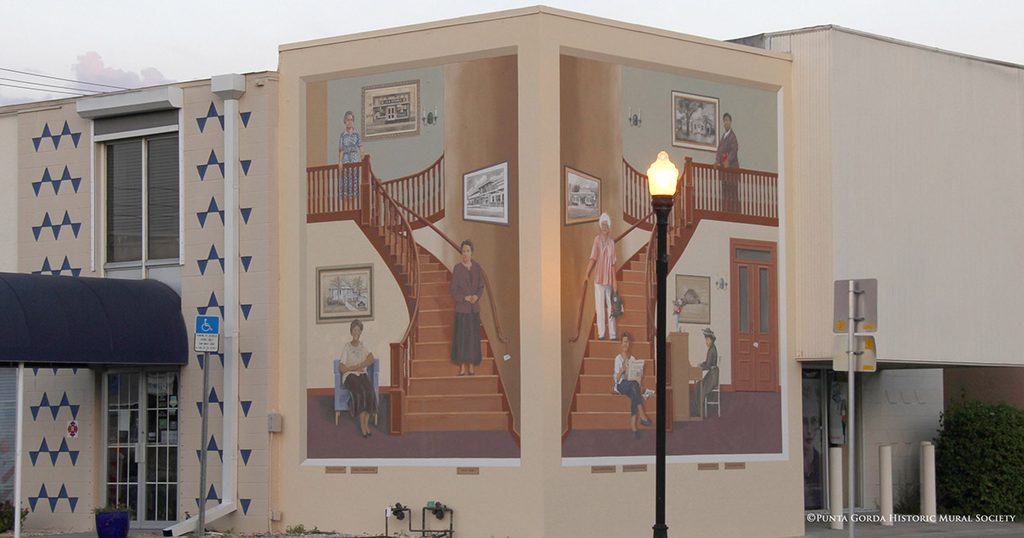
No more painting murals directly on walls in Punta Gorda. Those days are over, as the Punta Gorda Historic Mural Society has lived through the headaches. All too often the Society is trying to rescue another piece of public art that’s failing. After three decades, they’ve lost too many murals to crumbling stucco, water intrusion, hurricane damage, or simple redevelopment.
Their mission is simple: to protect Punta Gorda’s deep history through art and education.
Imagine a city where everyone gets involved: learning, sharing, and celebrating our story. That’s why artists create public murals that tell the tales of our past, right on the city’s walls. Their goal is to put Punta Gorda on the map as a leading Mural City and a top spot for history tourism.
Since 1995, the Punta Gorda Historic Mural Society (PGHMS) has been a volunteer-run nonprofit committed to this work. Thanks to strong support from neighbors, they’ve filled the city with vibrant, meaningful murals.
As an honored member of the Florida Mural Trail, they encourage you to explore the other mural cities across the state too. What a wonderful mission to keep our stories alive.
Preserving Our Past, Preserving Our Murals
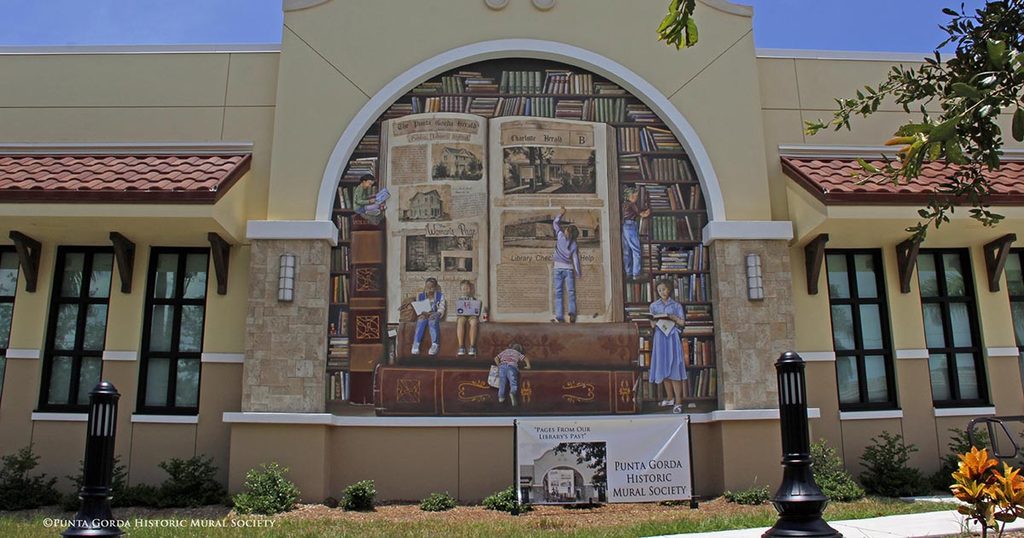
The Society has lost at least nine murals to structural problems, old stucco, leaks, those kinds of things. Hurricanes and new construction took out eleven more. Every time, it stings. This isn’t just about losing art. These murals are physical slices of local history, stories made public.
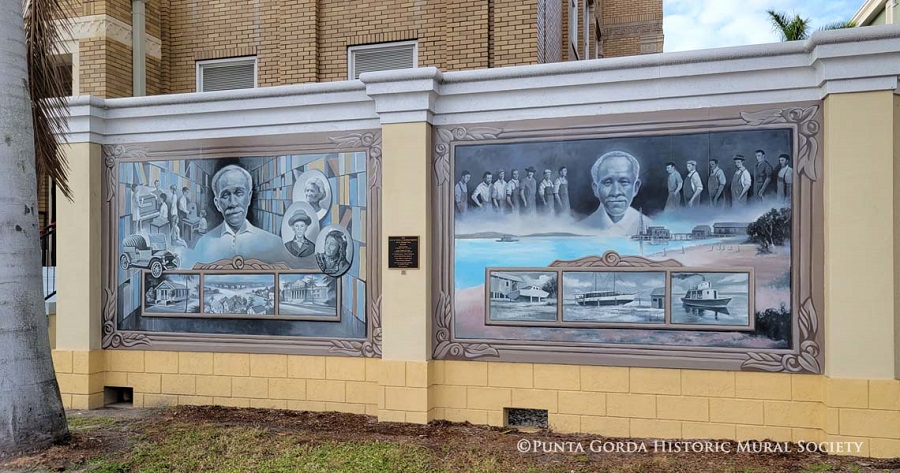
Take the mural on the south wall of the Old Charlotte County Courthouse, commissioned in 2014. It highlights George Brown, a Black landowner who sold his land for the courthouse. Within two years, disaster: after a heavy rain, bubbles swelled on the mural’s surface. Water had crept in, and by the time anyone realized, most of the painting had lifted off.
They took a high-res photo and glued it as a vinyl print to aluminum. But vinyl doesn’t survive Southwest Florida’s sun and humidity. That’s when the Society stepped in and had it repainted the mural-on-mural cloth. Now, it’s back, hand-painted, and everyone hopes, safe for much longer.
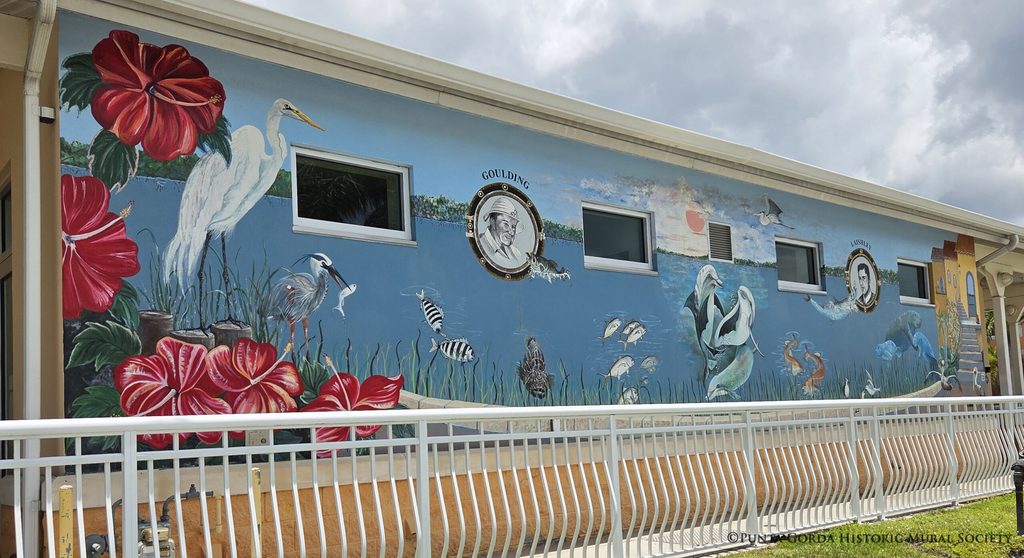
Mural cloth is thin, almost batten-like material. Most local buildings are old, built on shifting sandy soil, and they just keep settling and cracking. The answer? Aluminum panels. Now, with removable screws, the Society can take the art down before storms. Though, interestingly, recent hurricanes have left the murals nearly untouched, sometimes faring better than the buildings themselves.
A perfect example would be the three Boat Club murals in Gilchrist Park. Hurricane surge flooded the building, washing all kinds of things into the harbor, even their dishes. The murals? Submerged halfway, came out spotless. Just needed to wipe it down.
Another advantage of the removable aluminum setup is that it preserves the mural even if the building undergoes demolition or significant alterations. It’s not just a practical fix; it’s a way to keep their history safe from Florida’s weather, development, and all the chaos that comes with both.
Murals aren’t just decoration, they’re part of the culture, going back to the WPA era, when the government hired artists during the Great Depression. Nowadays, murals mark historic events and anchor neighborhoods. But outdoor art faces threats: storms, sunlight, age, and the simple fragility of the buildings they’re painted on.
When the Society realized mural cloth might be a permanent solution, they reached out to Mural Arts Philadelphia, a group with serious experience in public projects. Mural cloth isn’t just durable, it’s a bright-white, eco-friendly polymer fabric, created to stand up to years of sun and rain.
Every mural in Punta Gorda’s collection tells a story.
Take George Brown, born in 1868, a master carpenter and entrepreneur. Brown and his partner, Peter Miller, started a shipyard in 1897. Brown hired based on skill, not race, and paid equal, fair wages, earning him a place as Florida’s first supposed “equal opportunity employer.” By 1916, he’d expanded the shipyard, bought up property, and at one point, owned half the land in Punta Gorda. He donated land to the local Black Masonic lodge, served on church boards, and in 1924, sold the courthouse land to Charlotte County, the same courthouse honored in the mural.
Michael Vires of Alpine, Texas, who also worked on other big Society pieces like “Cattle Drive Down Marion Avenue” and “Movie Memories painted the original mural.”
“Captivating Charlotte County” is another example, originally on the wall at the Best Western but destroyed by Hurricane Charley in 2004. When the mural society recreated it, they moved the design to Laishley Park Marina. But cracks formed in the new concrete wall almost right away, water seeped through, staining and damaging the paint. Repair attempts failed. Finally, the Society switched to curved aluminum panels.
Even with mural cloth, maintenance matters. Good paint, solid structure, and a quality sealer keep artwork alive outdoors, but there are costs. Large or curved panels, especially custom ones, can be expensive. And the elements take their toll. Punta Gorda’s sun already faded the reds on some Boat Club panels. Every mural gets a maintenance fund, but sometimes even that’s not enough, especially after a hard hurricane season, so the community pitches in with fundraisers.
Removable panels have proven themselves in storms. The Boat Club murals, for instance, survived Hurricane Ian and Hurricane Milton. Surges flooded the building, but the murals just needed a wipe-down. The greater challenge is sunlight, red pigments fade fast, and touch-ups by Goodson are already necessary.
Ultimately, by switching to mural cloth on aluminum panels, the Society struck a balance, keeping art public, the stories alive, and not letting weather or change erase their history again. The solution’s not perfect, but for now, it’s as resilient as the people who care enough to keep painting.
Click here for more information.