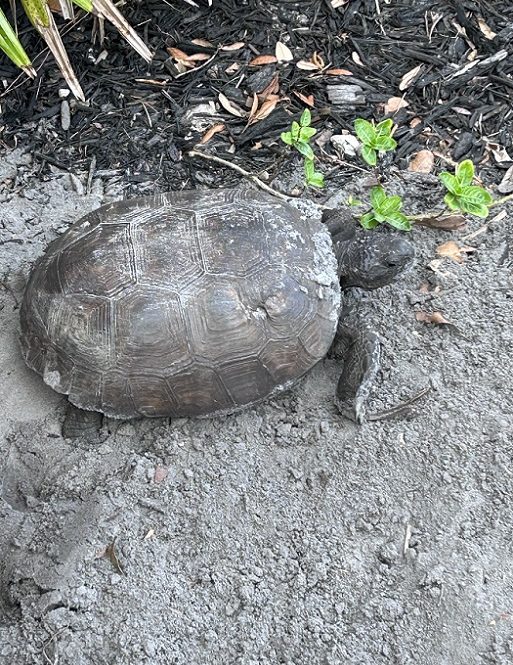
The gopher tortoise, a land-dwelling reptile vital to Florida’s native ecosystems, faces ongoing threats from severe habitat loss, human encroachment, and low survival rates, according to conservation data from the Cape Coral Friends of Wildlife.
Despite experiencing an estimated 80 percent population decline over the last century, urban gopher tortoises in Southwest Florida maintain self-sustaining, viable conservation units. Habitat management remains critical to their survival, with organizations like the Lemon Bay Conservancy actively maintaining protected foraging and burrow habitats like the Gopher Tortoise Meadow at Wildflower Preserve in Grove City.
Gopher tortoises are classified as a keystone species because their extensive burrows provide shelter from extreme weather, fire, and predators for over 350 other native species, including burrowing owls, coyotes, indigo snakes, and Florida mice.
“If they disappear from the environment, the ecosystem will collapse on itself,” said Rachel King, a conservation biologist with the Florida Fish & Wildlife Conservation Commission (FWC).
Species Profile and Life Cycle
- Adult Characteristics: Adults average 9 to 11 inches in length—reaching up to 15 inches—and weigh 8 to 10 pounds, featuring grey, tan, or brown shells and stumpy, shovel-like forelimbs.
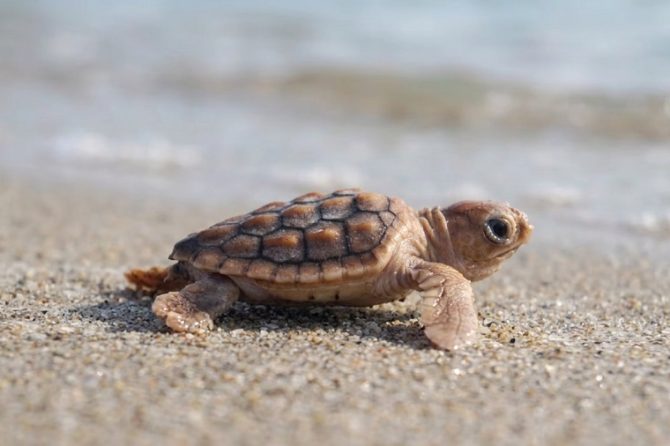
- Hatchlings: Measuring just 1.5 to 2 inches long, hatchlings emerge with brighter yellow-orange shells that fade with age.
- Burrow Mechanics: Using flattened forelimbs, tortoises excavate burrows averaging 15 feet long and 6.5 feet deep (documented up to 40 feet long), maintaining year-round temperatures between 60 and 80 degrees Fahrenheit.
- Reproductive Timeline: Females reach maturity between 10 and 21 years of age and lay a single clutch of 5 to 9 eggs annually between May and July.
- Incubation and Emergence: Eggs incubate underground for roughly 80 to 110 days. Hatchling season peaks in late summer and early fall, with emergence taking place between August and November.
- Survival Rates: Females provide no maternal care. Due to nest predation, disease, and road mortality, only one to three out of every 100 eggs survive to adult breeding status.
Legal Protections and Handling Guidelines
The gopher tortoise is designated as a State-designated Threatened species in Florida. Handling them or disturbing their burrows is illegal without explicit FWC permits:
- Terrestrial Nature: Gopher tortoises live strictly on land and will drown if placed in water.
- Roadway Assistance: FWC permits drivers who encounter a tortoise on a road to move it directly across to the side toward which it was already traveling. Tortoises should never be transported to a new location or placed in a car, which constitutes illegal possession.
- Interaction Limits: Chasing or harassing tortoises creates severe stress that disrupts necessary foraging activities.
To learn more visit myfwc.com, fnai.org, gophertortoisecouncil.org and animaldiversity.org.