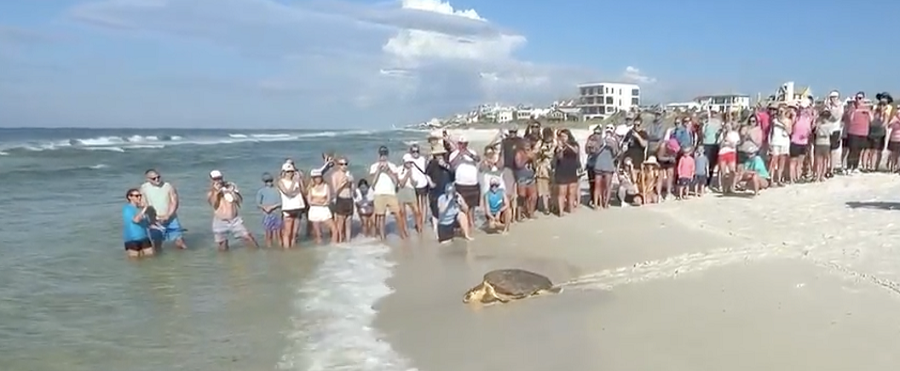
A crowd gathered on Thursday to watch as five sea turtles, Waffles, Bashful, Buzz, Coconut, and Pepper, made their way back to the Gulf. Each turtle had ended up at the Gulfarium Care Center after getting accidentally hooked in the wild.
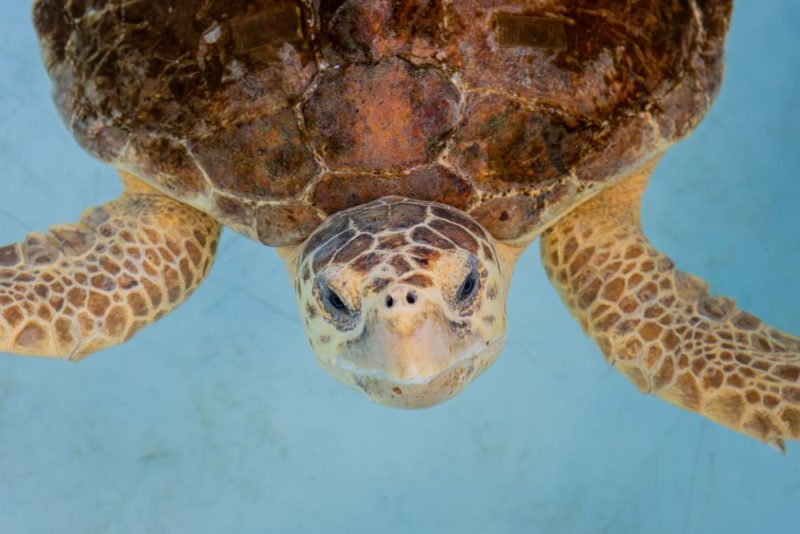
Their recovery stories varied. Some bounced back after just a few days with a little food, vitamins, and some watchful care. Others needed surgery and a longer stay to heal. The care team noticed the large turnout and felt it spoke volumes about how much the community cares about sea turtle conservation.
Sarah Kamen, the Gulfarium Care Center’s stranding coordinator, described the experience with genuine emotion. She said, “It’s an incredible feeling, and I swear, I could do this a million times every single time that I do it. Watching the community come together and support what we do, support the turtles, support the mission of conservation, it brings tears to my eyes because how incredible that so many people feel so passionate about the same things.”
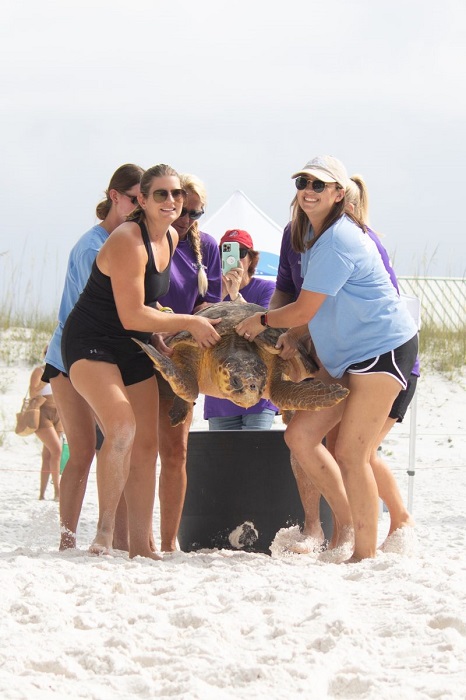
Florida’s rehabilitation centers face a constant stream of sea turtle patients.
While the Gulfarium sits up in northern Florida, turtle injuries and the need for emergency care are a big deal everywhere in the state. Boats strike the top of the list, as they’re the deadliest human cause of sea turtle deaths in Florida.
Let’s look at how often this happens. According to the Florida Fish and Wildlife Conservation Commission (FWC), 20 to 30 percent of stranded sea turtles in Florida show serious wounds from boats. Marine conservationists say boat strikes kill nearly 3,000 sea turtles each year in the state. That number likely underestimates the real toll since only a fraction, around 10 to 20 percent of sea turtles that die at sea ever wash up on shore. Most disappear without a trace.
The distribution of these accidents throughout the year isn’t even, either. They spike between March and October, right when people rush out on the water and as sea turtles crowd coastal shallows to nest. Spots like inlets and passes become especially risky for the turtles during this time.
Florida’s rehabilitation centers face a constant stream of sea turtle patients. The Florida Sea Turtle Stranding and Salvage Network (FLSTSSN) coordinates rescues and sends the injured to approved hospitals. Every year, hundreds of turtles end up in specialized facilities such as the Loggerhead Marinelife Center and The Florida Aquarium. When the season peaks, a single hospital might treat between 100 and 170 turtles.
Boat strikes bring in many adult turtles, but that’s not all the hospitals see. Thousands of hatchlings, turtles caught up in fishing gear, and sometimes sizable groups of juveniles stunned by sudden winter cold also flood the centers. The numbers paint a clear picture: sea turtle injuries and rehabilitation have become a major, ongoing challenge for conservation in Florida.
If you spot a stranded turtle, there’s help available around the clock. In Florida, reach the Florida Fish and Wildlife Conservation Commission at 1-888-404-FWCC (1-888-404-3922). The Gulfarium also operates a local stranding hotline.
Remember, don’t touch or move the animal, and never push it back into the water, as that can do more harm than good. The best thing you can do is keep your distance, make a note of where the turtle is, and keep watch on its breathing until help arrives.