Floridians wait all year for sea turtle season. Watching tiny hatchlings fight their way out of their eggs and struggle toward the waves never gets old; it’s one of nature’s glories and is uplifting.
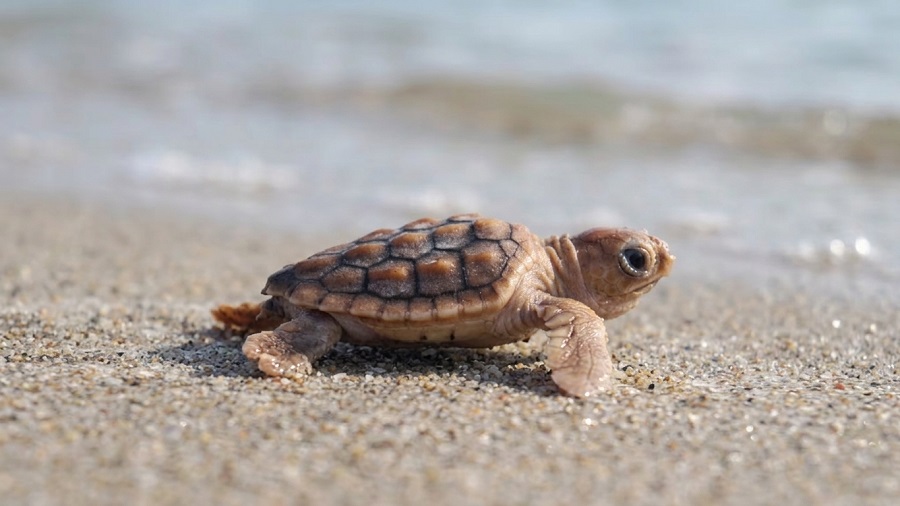
This year, something even more unusual happened. Popular Science reported spotting a rare ‘pumpkin spice’ baby sea turtle in Florida right as fall started. It wasn’t the usual dark or grey color either; this hatchling had a distinct earthy-orange, almost autumnal, tone.
We’re talking about the loggerhead sea turtle, Caretta caretta. Normally, their hatchlings are black, dark brown, or grey, so they can hide in sargassum seaweed. This little one broke the mold. Instead of blending in, it stood out. Around the same time stores started filling up with pumpkin decorations in August, this tiny turtle was heading toward the water, showing off its unexpected color.
Loggerhead hatchlings usually sport dark or light brown carapaces, with dark flippers, sometimes pale at the tips. Their bottom shells, the plastrons, are usually tan or faded yellow. Odd shades like the ‘pumpkin spice’ orange, or what you see in albino turtles, are rare and pretty much unheard of.
Color isn’t just about looks for these hatchlings; it’s essential for survival. Their typical dark coloring helps them hide from predators while floating in seaweed. Deviations like the bright orange make them an easy target. It’s one reason you rarely see adult loggerheads with unusual colors. They don’t survive as well.
Adult loggerheads look different. Their carapaces turn more reddish-brown, and their plastrons are pale yellow. Their flippers shift from brown to yellowish as they mature. They get their name from their impressively large heads.
Loggerheads favor subtropical and temperate waters, and Florida stands out as one of their biggest nesting grounds worldwide. Still, despite all those nests, they’re endangered according to the IUCN and listed as threatened federally in the United States. One of their biggest threats? Bycatch in commercial fisheries. So, every hatchling, especially a rare one like this, is worth celebrating.