
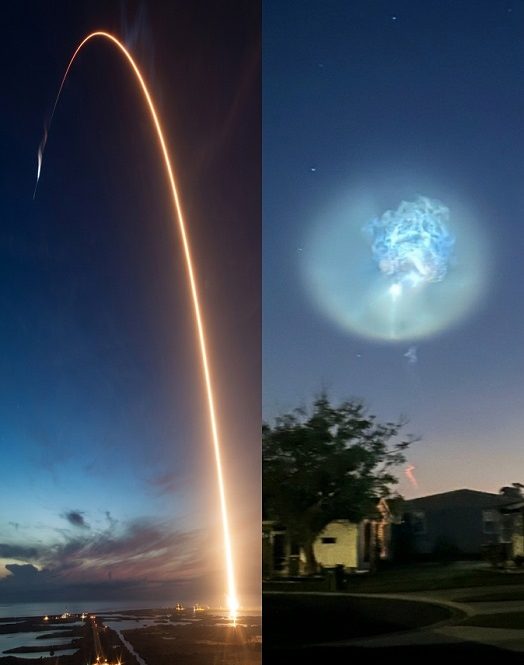
Early this morning on October 13, 2026, a Falcon 9 rocket launched from Cape Canaveral, and people across Englewood and the Southwest Florida horizon woke to a wild sight, a bright, glowing vapor trail stretching through the sky. Locals call it a “jellyfish cloud,” and it stood out vividly against the dark backdrop.
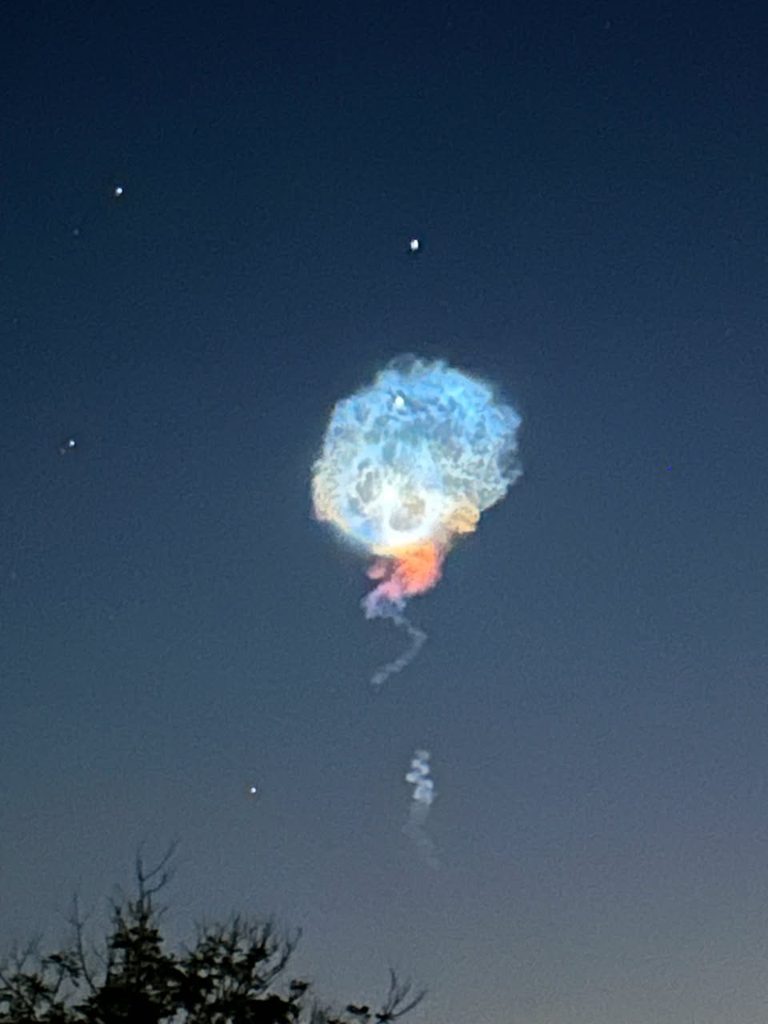
What’s behind this jellyfish cloud phenomenon? These clouds appear when a rocket launches near dawn or dusk.
Here’s what’s happening:
• Sunlight at High Altitudes: Even though the ground remains dark, the rocket climbs high enough to pop into direct sunlight.
• Freezing Exhaust: The Falcon 9 shoots out water vapor and exhaust, which freeze into tiny ice crystals way up in the atmosphere.
• Scattering Light: These crystals catch the low sun and scatter its light. That’s why the plume glows, sometimes blue, white, or orange, against the pre-dawn sky.
Tuesday morning’s “space jellyfish” came from the SpaceX CRS-35 cargo mission. The Falcon 9 lifted off at 6:33 a.m. EDT, hauling over 6,300 pounds of research gear, crew supplies, and new solar arrays for the International Space Station.
The display isn’t just beautiful. It’s atmospheric physics at work.
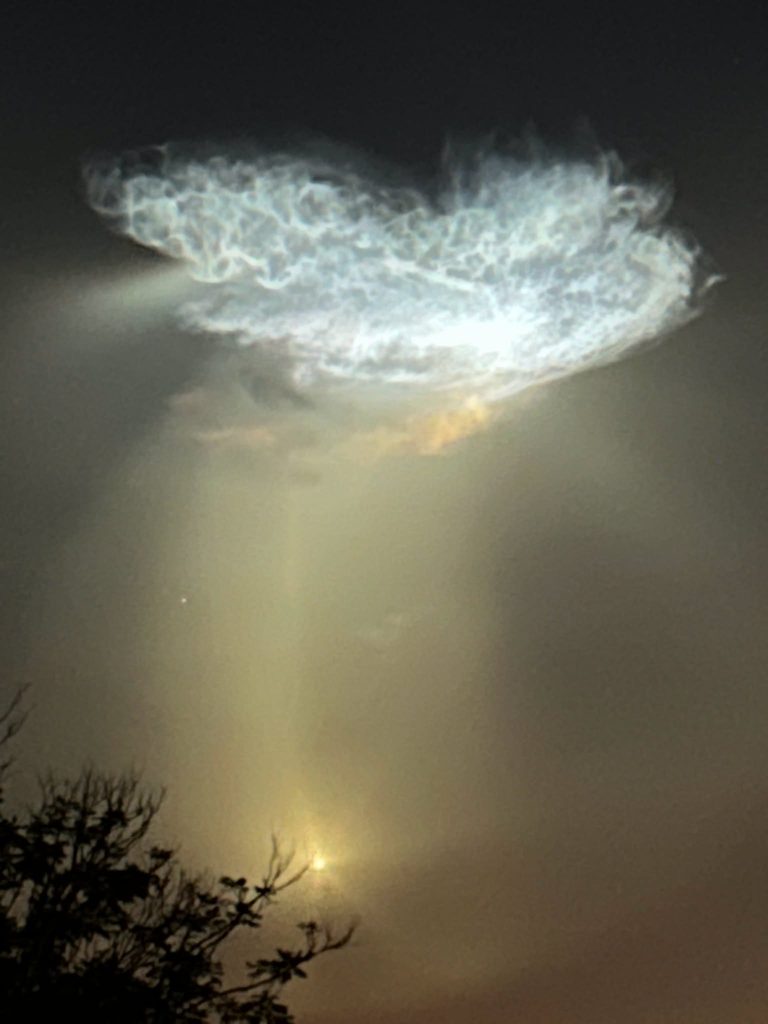
Here’s a breakdown:
Scientific Name: Technically, it’s a noctilucent cloud, caused here by the rocket.
Altitude: It forms up in the mesosphere, about 30 to 60 miles above Earth.
Why the Jellyfish Shape? As the rocket pushes into thinner air up high, its pressurized exhaust spreads out rapidly, fanning into tentacle-like trails.
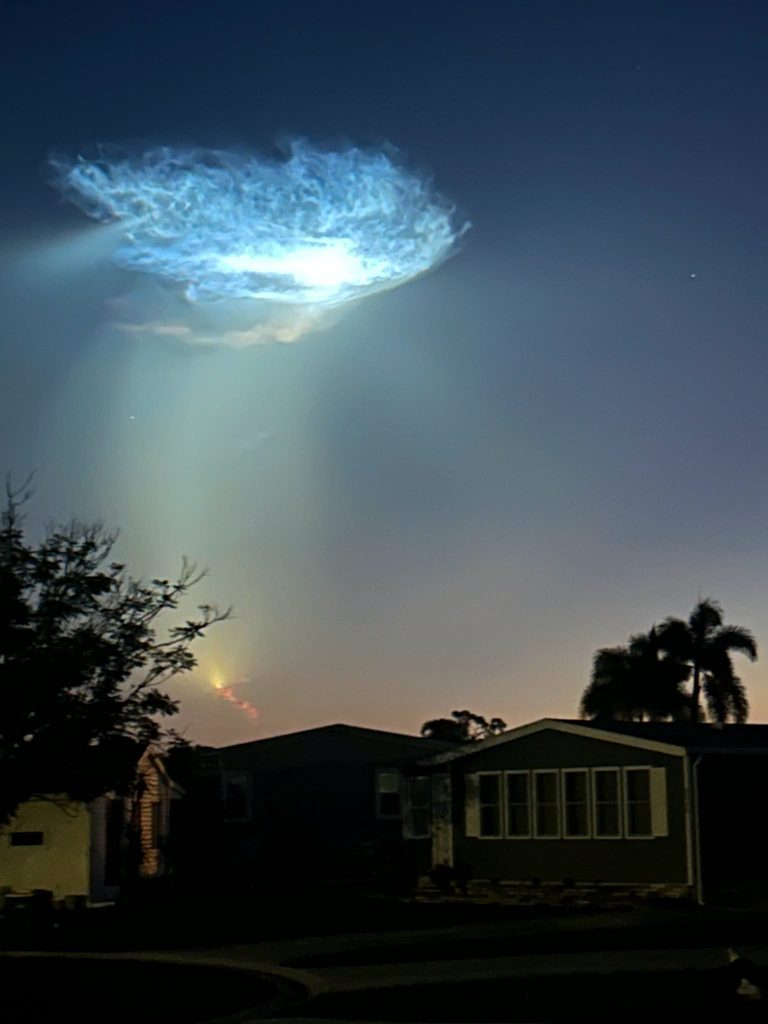
The Twilight Effect
When the rocket launched, about 50 minutes before sunrise, the ground still sat in darkness. But just three minutes after liftoff, Falcon 9 had already climbed into direct sunlight, making the frozen crystals shine bright over the unlit world below, and all the way to Englewood, Florida and beyond.