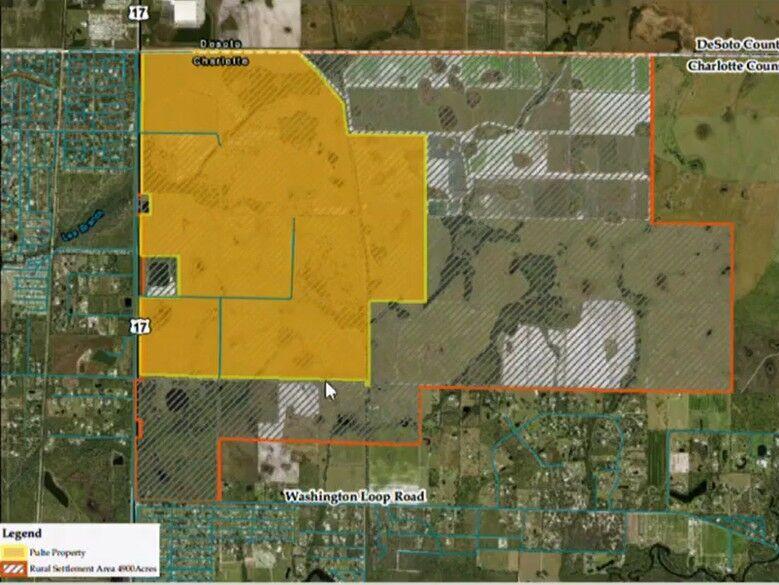
The 6,000-home Pulte project in eastern Charlotte County should be dead in the water. The county missed a critical adoption deadline on July 9, which not only halts the project but also drags it into a tangle of legal battles and accusations of backroom maneuvers.
The “Pulte project” is a large-scale housing plan, labeled Comprehensive Plan Amendment TCP-24-04, aimed at building 6,000 homes in a rural part of eastern Charlotte County, far from city centers.
Residents and local advocates stand firmly against it. Their primary concern: the project would spur unchecked urban sprawl miles from existing urban infrastructure. They also warn it would overextend county services and directly violate Florida’s rules on managing sprawl.
Legally, the project unraveled because of a hard deadline in Florida law (Section 163.3184). If a county wants to change its comprehensive plan, it only gets 180 days to act after the state’s comments come in. Opponents point out that the county’s window slammed shut on July 9, 2026.
Digging deeper, things got suspicious in March.
On March 19, county staff allegedly tried, quietly and without public input, to extend the decision window. Opponents say this sidestepped Florida’s Sunshine Law, which demands that public business happens in the open.
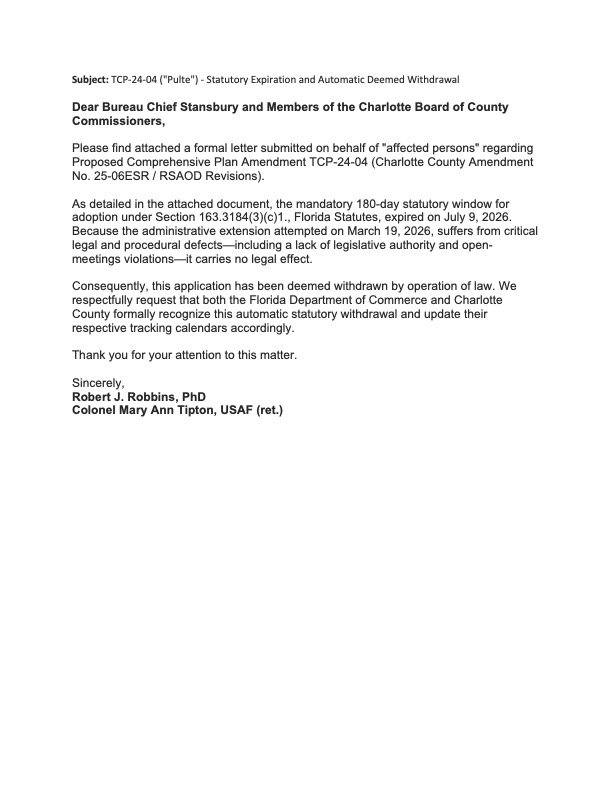
In an email received from Robert J. Robbins, PhD and Colonel Mary Ann Tipton, USAF (ret.), this issue stretches across all of Charlotte County, and it matters.
The current proposal would throw open rural eastern Charlotte County to massive housing developments, far outside the urban core and away from key highways. That’s urban sprawl, and the strain on county services would hit every resident and every taxpayer for decades.
Robbins and Tipton say, “We’ve seen this play out before. Back in 2010, the state rejected plans for the Rural Settlement Overlay District, citing violations of every single one of Florida’s 13 indicators of urban sprawl. The state’s message couldn’t have been clearer: ‘Don’t do it.’ But now, developers and county officials are once again charging ahead.”
The new Comprehensive Plan Amendment TCP-24-04, the Pulte proposal for 6,000 homes, and the RSAOD revisions sparked a massive backlash from the community, and there’s a reason.
According to Florida law, local governments get exactly 180 days to adopt a comprehensive plan amendment after receiving comments from the state. That deadline for TCP-24-04 hit on July 9, 2026. After that, the law says the proposal is dead. They’re calling on the county and state to openly admit this and move forward.
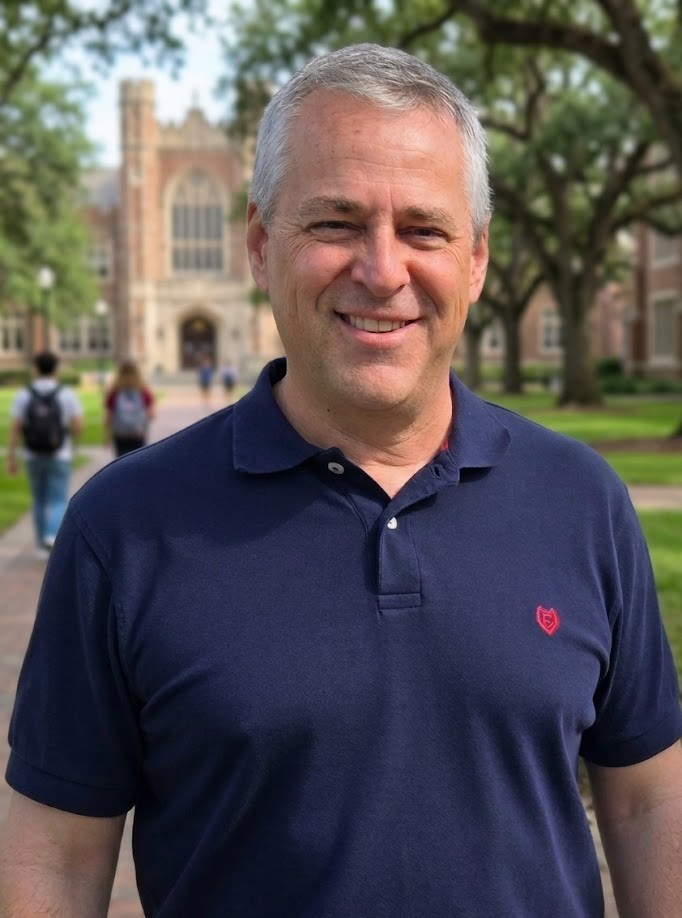
Dr. Robert Robbins, PhD and RSAOD
Robbins is an environmental scientist and leads Friends of Cape Haze. He’s taken an active role in challenging local land-use decisions in Charlotte County, Florida, especially the debates surrounding the Rural Settlement Area Overlay District, or RSAOD. Robbins comes from a background in marine biology and fisheries, with a real focus on the coastal mangrove fish ecology in the region.
The RSAOD covers about 4,900 acres along the U.S. 17 corridor. As president of Friends of Cape Haze, Robbins doesn’t just watch from the sidelines. He speaks up in public forums, attends community group meetings, and weighs in on state-led reviews about major changes to the county’s comprehensive plan, such as amendment TCP-24-04. Robbins keeps spotlighting big issues, threats to wetlands, higher base flood elevations, and the creeping danger of urban sprawl.
How did we get here?
The answer exposes a troubling pattern within Charlotte County’s administration. On March 19, behind closed doors, staff tried to quietly extend the statutory deadline. But the administration’s attempt had many problems: no legal authority supported the extension, and the process violated Florida’s Sunshine Law on open meetings. Bottom line: that extension is meaningless, and the law automatically withdraws the application.
This isn’t just some technical mistake. It spotlights a larger problem: dysfunction, unprofessionalism, and a clear pro-developer tilt inside the Community Development Department that extends to the legal department and the board. Instead of serving the public transparently, staff manipulated procedures to keep a developer-friendly amendment going, protecting developers instead of listening to citizens.
Robbins says, “We’ve sent a formal letter this morning to Bureau Chief Stansbury at the Florida Department of Commerce, as well as to the Charlotte Board of County Commissioners. The letter details the statutory violations that brought us to this point.”
Englewood REVIEW spoke with Robbins:
ER: All right, please walk me through all of this. You’re basically asking the county and state to admit that the required deadline has passed, correct?
Robbins: That’s it. And there’s a bigger picture here with everything happening in Eastern Charlotte County. We’re talking about development ten miles away from I-75, out on the fringe, next to DeSoto County. The whole point of smart growth is to focus on building where there’s already infrastructure, water, sewer, good roads, not way out in the boondocks.
But what’s being proposed now would put at least 6,000 homes on the extreme edge of the county. You have to drive through completely rural land just to get there. Meanwhile, the middle and western parts of the county have over 100,000 empty lots sitting there, undeveloped. The county has always struggled with that. Even when they tried to push this kind of expansion in 2010, the state stepped in and said no, flat out. It’s classic urban sprawl by every definition, and Florida law has 13 clear indicators for that. This plan violates all 13.
Back then, during the 2010 Comprehensive Plan rewrite, the county made a deal with the state to only allow density transfers. They took the building rights from parts of mid-county that weren’t developed and tried to move them to the fringe area, so no extra density was added to already developed spots. Plus, the untouched areas would shift to ‘rural service’ status, meaning no county investment in utilities or services. But in the years since, those mid-county spots have been developed anyway. Now it’s not even possible to transfer density out there like before; the credits are gone or hard to move.
Developers are pushing hard for a rule change so they can pull development rights from anywhere, even rural areas out by Glades County, effectively opening the floodgates. Their goal is to let anyone build massively out on the edge. But there’s no water, no sewer, nothing. The county won’t move forward unless someone solves that. Developers are supposed to figure out how to bring in sewer lines from the East Port plant or even set up an entirely new one closer to their own project.
The bottom line: urban sprawl makes everything more expensive and less efficient. Suddenly, you need to staff police, fire, schools, utilities, everything way out there. Taxpayers foot the bill, not the developers. That’s why the state pushes back. And now, developers want to waive all the safety checks too. If they succeed, you end up with leapfrog development. Maybe it seems good at first, shiny new development, but in the long term, the community pays for it.
ER: I’m interested in what you said about the backstory, how the process failed, and how there’s no real legislative oversight. I keep hearing that from others too, not just you. Can you dig into that for me a bit more?
Robbins: Absolutely. There’s a growing sense here that Community Development isn’t working for the public. They take their cues from a handful of developers and the same land-use attorneys who’ve run things for decades. It’s always the same people, just three or four regulars, and they shaped the Comprehensive Plan themselves back in 2010. They know every loophole because they wrote them in.
These attorneys end up advising the volunteer Planning and Zoning Board, and staff relies on their instructions. The relationship is cozy; they know who to call; they know how to get things approved. It feels like they’re doing the developers’ work for them, helping craft applications that will fly through the board. By the time a project hits a formal vote, staff is already vouching for it, saying it’s “not inconsistent with the Comprehensive Plan.” They can’t officially recommend approval anymore, but we all know whose side they’re actually on.
When I’ve helped different neighborhood groups push back against projects, it’s always the same: Community Development won’t help us. Take the Hutton Multi-Family project, a four-story apartment complex behind the Ace Hardware in Cape Haze. The parking lot was set to go right over flagged wetlands. I dug in before the hearing, sent questions to the staff, and wanted to know how they came to their conclusion. One look at the maps and anyone can see the wetlands, but staff sided with the paid consultant who denied they existed. When I reached out for answers, the Zoning Director told staff not to respond to me, twice. And I found out from public records requests. I brought it up at the meeting, and frankly, nothing changed.
We later met with Community Development to talk about how they review wetland impacts and traffic studies, and it turns out they’re just doing a basic “review,” checking that all the boxes are ticked, not digging in and verifying the consultant’s claims. For traffic, for wetlands, they just let outside agencies like FDOT, or the water management district figure it out at the permitting stage. Yet the Comprehensive Plan requires that staff actually review these things themselves. They’re supposed to use every resource up front, but they don’t. They just rubber-stamp the developer’s materials and move it on. That’s why we don’t feel like they represent the public’s interests.
ER: I can see there’s a lot more beneath the surface here, and I’m just scratching the surface with what you’re sharing.
Robbins: You’re right, this whole thing shows how deep the dysfunction goes in Community Development. Maybe it’s just ingrained by now. We gave the county examples of how these agreements, like extensions of Comprehensive Plan amendments, should be documented. Staff should draft a formal agreement between the applicant and the county, send it to the board for an official vote, and then notify the state after the board approves it. But here, they just emailed the state with a casual notice, no agreement, no signatures, nothing for the public record.
The county already has these examples. I handed them over, and they even mentioned maybe taking a look at the process in board meetings but never followed through. We’ve stopped fighting. If the county’s going to let the deadline lapse, we’ll just wait them out. Then, once it expires, we notify them.
ER: Big picture, what do you want readers to take away? There’s so much here, I fear people could get lost in the weeds. What’s the core message?
Robbins: The public needs to understand: Community Development isn’t acting as an ally. There’s real dysfunction, and it’s different from places like Sarasota or Orange County. We need accountability and genuine public notice, but we’re not getting it.
I’ve seen this in other cases too. Take the “Restoration of Orange Grove” project; in reality, it’s a commercial mining operation slated for a vote on July 28th, yet it was pitched as a simple native plant restoration. They’re planning to dig twelve feet down, haul off the material, and yet they call it “restoration.” It’s misleading. I’ve reached out to neighbors who protested years ago, some moved away because the county pushed a mine into their backyard while publicly promising a “restoration project.” People need the truth about these projects.
Click here for the YouTube video, “To only allow for an existing grove to be restored.”
It’s infuriating. I stood in front of the county and called it dishonest and shameful. People left because of it. And I’ll send you the documents for that too. And what makes it worse is that the county’s own documentation calls it “restoration” while it’s really about mining, removing material from the site, not planting anything. People have to know.
I’m putting together some information and a video that explains the mine project advertised as an orange grove restoration. The hearing will be Tuesday July 28th at 2 p.m. I think that it goes a long way when decision makers know that they are deciding on an issue that the public is aware of in advance instead of just quietly approving something.
The people affected by this mine expansion have been fighting two proposals for mines that border their properties. In addition to the “orange grove restoration” mine being considered on the 28th, a larger mine was proposed just 11 months ago (which is currently paused). This is a video clip from the planning and zoning hearing 11 months ago – most of the people in tears or holding back tears in the video are the neighbors who have the mines proposed on the edge of their dream/retirement properties.
Click here to see the YouTube link.
It is very unfair, and the rest of the residents of this county should be aware of what is happening in eastern Charlotte County.
ER: What can people do? Our readers always want steps, who to contact, how to act, what to ask for.
Robbins: Reach out to your county commissioners. Tell them you’re worried about development on the rural eastern edge, even though the state has repeatedly warned against it. There’s a fundamental fact here, agriculture pays its own way on the tax base. The county often makes more in taxes from farms than it spends on services. But when land becomes high-density housing, all the extra services, utilities, schools, fire, everything, eat into that revenue. In the end, taxpayers cover the shortfall. Developers promise all sorts of things, but once the projects are done, if a private wastewater plant fails or goes bankrupt, the county, and taxpayers, are left to clean up. The problems hang around long after the developers are gone.
ER: And the environmental impact is real, too.
Robbins: It matters more than people realize. Everyone frames it as just about wildlife, but these management issues affect everyone, even people in West County. Flooding, hurricane evacuation, everything. You see fights like the one over Manasota Beach Road, where residents didn’t even get timely notice of meetings that impacted their property. It all comes down to a lack of transparency and accountability.
ER: Dysfunction, and outright failure to follow the law.
Robbins: Exactly. It’s not just frustrating; it’s unlawful, and people need to realize how deep it goes.
ER: Is there anything else you want our readers to know?
Robbins: Just this: If you look up rsaod.com, there’s a lot more background. For years, large tracts were held by investors whose only real goal was to get a utility service area certificate from the Public Service Commission. Charlotte County fought that starting in 2008, but these investors eventually got their own sewer area set up, and that let their consultants push for urban service area expansion into the rural settlement zone. It’s been an incremental process.
And if you follow the money, look at the US 17 Corridor Study that underpins all this, $50,000 came from the county, but $200,000 came from private interests: attorneys and consultants working for the land investors. I’ve asked who paid that $200,000, but the county won’t say. They claim it’s a public-private partnership, but under Florida’s Sunshine Law, we’re supposed to know where that money comes from. They haven’t disclosed it. The US 17 Plan, which grew out of that study, now shapes the Comprehensive Plan and enables all this development. I just think people deserve to know what’s happening behind the scenes.
For more information about RSAOD, click here.