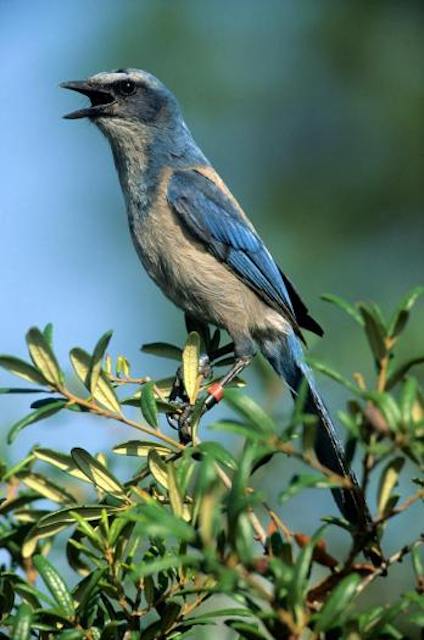
A lawsuit unfolding in Charlotte County might reshape how the Endangered Species Act works, and it all centers on a bird you can only find in Florida: the Florida scrub-jay.
A young tech entrepreneur, Michael Colosi, wants to build on land in Punta Gorda that scrub-jays call home. That’s a problem, because Charlotte County set up strict protections back in 2014 to preserve this exact habitat. Anyone who wants to develop there has to pay a hefty fee. Colosi is fighting that fee through the courts, arguing that it’s not about whether the scrub-jay deserves protection, he just doesn’t think it’s his responsibility to foot the bill.
The Florida scrub-jay has been on the federal threatened species list since 1987. The Fish and Wildlife Service estimates that just 7,700 to 9,300 remain in the wild. It’s a smart, striking bird that can even recognize itself in a mirror, a skill most animals don’t have.
Environmental experts feel that protecting this bird means preserving much more than a single species; Florida’s sandy scrub gets recharged with groundwater and supports agriculture. The bird’s existence depends on a healthy, regularly burned habitat.
Scrub-jays can stick around and even thrive near development if people will give them the space and respect they need.
Colosi and his legal team see things differently. They argue that since the scrub-jay only lives in Florida, responsibility for protecting it should belong to the state, not the federal government. Colosi’s lawyer, Mark Miller from Pacific Legal Foundation, points out that the Endangered Species Act puts a $140,000 price tag on developing Colosi’s property. He claims it’s unfair to make property owners shoulder these costs if the broader community values preservation. In his view, compensating landowners, rather than fining them, helps everyone find middle ground.
This fight over a rare Florida bird is more than just a local dustup. It’s a test of who gets to decide what wild America keeps, and who has to pay for it.