
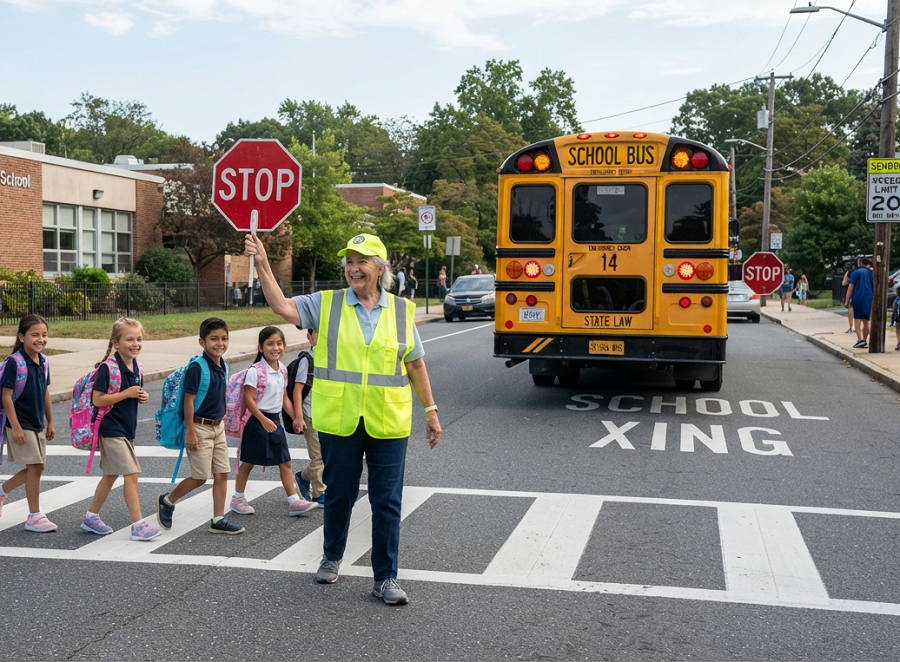
August launches Child Safety Awareness Month in Florida. As kids head back to school, the Florida Department of Highway Safety and Motor Vehicles (FLHSMV) is reminding everyone, drivers, parents, caregivers, and students, to “Know Their Zone.” That means paying extra attention around school buses, in school zones, and in neighborhoods where children walk, ride bikes, or wait for their ride. Whether your child is starting school for the first time or just returning for another year, you play a role in making sure children get to school safely.
It’s not just about watching out in school zones or being careful around buses. Drivers must also use the right child restraints and seat belts, teach kids to practice pedestrian safety, always stay on the lookout to prevent back-over accidents, and never leave kids alone in cars. Take these steps, and you will help ensure every student has a safe, successful start to their year.

Know the Law—School Buses
In 2023, Florida lawmakers made key changes: now, local agencies can set up speed detection cameras in school zones and use systems to catch drivers who illegally pass school buses. Passing a stopped school bus isn’t just breaking the rules; it puts children’s lives at risk. Every illegal pass endangers kids getting on or off the bus. We all have a responsibility: follow the law and never pass a stopped school bus.
Speeders are a big problem near schools and with child safety. In 2025, authorities issued over 54,000 tickets to drivers who were speeding in school or work zones. Watch for flashing lights or beacons, usually 30 minutes before and after school, and during sessions, and slow down to the posted 15–20 mph. Fines double in these areas. Yield to pedestrians, stay alert for children near schools and bus stops, and use only approved spots for pickup and drop-off.
Stick to Stopping Rules
Since 2021, the stakes have gotten even higher. Fines doubled for not stopping for school buses, especially on the side where kids get on and off. Break these rules and you’re facing hundreds in fines and even license suspensions. Here’s the breakdown:
– Passing on the left side: at least $200 fine; second offense within five years? You could lose your license for up to a year.
– Passing on the right side where children board: at least $400, a required court appearance, and possible license points. A second offense within five years can bring up to a two-year license suspension.
Put the Phone Down—Distractions Are Dangerous
It’s illegal to use a handheld device in school crossings, school zones, and active work zones. Yet distracted driving still causes one out of every seven crashes in Florida, one crash every 44 seconds. Parents, talk to your kids about safety. The habits you build now will keep them safe around buses and in school zones.
Pedestrian Safety—Heads Up, Eyes Open
Remind children: use sidewalks if they’re there. If not, walk facing traffic to see what’s coming. Only cross at corners or crosswalks, and don’t get distracted by headphones or phones. Make eye contact with drivers before crossing. Don’t dart out from between parked cars. If you must cross in the middle of the block, let all cars pass first. Stay visible: wear bright clothing, use a flashlight at night, and follow pedestrian signs. When the walk signal is off, wait, and always yield to cars when the sign says, “Don’t Walk.”
Prevent Tragedy—Watch for Heatstroke
School routines mean busy mornings and shifting habits. Always double-check the backseat before leaving your car. Put your purse or phone in the back if that helps you remember. Never leave a child or pet alone in a vehicle. Florida’s heat climbs fast inside a parked car, 20 degrees hotter in just 10 minutes. Children are especially at risk, and heatstroke can happen even on cooler days. Leaving a child unattended is a second-degree misdemeanor with up to a $500 fine, and if injury occurs, it’s a felony. If you spot a child or pet locked in a hot car, call 911 right away. Florida law lets bystanders take action to save someone locked in a car. To prevent accidents, always keep your car locked and keep keys out of reach of children.
Back-over Incidents—Look Before You Reverse
Kids should know not to play near vehicles. If a driver gets into a car, kids should move away, and their toys and bikes need to be out of driveways and paths. Drivers, make it a habit to walk around your car before backing up. Remember, small children can be especially hard to see.
Instruct nearby children to stand off to the side, where you can spot them before you move. Back up slowly, check your mirrors, and keep the windows down to listen. Even with backup cameras, don’t rely completely on technology; nothing beats turning and looking to be sure no children are behind you.
Want to learn more? Visit FLHSMV’s Child Safety Awareness Campaign page for more information and resources. Every action you take makes a difference this school year.