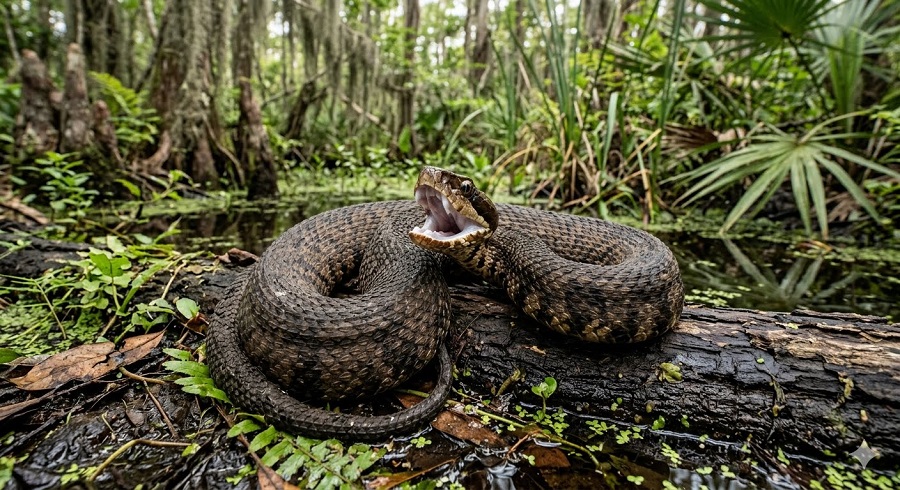
Out of Florida’s six venomous snakes, only four actually make their home in South Florida. You’ll find cottonmouths, eastern diamondback rattlesnakes, pygmy rattlesnakes, and coral snakes in this region. The copperhead and timber rattlesnake stick to more northern parts of the state, as they prefer that environment and only get as far south as the top of Florida.
Florida has a wide range of habitats: coastal mangroves, salt marshes, freshwater wetlands, and dry uplands, and snakes make appearances across all these landscapes. Only six of the total 44 native species are venomous, but they all serve a purpose in the ecosystem. They keep rodent populations in check, which protects crops and lowers disease risk for humans. Nonvenomous snakes sometimes eat their venomous cousins, keeping things balanced. Even venomous snakes play a role, like certain rattlesnakes that feed on ticks.
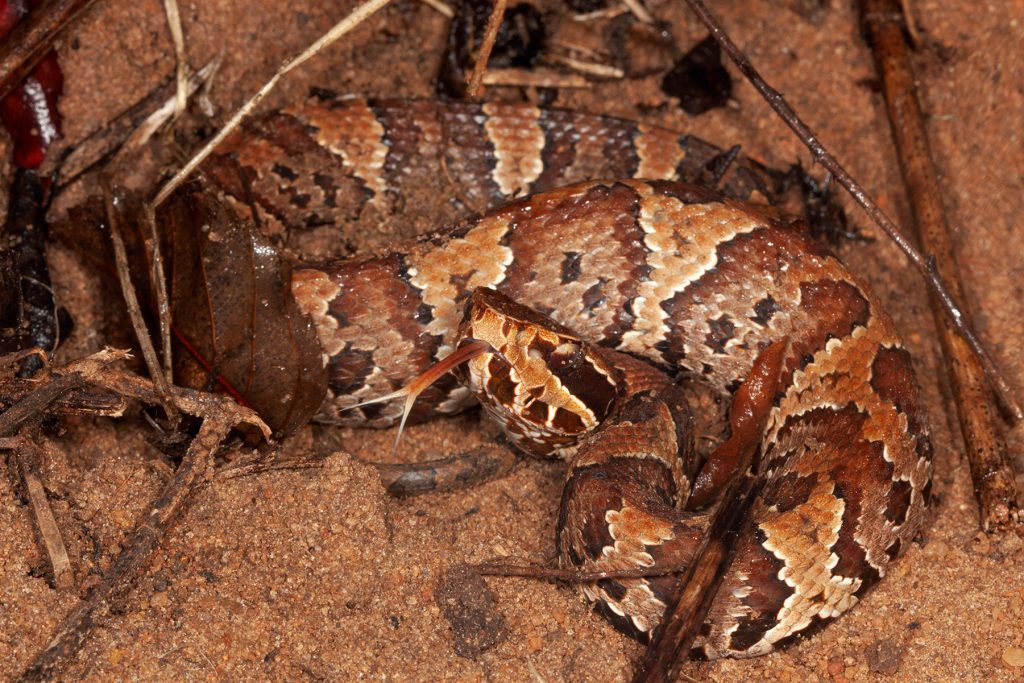
Cottonmouth
Cottonmouths could be mistaken for water snakes. Adults are usually a solid dark color, sometimes with faint patterns, while juveniles show brown or tan with reddish-brown cross bands, and a bright yellow tail tip. Broad heads, dark stripes through the eyes, and deep pits between the nostrils and eyes are typical features. Though not aggressive by nature, it’s smartest to steer clear if you see one.
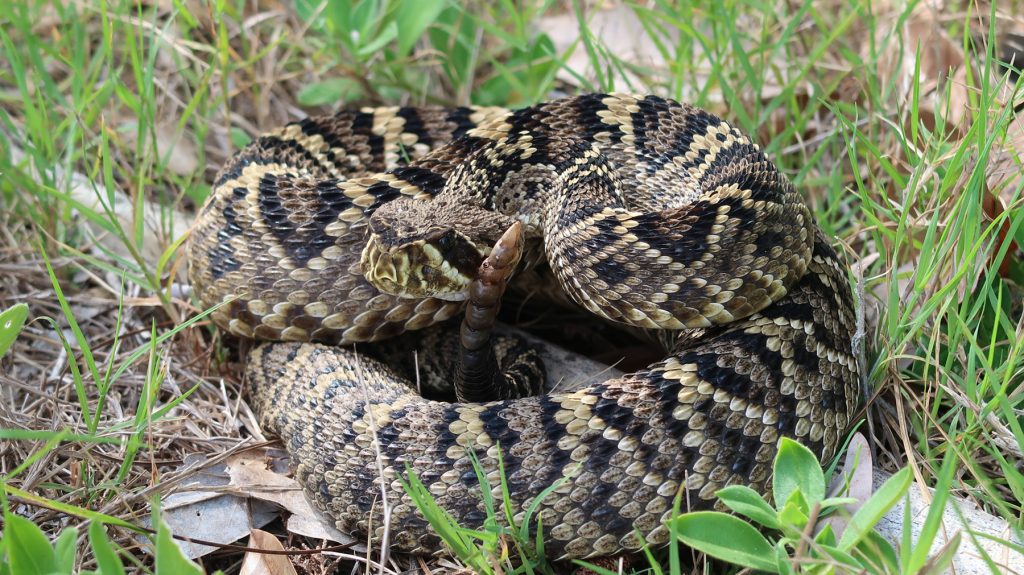
Eastern Diamondback
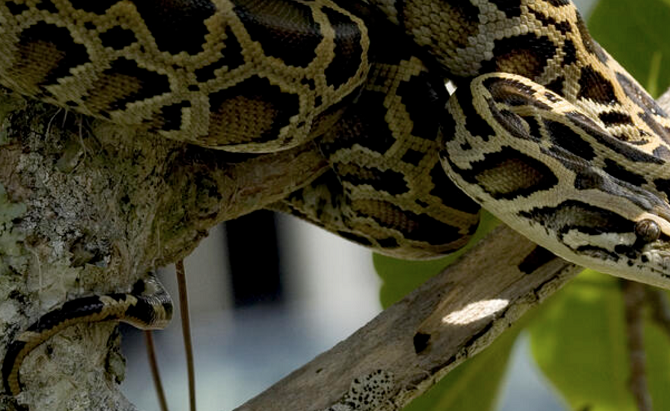
Eastern diamondbacks are impressive, being the largest rattlesnake in the U.S. Brown, yellow, or tan backgrounds, diamond-shaped marks, wide heads. Habitat loss and people who fear them put them at risk, so humans often cut their lives short, even though they could live over 20 years.

Pygmy Rattlesnake
Dusky pygmy rattlesnakes stay small, around 12-14 inches usually, and have gray coloring with black or charcoal blotches and a distinct reddish stripe down their back.
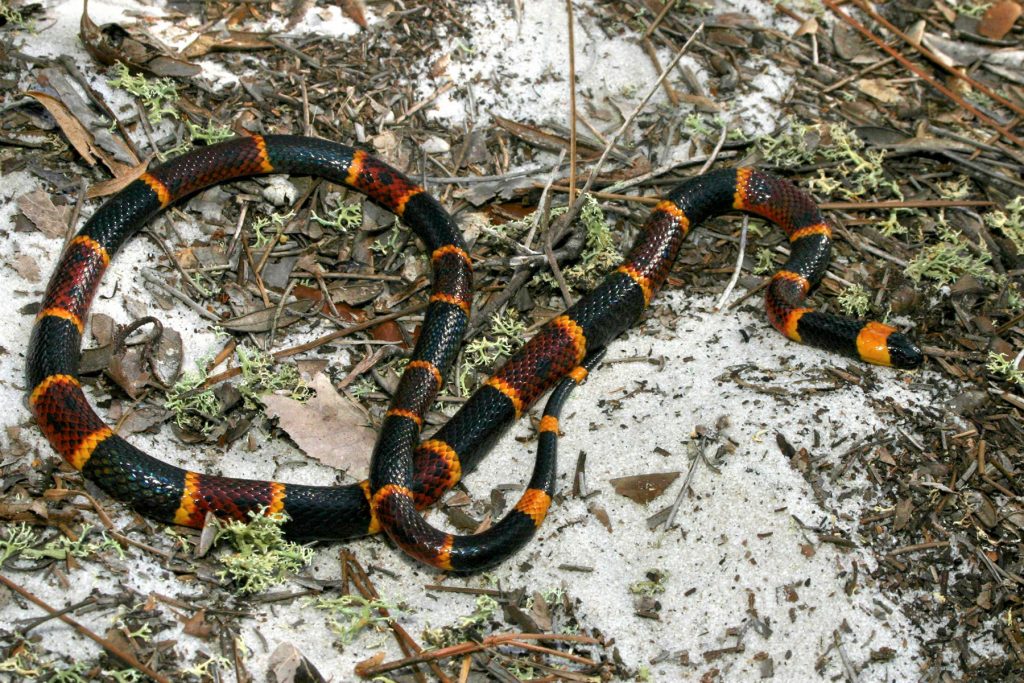
Coral Snake
Coral snakes are pretty elusive. They spend a lot of time underground, rarely growing longer than 30 inches, and you’ll spot them by their black noses and alternating bands of black, yellow, and red.
If you stumble across a snake in Florida, don’t rush to kill it. The FWC makes it clear: snakes rarely present immediate danger to people or pets, and bites only happen when the animal feels threatened. Even venomous snakes, whether in the woods or just crossing a road, aren’t something to fear; just leave them be. Snakes aren’t out to scare anyone; they’d rather avoid you and make a hasty retreat. If you see one, just pause and watch from a distance. The snake will move on soon enough.
Learn more about safely coexisting with our slithery friends by visiting the FWC Living with Snakes Guide.