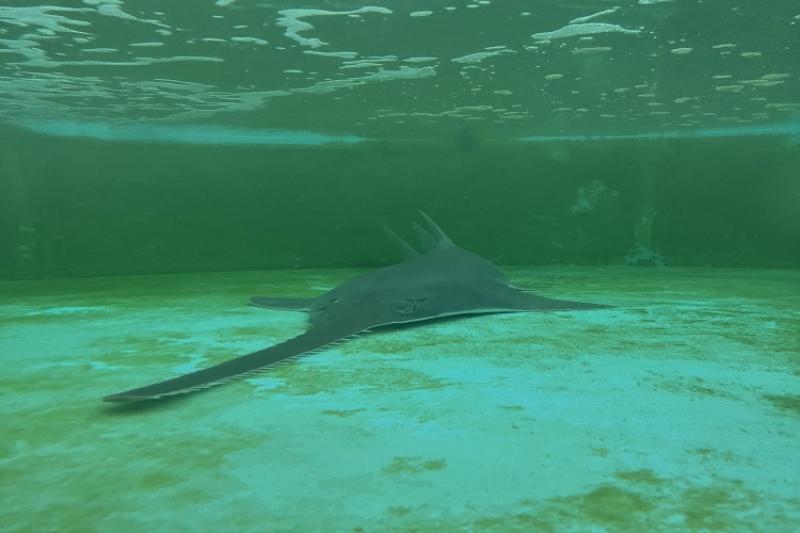
Marine biologists want help from the public to track the smalltooth sawfish in Southwest Florida. Once, these odd-looking fish, relatives of stingrays, were everywhere along Florida’s coast. Now, it’s rare to spot one. Overfishing, often unintentional, pushed them to the brink. Their long, toothy snouts, called rostrums, easily get tangled in fishing lines, making them both accidental casualties and, all too often, someone’s trophy.
Today, the Peace and Caloosahatchee rivers hold some of the most important nurseries for smalltooth sawfish in the United States. These fish depend on shallow tidal creeks and flats, especially the tangles of red mangroves where saltwater and freshwater mix. That narrow mixing zone offers the right conditions for young sawfish to grow.
Yet, sawfish remain one of the most threatened marine fish groups anywhere. Back in 1992, Florida gave them legal protection, and they’re now officially endangered under the Endangered Species Act. The IUCN Red List classifies green, smalltooth, and largetooth sawfish as “critically endangered.” Dwarf and narrow sawfish are also endangered.
One big problem is that sawfish don’t have many young. Every loss hits the population hard, and there’s still so much scientists don’t know about them. That’s why researchers at the Florida Fish and Wildlife Conservation Commission’s Fish and Wildlife Research Institute are ramping up efforts to learn more. But they can’t do it alone.
They’re calling on anglers, boaters, and anyone near the water to report sawfish sightings. Catch one by accident? See one from a dock or bridge? The scientists want these reports. On their Save the Sawtooth website, they urge: “If you catch a sawfish while fishing for other species or happen to see one while you are near the water, please contact us. This statewide survey gives everyone a chance to help us learn where sawfish are still hanging on.”
Five species of sawfish remain worldwide. The smalltooth sawfish lives in the Atlantic. Scientists find green, narrow (or knifetooth), and dwarf sawfish in the Indian and western Pacific Oceans. The largetooth, or freshwater, sawfish survives in the Atlantic, Indian, and Pacific oceans.
Anyone who sees a sawfish in Florida should contact the scientists online or call 1-800-4SAWFISH (472-9347). The more details, the better: date, time, water depth, the fish’s size, and anything else that stands out, all help researchers piece together the story of Florida’s sawfish and what it’ll take to protect them.
Click here for more information and to report any findings to the FWC.