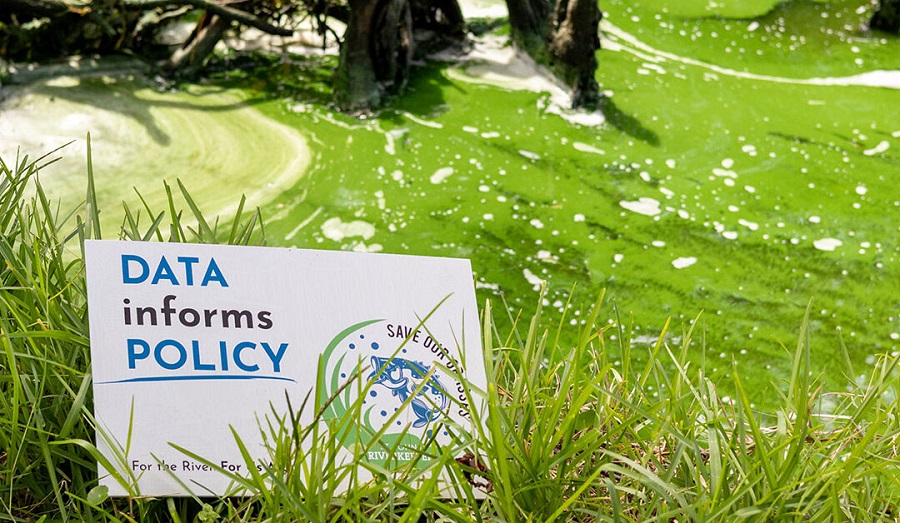
Over half of Florida’s waterways are failing to meet state water quality standards. According to the Florida Department of Environmental Protection (FDEP), 52% of the 4,200-plus water bodies it assessed do not meet state requirements, and there isn’t enough data to even judge another 15%. The primary culprits are high levels of nutrients, fecal bacteria, and low dissolved oxygen.
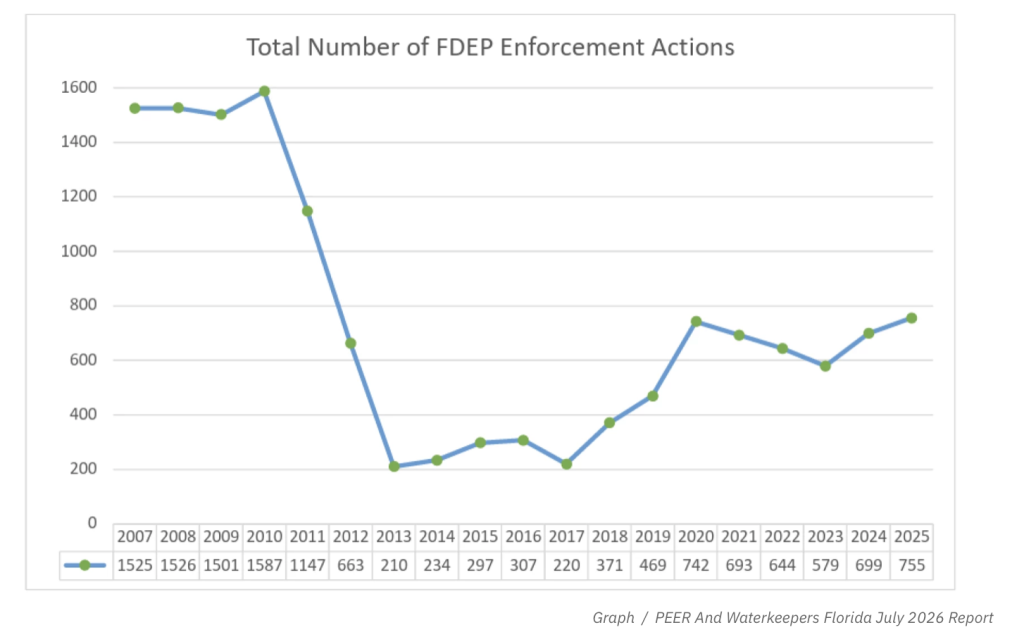
A new report from Public Employees for Environmental Responsibility (PEER) and Waterkeepers Florida pairs this recent data with 37 years of enforcement records, painting a long-term picture. In 2025, FDEP reported 755 enforcement actions, a bump from 579 in 2023 but still nowhere near the late 1980s average of 1,048 per year.
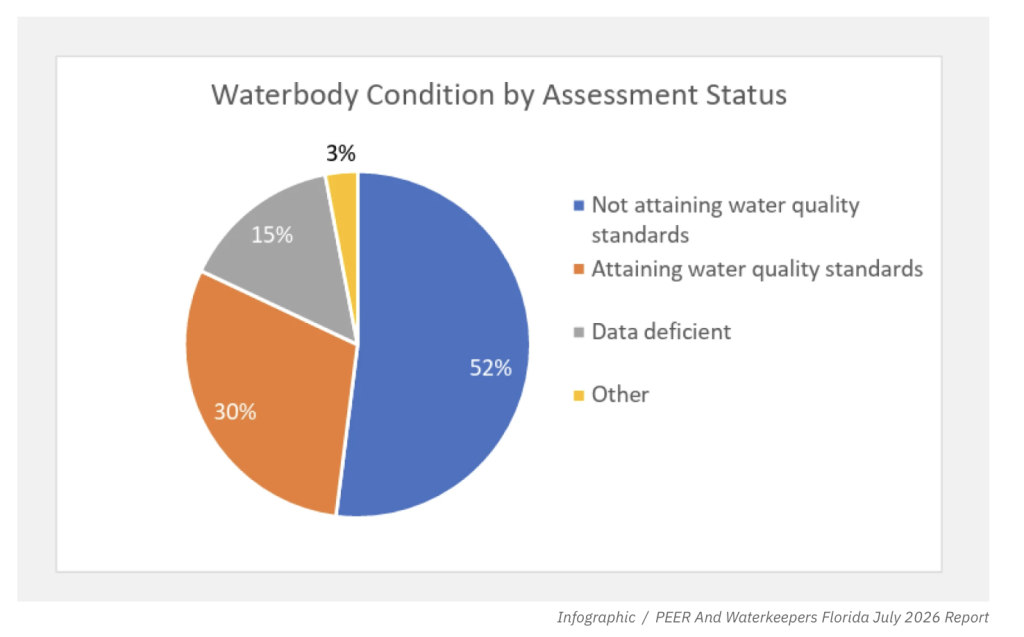
The report shows a modest improvement in the condition of Florida’s coastal waters and streams, but that’s offset by a troubling decline in the health of lakes and estuaries. “It’s alarming for a state like Florida, where everything depends on clean water,” said Lisa Rinaman of St. Johns Riverkeeper. She pointed out that water quality underpins the state’s tourism, economy, and everyday life.
FDEP’s own assessment highlights specific cases. In Central Florida, the assessment lists Lake Jesup as impaired by nutrients, identifies nutrient loading and pesticide contamination in fish tissue as problems for Lake Apopka, and notes that the Econlockhatchee River struggles with E. coli and excess nutrients. Statewide, most water body impairments come from the same trio, hazardous nutrient loads, harmful bacteria, and depleted oxygen levels.
The PEER and Waterkeepers Florida report also track the trajectory of enforcement. Starting in 2011, when Governor Rick Scott took office, enforcement actions saw a sharp decline. Between 1988 and 1995, the state averaged over 1,000 cases a year; under Scott (2011-2018), that dropped to only 431 per year. Enforcement slid again after 2020 before inching upward again. Even with the recent uptick, the 755 actions reported in 2025 are still less than half the 2010 total.
Rinaman and other environmental advocates argue that Florida’s pollution protections simply aren’t strong enough. While some regulations have had a modest positive effect, she says they lack the teeth needed to restore and protect the state’s waters, especially with enforcement at such low levels. “Those protections that have been in place, they’re too lax. They don’t go far enough,” Rinaman emphasized. And without real enforcement, she added, “it’s not as good as the paper it’s written on.”
Looking ahead, the report notes mixed news. While more water bodies, including lakes and estuaries, are failing to meet standards, coastal waters and streams have improved slightly. Beyond that, one promising step is a recent change in the state’s farm bill that bans the land application of Class B biosolids (treated sewage sludge) by 2028. Still, protections for the more processed Class AA biosolids failed to pass, after Governor DeSantis vetoed a related bill. “That’s just going to continue to add to our nutrient pollution problems,” Rinaman warned.
Ultimately, even with years of watching and some new regulations, most of Florida’s waters are still not as clean as they should be. Also, enforcement of the rules has decreased, which constantly puts Florida’s environment, economy, and people in danger.