Are you experiencing hurricane preparedness overload? This story allows us to look at some creative solutions that are also good for the environment.
Turns out, the way you plant trees around your home can actually make a big difference during a hurricane. Researchers at Florida International University found that carefully placing trees, like pines, oaks, and palms, can cut the suction forces on your roof by half. That means there’s a real, practical way to protect your house without breaking the bank, just by adding a few trees to your yard.
This isn’t just speculation. A study published in the Journal of Wind Engineering and Industrial Aerodynamics tested some of Florida’s most common trees. The researchers discovered these trees help reduce wind forces on the parts of the roof where storm damage usually begins. The results are especially important for coastal communities that have lost much of their tree cover after recent storms. Replanting isn’t just about replacing what’s lost; it can actually strengthen your home’s defenses during hurricane season.
Miami-Dade is already home to about 36 million trees, and city planners are pushing for even more. The urban tree canopy shades approximately a fifth of the county. While there’s no arguing trees offer shade and keep energy bills down, they also have a reputation for turning into flying debris once hurricane winds pick up. So, what are all those trees really doing in a big storm? Are some better protectors than others? And which trees are the troublemakers?
To find answers, Dr. Amal Elawady and her team at FIU tracked data from over 40,000 trees across the state. Working at FIU’s Wall of Wind, where they can mimic a Category 5 hurricane, they tested how different tree species interacted with hurricane-force winds near buildings. They even built risk models with just a few key details, like species and crown diameter, to predict how well a tree might hold up.
Some takeaways: mahogany topped the list as the sturdiest deciduous tree, slash pine led among conifers, and water oak was the most wind-prone overall. Insurance and construction companies teamed up for this research, eager to understand what trees do to both homes and risk during major storms.
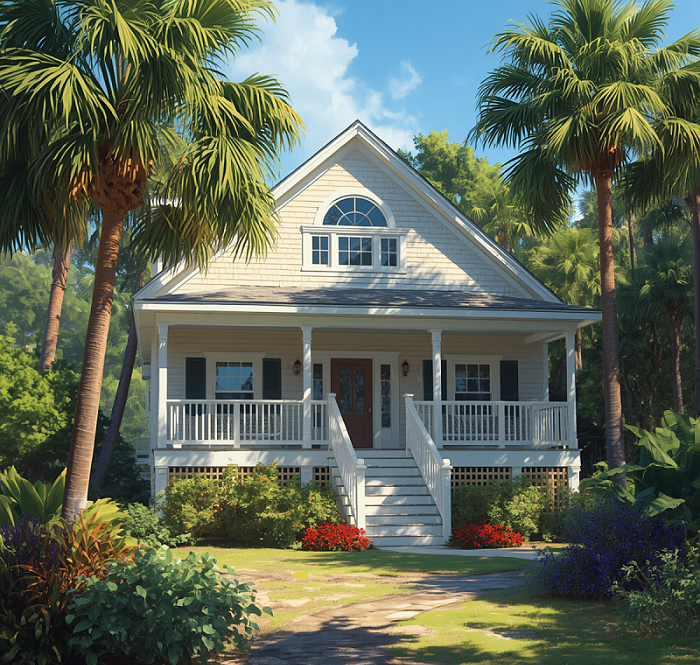
The experiments showed that when trees surround a single-story house, especially if they’re positioned so the wind hits them first, they provide a big shield, cutting wind pressure on the roof by as much as 50%.
But it’s not all good news. When the wind hit homes at certain angles (45° or 210°), some trees actually made wind pressure spike in places, possibly funneling wind toward vulnerable spots. The researchers suspect that the trees’ positioning influences this effect, so they are running more tests to figure it out.
These insights matter for regular homeowners, insurance companies, and city planners. The models from FIU can help you decide what type of trees to plant and exactly where to put them for the most protection. Insurers could even use these findings to set premiums or decide what’s insurable, taking tree risk into account. Elawady points out that this work isn’t just for homeowners; emergency managers, utilities, and local governments could use the models to plan for faster recovery, debris cleanup, and protecting power lines when major storms hit.
One thing that stands out: trees are incredibly adaptive. As wind speeds rise, branches and leaves morph to lessen the drag and cut down the risk of snapping. That makes predicting damage complex, since tree species, size, and specific winds all play a role in what ultimately happens. Elawady’s team is now looking into exactly how fallen trees damage houses so they can keep improving their models.
In the long run, understanding which trees are safest to plant could help everyone get ready for hurricanes, preparing cities, guiding cleanup, and even keeping insurance costs in check. Trees don’t just shade our homes or make our streets look nice. They keep the air cleaner, buffer floods, provide habitats for wildlife, and even cool down entire neighborhoods. And, of course, they take carbon out of the atmosphere.
Whenever you think about prepping for hurricane season, don’t forget about your trees. They might give your home more protection than you’d expect.