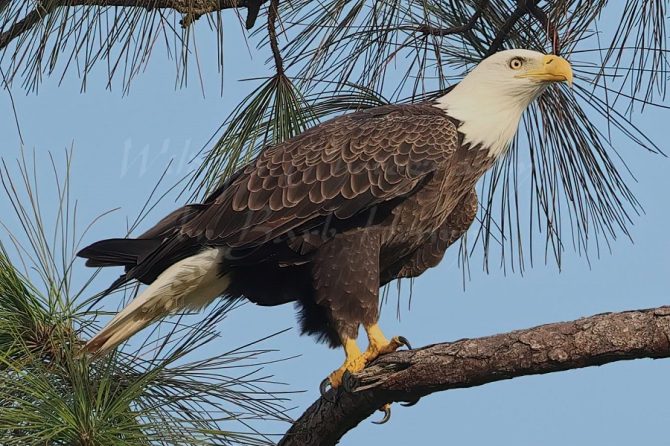
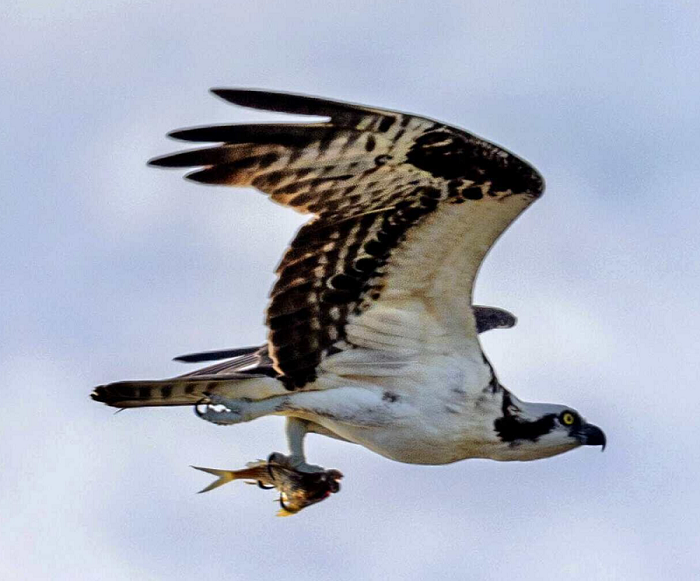
Sanibel ospreys are making a remarkable comeback. The Sanibel-Captiva Conservation Foundation (SCCF) just delivered some thrilling news: local osprey populations aren’t just bouncing back after hurricane damage, they’re soaring ahead.
This season, their team recorded an 84.6% nesting success rate. Out of 221 nests, 187 chicks fledged, and the productivity average reached 1.24 fledglings per nest. That’s well above the 1.15 benchmark needed to sustain the ecosystem.
This isn’t just good news for the birds. It’s a hopeful sign for Southwest Florida’s coastal ecosystems. These ospreys are a key indicator of their health. SCCF, now overseeing the region’s long-running monitoring program, tracked 151 active nests across Sanibel, Captiva, Pine Island, and Fort Myers Beach. In total, volunteers watched over 200 nests, collecting data that feeds into the global OspreyWatch database.
Earlier this year, SCCF took the reins from The International Osprey Foundation, which started in 1981 and spent decades building up the region’s monitoring efforts. SCCF’s first season in charge has already produced historic results.
Why does this matter? Ospreys depend almost entirely on fish, so their population health tells us a lot about local water conditions. When water quality suffers, fish populations decline, and the birds follow suit. SCCF calls ospreys a “sentinel” for water quality. Watching their numbers gives researchers a direct window into the state of Southwest Florida’s waterways.
This season, favorable water conditions helped. Less rain and fewer releases from Lake Okeechobee meant clearer water with less pollution. That clarity gave ospreys an edge in hunting, leading to this leap in nesting success.
Southwest Florida’s ecosystems really needed this win. After years of red tide, hurricanes like Ian, Helene, and Milton, and ongoing environmental stress, osprey numbers hadn’t reached these heights since 2017. Now, we’re seeing real recovery, not just for the birds but for the coastal habitats that depend on them.
After all the turmoil, ospreys are not only surviving, but they’re also thriving. Their comeback hints at healing waters and stronger ecosystems, and researchers are watching closely. This season’s success is a reminder: when you give nature a break, it responds, sometimes with a roar.
Click here for more information.