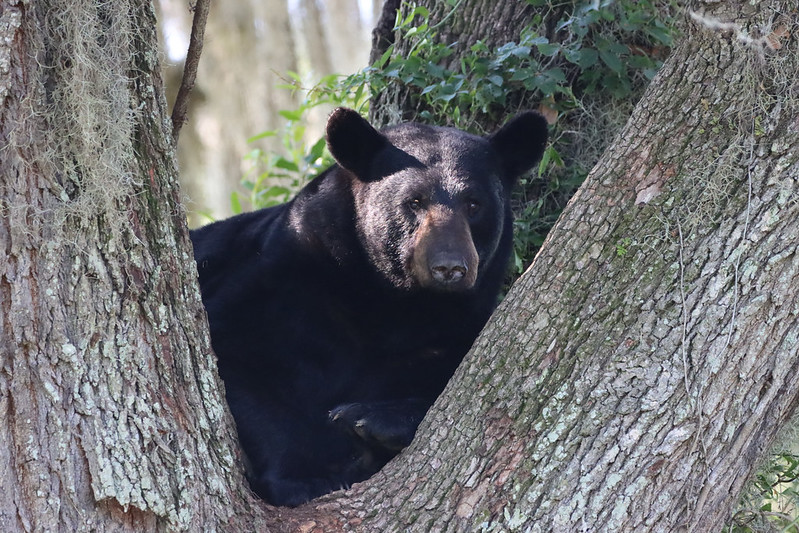
Bear sightings in Florida are hitting record highs lately, so let’s tackle a question people ask all the time: Do black bears hibernate in Florida?
Florida has seen a surge in bear-related calls, about 42% higher than in 2016. The main reasons are that the black bear population has rebounded to around 4,000, up from just a few hundred in the 1970s, and their habitat is shrinking and getting more fragmented.
Black bears have reclaimed much of their old range, but crowded development pushes them closer to people. Naturally, that leads to more run-ins. And this isn’t just a local thing; other states like Colorado are also reporting record bear sightings. In Florida, this has brought new strategies: the first regulated bear hunt in over a decade (late 2025), and an expanded hunt framework set for 2026. The Florida Fish and Wildlife Conservation Commission (FWC) oversees all of this.

Black Bear Hibernation
Do black bears hibernate in Florida? They do, but it looks a little different in Florida than up north. Scientists also use the words denning, torpor, or carnivore lethargy for this period.
Hibernation means their bodies slow down: bears don’t eat, drink, pee, or poop during this time. The timing depends on things like daylight, temperature, and most importantly, food.
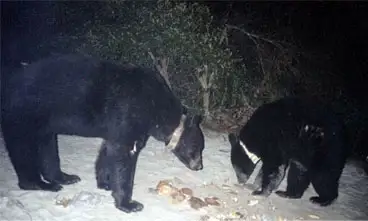
Here is the catch, bears in the South don’t hibernate the way bears do where it gets colder. In northern states, they’ll sleep deeply and get sluggish; you can walk right up to a den and they’re barely responsive. Not so in Florida. Bears here sleep less deeply, nap for shorter periods, and if you disturb them, they’ll often just run off. Sometimes, especially the adult males, they hardly den at all, though they might act sluggish during winter.

Pregnant females are the exception. They have to den for the winter because this is where cubs are born and nursed. These mothers find the safest, thickest spots; dens appear in dense vegetation, hollow trees, or under fallen logs. Pregnancy for black bears involves delayed implantation: they breed in summer (June to early August), but the fertilized egg doesn’t actually implant until late November or December. If the mother is not healthy enough by then, she won’t carry the cubs to term. Healthier females can support larger litters.
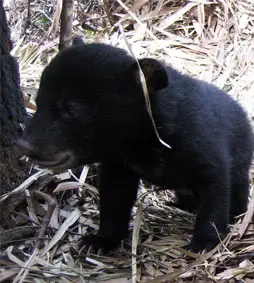
Fun fact: Bear milk is incredibly rich compared to cow milk, up to 30% fat.
Bear cubs arrive tiny, about the size of a soda can, and totally helpless, with closed eyes and a fine fuzzy coat. In Florida, mothers typically have two or three cubs, though sometimes four. In other parts of the country, they can have up to six; Florida hasn’t seen that yet. Cubs stay in the den until April and then stick with mom, learning the ropes, through their first summer and fall. They’re weaned in the fall and usually den with her their second winter. After that, the family breaks up. Females often settle nearby, while the males roam farther, looking for their own patch.
Florida’s black bears still hibernate, but it’s a lighter, shorter version than you’ll see farther north. Pregnant females stick to tradition, tucked safely away to raise their cubs, while males and non-pregnant females might just take it easy for a few weeks, if at all. And with populations rising and habitat shrinking, expect bears to keep turning up in new places across the state.
Read more about the story at myfwc.com.